



Preventive Maintenance Checklist for Excavators: What to Check and When
Key Takeaways
- Daily checks prevent immediate safety risks and breakdowns
- Weekly and monthly inspections ensure long-term vehicle performance
- Preventive maintenance reduces repair costs and downtime
- Standardized processes improve fleet efficiency
- Fleet management software simplifies tracking and scheduling
Managing a fleet is about keeping them safe, efficient, and cost-effective. One missed maintenance check can lead to breakdowns, delays, or expensive repairs.
A structured auto maintenance checklist helps fleet managers stay proactive instead of reactive. It ensures that vehicles are inspected regularly, problems are caught early, and operational efficiency remains high.
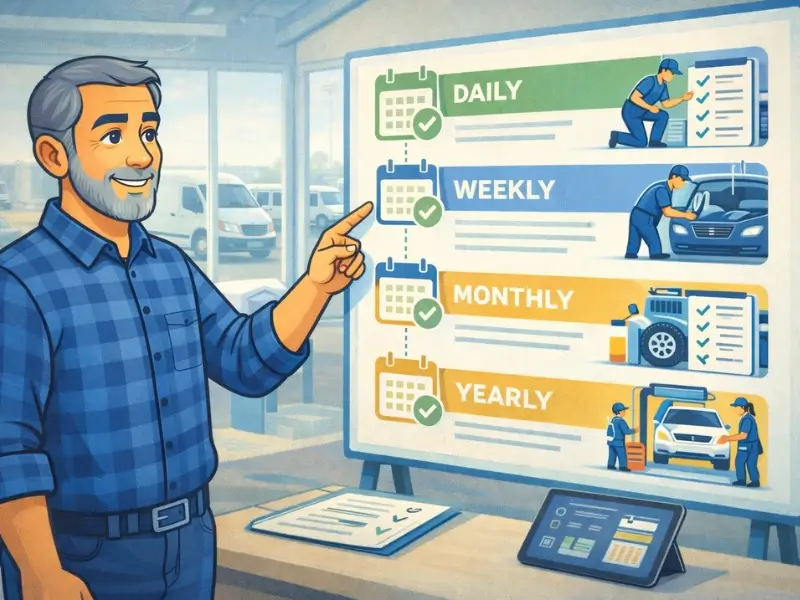
This guide breaks down a complete auto maintenance checklist into daily, weekly, monthly, and yearly tasks, making it easy to implement across fleets of any size.
Why Auto Maintenance Matters for Fleet Management

Fleet vehicles operate under higher stress compared to personal vehicles. They run longer hours, cover more distance, and often carry heavier loads.
Without proper maintenance:
- Small issues quickly turn into major failures
- Fuel efficiency drops significantly
- Safety risks increase for drivers and assets
- Downtime disrupts operations and customer commitments
A consistent checklist-driven approach ensures:
- Predictable maintenance schedules
- Reduced repair costs
- Improved vehicle lifespan
- Better compliance and safety standards
Daily Auto Maintenance Checklist (Quick Safety Checks)
Daily inspections are the first line of defense. These checks take only a few minutes but can prevent serious issues.
What to Check Daily
- Fuel Levels: Ensuring sufficient fuel avoids operational disruptions. Running vehicles on low fuel repeatedly can also damage fuel systems over time.
- Tire Condition: Look for visible punctures, uneven wear, or low air pressure. Poor tire condition directly impacts safety and fuel efficiency.
- Lights and Indicators: Headlights, brake lights, and indicators must function properly to avoid accidents and legal issues.
- Dashboard Warning Lights: Any warning light should be taken seriously. Ignoring them can lead to major mechanical failures.
- Fluid Leaks: Check under the vehicle for oil, coolant, or other fluid leaks. Early detection prevents engine damage.
- Unusual Sounds: Strange noises from the engine or brakes often indicate underlying problems that need attention.
Daily checks are simple but critical. They keep vehicles road-ready and reduce unexpected breakdowns.
Weekly Maintenance Checklist (Functional Inspections)
Weekly checks go slightly deeper and focus on performance-related components.
Key Weekly Checks
- Tire Pressure and Tread Depth: Proper tire pressure improves fuel efficiency and reduces wear. Uneven tread may indicate alignment issues.
- Engine Oil Level: Low oil levels can lead to engine overheating and severe damage. It should always be within the recommended range.
- Coolant and Brake Fluid Levels: These fluids are essential for engine temperature control and braking performance.
- Battery Condition: Inspect terminals for corrosion and ensure the battery is securely mounted. Weak batteries can cause unexpected failures.
- Windshield Washer Fluid and Wipers: Clear visibility is crucial for safety. Worn-out wipers should be replaced immediately.
- Brake Response and Horn Functionality: Brakes should feel responsive and smooth. Any delay or noise requires inspection.
Weekly checks help maintain vehicle performance and prevent wear-related issues from escalating.
Monthly Maintenance Checklist (Detailed Inspection)
Monthly inspections are more comprehensive and help identify long-term wear and system inefficiencies.
What to Inspect Monthly
- All Fluid Levels: This includes engine oil, transmission fluid, brake fluid, and coolant. Each plays a critical role in vehicle performance.
- Battery Health and Voltage: Testing battery performance ensures reliability, especially for fleets operating in demanding conditions.
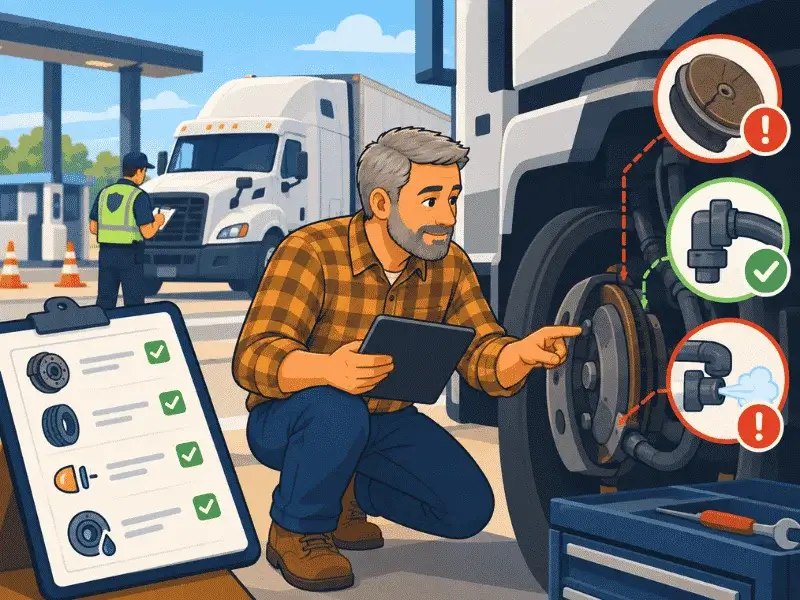
- Brake System: Check for worn brake pads, leaks, or unusual noises. Brake failure is one of the most critical risks in fleet operations.
- Lights and Electrical Systems: Ensure all lighting systems are functioning correctly, including interior lights.
- Air Filters and Cabin Filters: Dirty filters reduce engine efficiency and air quality inside the vehicle.
- Belts, Hoses, and Wiring: Cracks or wear in these components can lead to sudden breakdowns.
- Suspension and Steering: Poor suspension affects driver comfort and vehicle control, especially on long routes.
- Exhaust System: Check for excessive smoke or unusual noise, which may indicate engine issues.
Monthly checks significantly reduce the risk of unexpected repairs and improve overall fleet reliability.
Download Our Free Fleet Maintenance Resources Now!
Prevent costly breakdowns and maximize uptime with our free checklist.
Download
Quarterly and Yearly Maintenance (Preventive Servicing)
Some components require periodic professional servicing rather than routine checks.
Quarterly / 3–6 Months
- Replace worn-out wiper blades
- Inspect belts and hoses for aging
- Check transmission and power steering fluids
- Perform engine oil changes if due
Yearly Maintenance
- Complete brake system inspection
- Suspension alignment and balancing
- Cooling system servicing
- AC system maintenance
- Spark plug replacement and engine tuning
These checks ensure long-term performance and help avoid costly breakdowns.
Fleet Maintenance Checklist Summary Table
Best Practices for Implementing a Fleet Maintenance Checklist
A checklist alone is not enough. The real value comes from consistent implementation.
- Standardize the Process: Create a uniform checklist for all vehicles in the fleet. This ensures consistency and accountability across teams.
- Train Drivers and Technicians: Drivers should be trained to perform daily checks, while technicians handle deeper inspections.
- Maintain Digital Records: Manual tracking often leads to errors. Digital logs help monitor fleet maintenance history and predict future servicing needs.
- Use Preventive Maintenance Scheduling: Instead of waiting for failures, schedule maintenance based on usage and mileage.
- Track Vehicle Performance Data: Monitoring fuel efficiency, repair frequency, and downtime helps identify problem vehicles early.
Common Mistakes Fleet Managers Should Avoid
- Ignoring minor issues until they become major problems
- Skipping routine checks due to time constraints
- Not maintaining proper records of servicing
- Relying only on reactive maintenance
- Failing to standardize processes across the fleet
Avoiding these mistakes can save significant costs and improve operational efficiency.
Eliminate Downtime with Smart Fleet Management
An effective auto maintenance checklist is a strategic tool for fleet success. It ensures that vehicles remain safe, reliable, and cost-efficient while minimizing operational disruptions.
Fleets that prioritize maintenance consistently outperform those that rely on reactive repairs. By implementing structured daily, weekly, and monthly checks, fleet managers can extend vehicle lifespan, reduce costs, and improve overall performance.
Managing maintenance manually can be overwhelming, especially as fleets grow. Simply Fleet helps streamline everything:
- Automated maintenance reminders
- Real-time vehicle tracking
- Digital inspection logs
- Performance analytics
Take control of your fleet operations and reduce downtime with Simply Fleet. Start optimizing your maintenance process today.