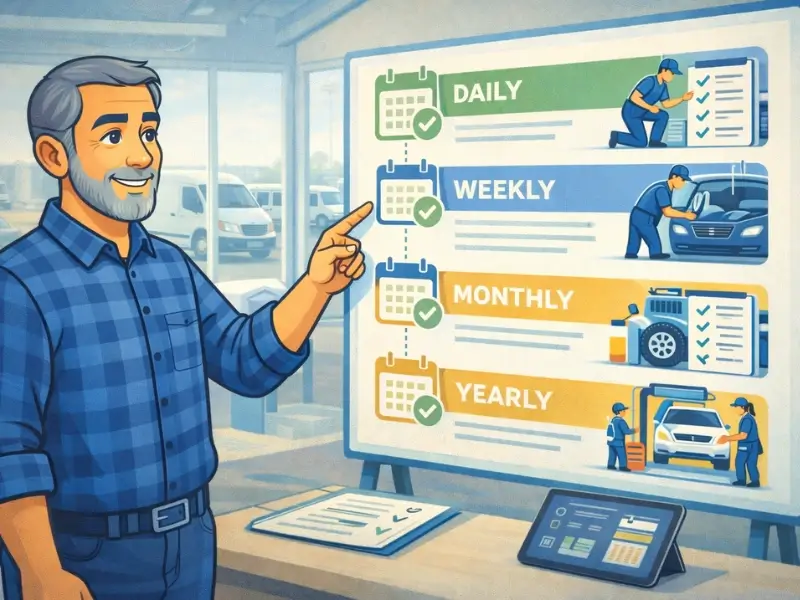
1. Create inspection tasks
Define what needs to be checked and whether the inspector should mark it pass/fail, enter information, or take a photo.


Create digital inspection forms, schedule recurring checks, let drivers complete inspections from the mobile app, and keep every submission connected to the vehicle's inspection history.
Simply Fleet gives fleet teams one inspection workflow from checklist to defect to maintenance follow-up, without relying on paper forms, spreadsheets, or separate inspection apps.
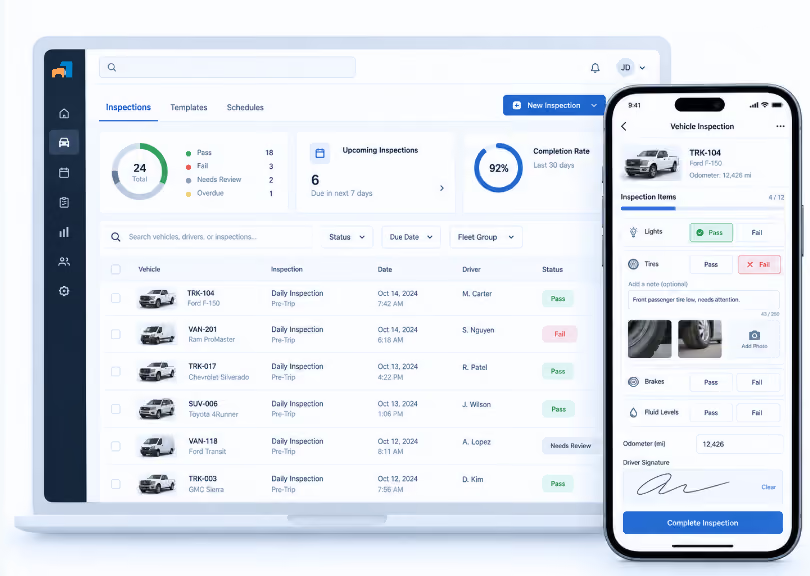
Vehicle inspections involve more than filling out a checklist. Simply Fleet connects the setup, scheduling, field inspection, and follow-up into one process.
Simply Fleet's digital vehicle inspection software gives managers one workflow for scheduling checks, collecting mobile submissions, tracking defects, and retaining vehicle inspection history.
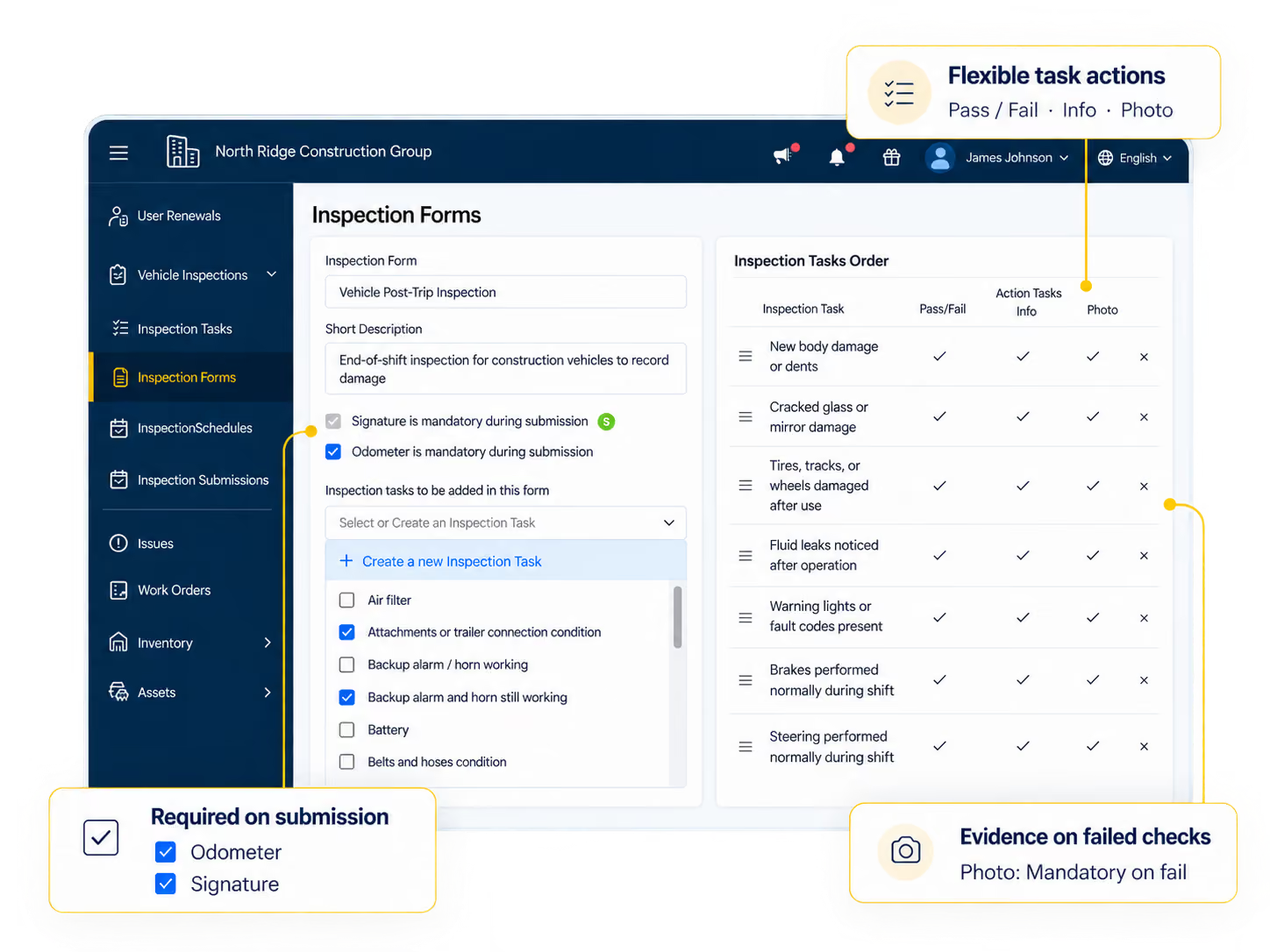
Define what needs to be checked and whether the inspector should mark it pass/fail, enter information, or take a photo.
Group tasks into reusable forms for pre-trip inspections, DVIRs, weekly inspections, or fleet-specific checks.
Assign a form to a vehicle and set it to run once or recur by mileage, time, or both.
See completed inspections, issues found, who submitted each record, and the vehicle's inspection history.
Different fleets inspect different things. Simply Fleet lets you create inspection forms around the way your vehicles actually operate instead of forcing every team into the same checklist.
Use condition checks and make the response mandatory when an item cannot be skipped.
Collect values, readings, or notes as part of the inspection task.
Make photo capture optional, mandatory, or mandatory only when a task fails.
Add instructions for the driver or inspector, arrange tasks in the required order, and require an odometer reading or signature on selected forms.
Common uses: Pre-trip inspections · DVIRs · Weekly inspections · Vehicle safety checks · Custom fleet inspections
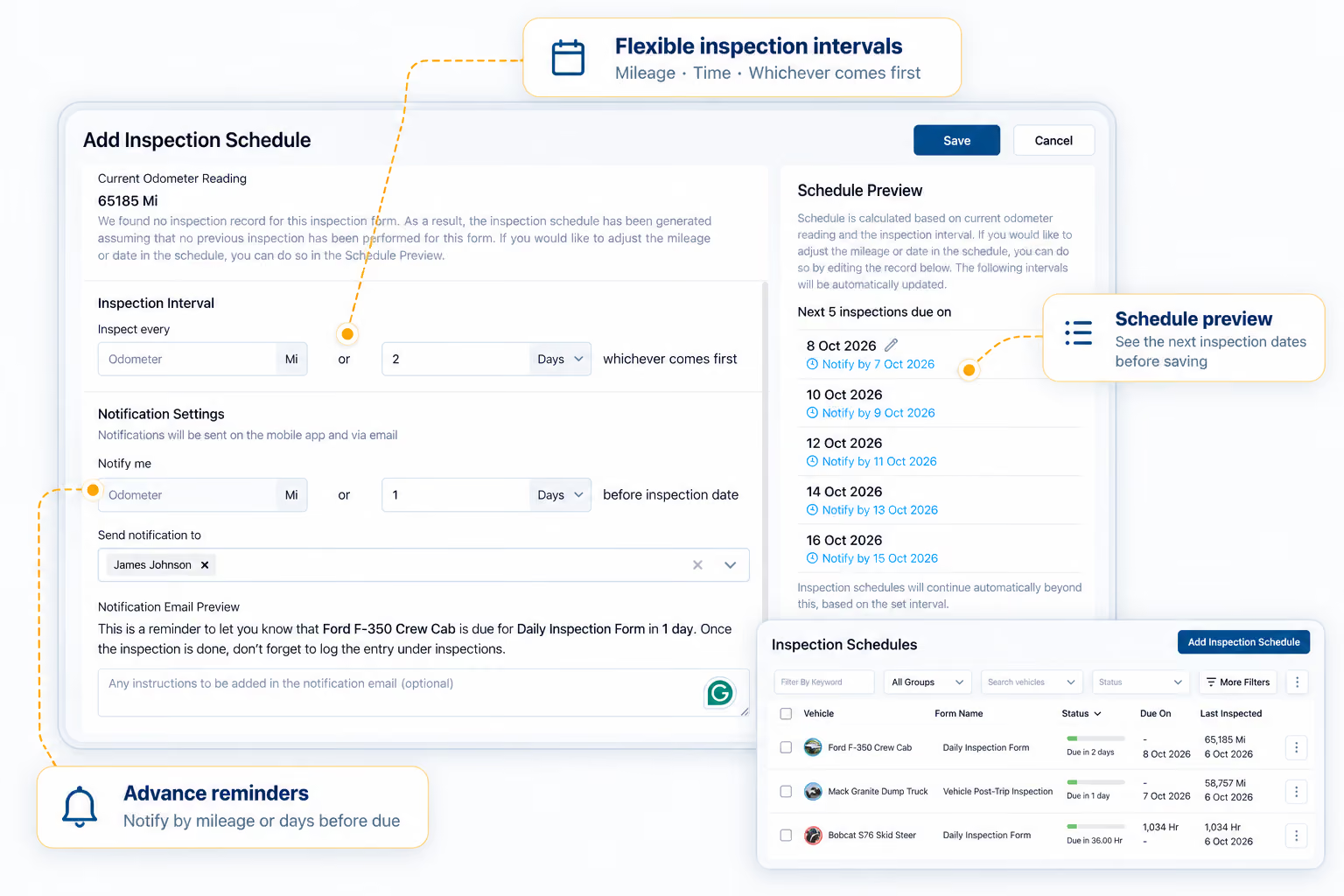
Assign an inspection form to a vehicle and choose when it should become due. Schedules can be one-time or recurring, based on odometer, time, or both.
When mileage and time are used together, Simply Fleet makes the inspection due when the first threshold is reached.
For example, every 1,000 miles or every 30 days.
Notify selected recipients by distance remaining, time remaining, or both.
Review upcoming due points using the vehicle's current odometer and selected interval.
Drivers and inspectors can complete vehicle inspections directly from Simply Fleet's mobile app instead of carrying paper forms back to the office.
The inspection form guides them through the required checks. Depending on how each task has been configured, they can mark an item pass or fail, enter information, capture a photo, enter the odometer, provide a signature, and submit the completed inspection.
Required fields help make sure important inspection information is captured before the record is submitted.
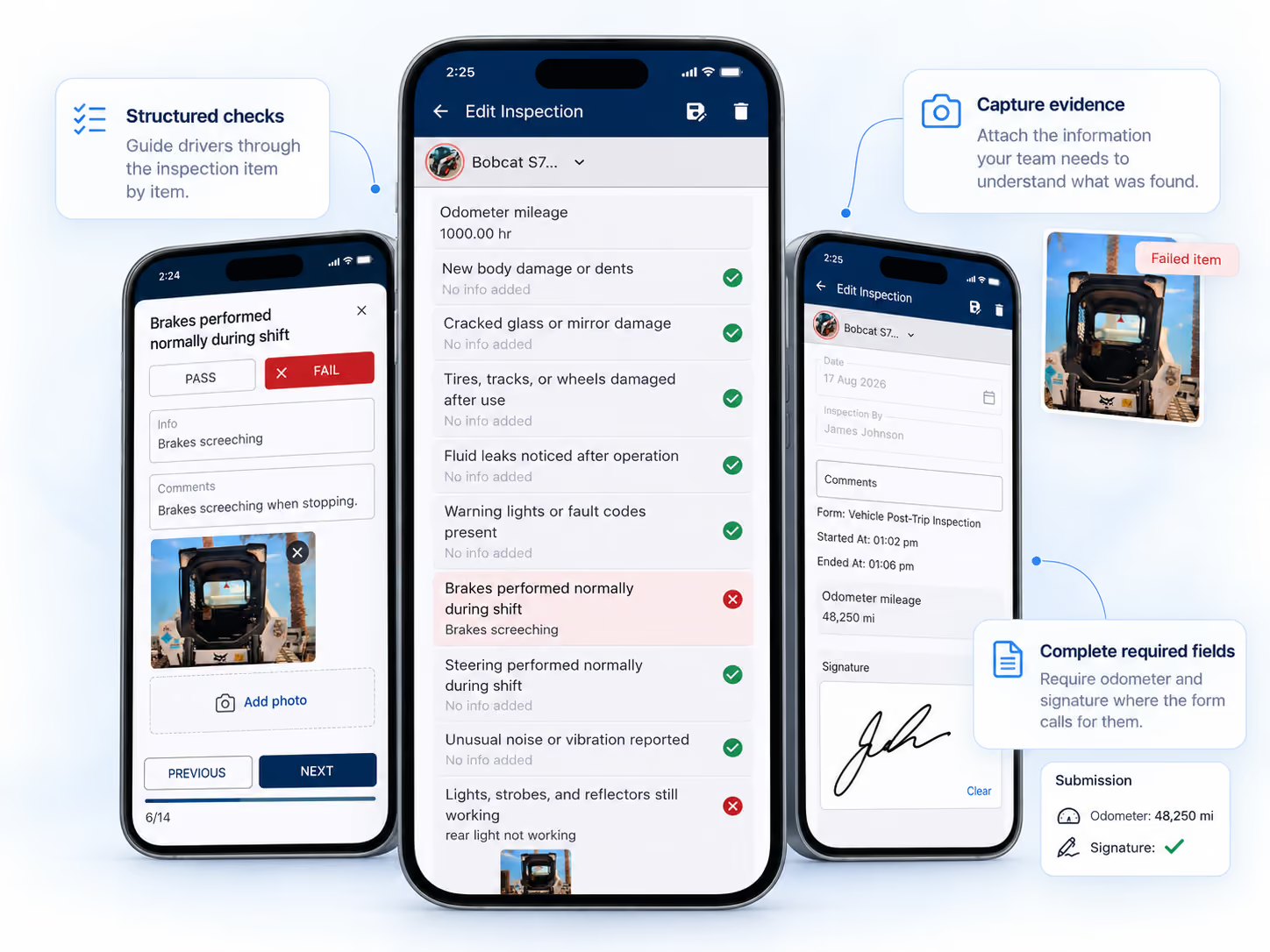
Simply Fleet inspection forms can be configured for recurring fleet processes such as DVIRs, pre-trip inspections, post-trip inspections, weekly safety checks, and other scheduled vehicle inspections.
A completed DVIR keeps the vehicle, inspection date, submitting driver or inspector, and issues found together in the inspection record. Depending on how the form is configured, the submission can also require an odometer reading, signature, and supporting photos for failed checks.
Choose the inspection tasks, evidence requirements, instructions, and submission fields your drivers need.
Submitted inspections become part of the vehicle's inspection history for later review.
A failed inspection can automatically create an issue in Simply Fleet so the finding does not stop at the inspection form.
A failed inspection should not end as a note on a checklist. In Simply Fleet, a failed inspection can create an issue automatically so the maintenance team has a clear next step.
Minor issues can be closed directly. When repair work is needed, the issue can be converted into a work order, assigned to a technician, and tracked through completion.
Inspection → Issue → Work Order → Repair → Service History
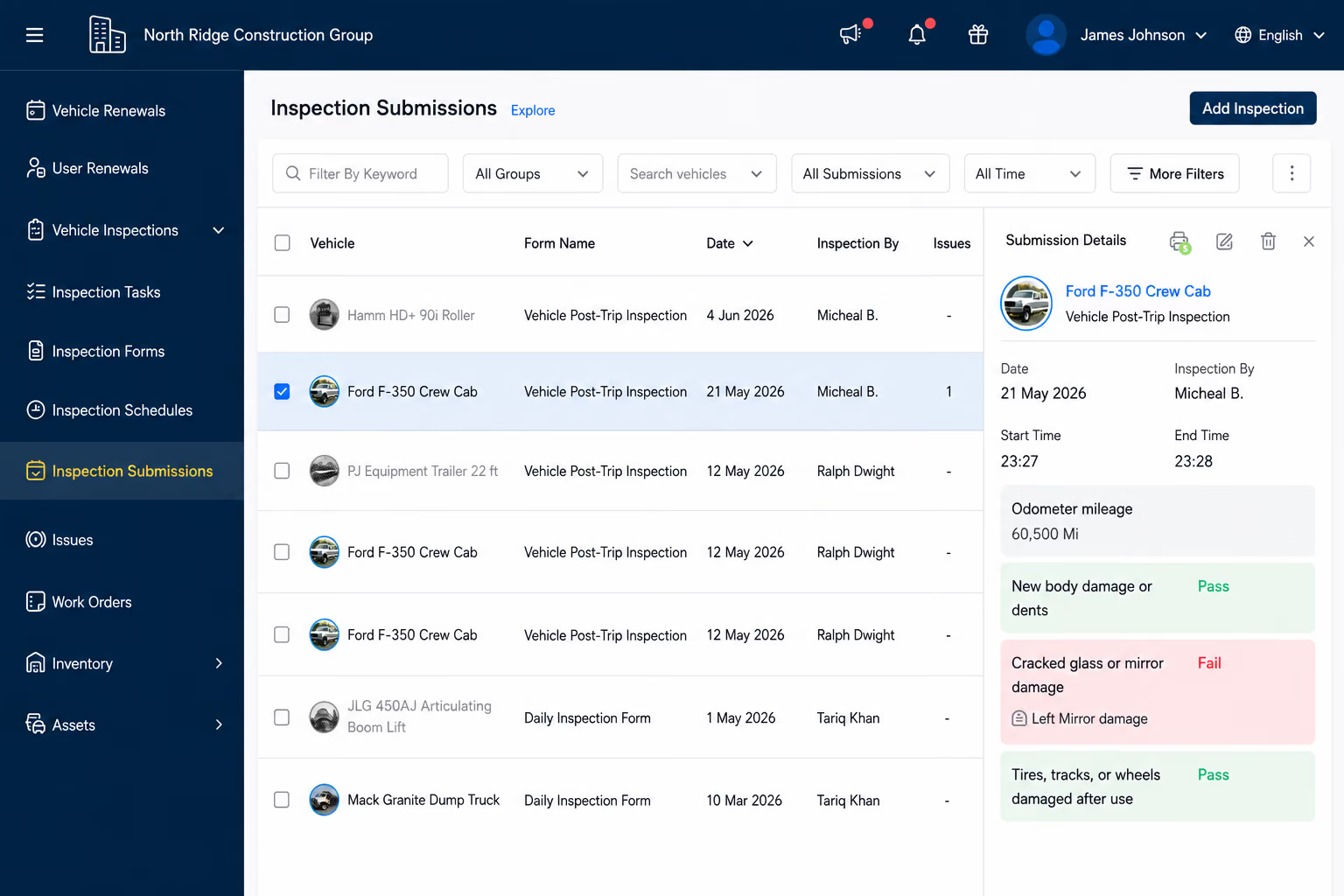
Once inspections are submitted, managers need more than a pile of completed forms. Simply Fleet keeps completed vehicle inspections together in Inspection Submissions, where fleet teams can review records across multiple vehicles.
Review the vehicle, inspection form, inspection date, submitted by, and issues found.
Find inspections by vehicle, date range, group, or other available criteria.
Identify vehicles without an inspection during the selected period so fleet managers can follow up before gaps become recurring operational problems.
Every submitted inspection becomes part of the vehicle's inspection history for later review.
Print or save completed inspection submissions as PDF when records need to be shared or retained outside Simply Fleet. Inspection images are included in the exported record.
Vehicle inspections sit inside the wider maintenance workflow. Use these related Simply Fleet capabilities when a finding needs follow-up, repair, or recurring maintenance.
Failed inspections can create issues automatically, giving managers one place to review, prioritize, and track defects.
Turn an issue that needs repair into a work order, assign technicians, and track the work through completion.
Use inspections alongside mileage- and time-based maintenance schedules to manage recurring vehicle care.
Vehicle inspection software replaces paper inspection forms with digital checklists that can be configured, completed, and stored electronically. For fleet operations, it can also help managers schedule recurring inspections, review submissions, track defects, and retain inspection history across multiple vehicles.
Yes. Simply Fleet lets you create individual inspection tasks and combine them into reusable inspection forms. Tasks can use pass/fail, information entry, and photo capture, and you can arrange the tasks in the required order.
Yes. Simply Fleet lets you configure inspection forms for DVIRs, pre-trip inspections, post-trip inspections, weekly inspections, and other fleet-specific checks. You can define the required tasks, evidence, odometer, and signature requirements, and failed inspection items can create issues automatically for follow-up.
Yes. Photo capture can be added to inspection tasks and configured as optional, mandatory, or mandatory when the task fails.
A failed inspection can automatically create an issue in Simply Fleet. The issue can then be reviewed and prioritized. If repair is required, it can be converted into a work order and assigned for action.
Yes. Inspection schedules can use odometer intervals, time intervals, or both. When both are configured, the inspection becomes due when the first threshold is reached.
Yes. Completed records are stored under Inspection Submissions and become part of the vehicle's inspection history. Managers can search and filter records to find previous inspections.
Yes. Completed inspection submissions can be printed or saved as PDF from the web app. The exported inspection record can also include images captured during the inspection.
Build inspection forms around your fleet, schedule recurring checks, give drivers a mobile inspection workflow, and keep defects connected to the maintenance process.
Reduction in Vehicle Downtime
Maintenance Cost Savings
Fuel Efficiency Gains
Time Saved/Week