

.avif)


A Practical Guide to Preventing OOS Violations and Maintenance Failures
Key Takeaways
- A Fleet Driver Inspection Checklist helps catch safety and maintenance issues before they turn into breakdowns or accidents.
- Daily pre-trip inspections ensure vehicles are road-ready, while end-of-day checks capture problems that occur during operations.
- Photo capture during inspections improves accuracy, prevents disputes, and speeds up maintenance decisions.
- Digital DVIR inspections are faster, more consistent, and easier to track than paper-based checklists.
- Using tools like Simply Fleet helps fleets improve safety, reduce downtime, and maintain inspection compliance effortlessly.
Fleet safety does not begin in the maintenance bay. It begins every single day with the driver and with one simple habit done well: a proper vehicle inspection.
Whether a fleet operates delivery vans, school buses, service vehicles, or mixed commercial assets, driver inspections are the first line of defense against breakdowns, accidents, compliance violations, and expensive downtime. A structured Fleet Driver Inspection Checklist ensures vehicles are roadworthy before journeys begin and correctly reported after they end.
A fleet driver inspection checklist helps drivers complete a consistent walk-around before and, where required, after operating a vehicle. It gives drivers a clear process for checking key safety items, recording the condition of the vehicle, and reporting defects that need attention.
For fleet teams, the inspection is more than a checklist. A completed inspection provides a record of what the driver found, including photos or other evidence when needed, while giving managers visibility into vehicle defects and the follow-up required.
This guide explains what a strong driver inspection process looks like, how to structure daily and end-of-day checks, why photo evidence matters, and how digital inspection tools improve consistency and accountability across fleets.
Why Fleet Driver Inspections Matter More Than Ever
Modern fleets operate under pressure. Tight delivery windows, rising maintenance costs, driver shortages, and stricter safety expectations make preventable failures especially costly.
A missed tire issue can turn into a roadside breakdown. A faulty brake light can trigger a citation. A small leak left unreported can lead to major engine damage.
Driver inspections solve these problems early, before vehicles move, before risks escalate, and before costs multiply.
For fleet managers, vehicle inspections provide visibility into vehicle conditions. For drivers, they create a clear, repeatable process that promotes safety and confidence. For businesses, they reduce liability and unplanned downtime.
Fleet Driver Inspection Checklist: What to Check
Start With a Driver Walk-Around
Before operating the vehicle, the driver should walk around the vehicle and look for visible conditions that could affect safe operation. This can include damaged bodywork, tire condition, lights, mirrors, windows, fluid leaks, and other obvious defects.
The purpose is not simply to complete a form. The driver should identify anything that appears unsafe, damaged, or different from the vehicle's expected condition and report it according to the fleet's inspection process.
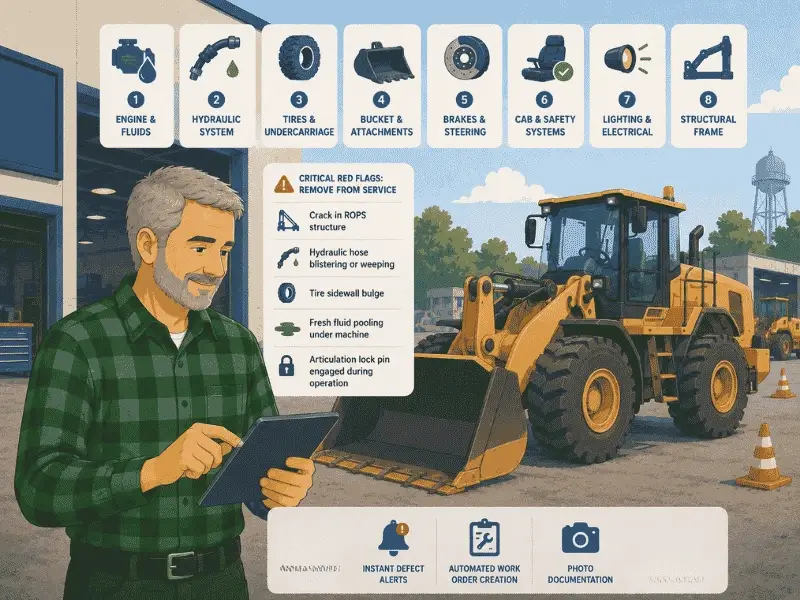
A driver walk-around should cover the vehicle areas most likely to affect safe operation. The exact checks can vary by vehicle and inspection requirements, but drivers commonly examine the following before starting a trip:
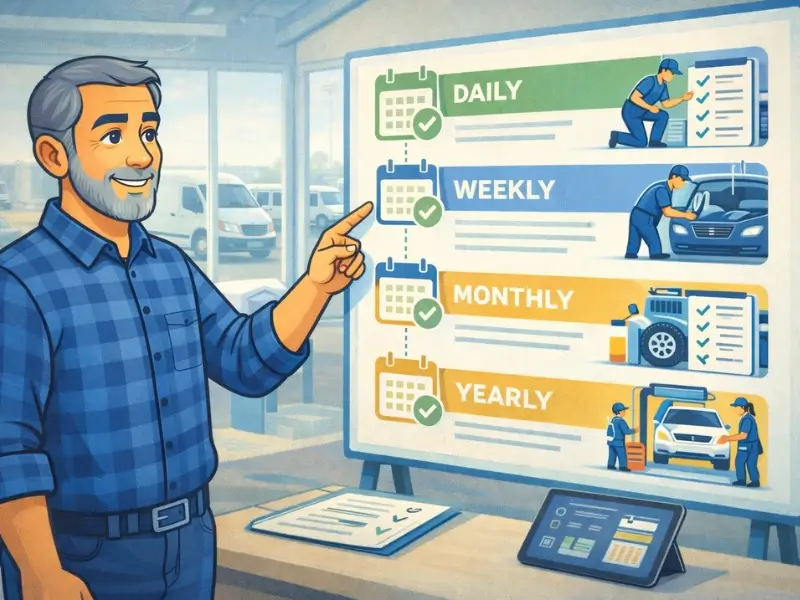
Daily Pre-Trip Checklist
A daily pre-trip inspection should be performed before the vehicle enters service. It takes only a few minutes but plays a critical role in preventing incidents during the day.
The inspection should follow a consistent structure so drivers know exactly what to check and fleet managers can compare results across vehicles.
Exterior Walk-Around
Drivers should begin with a slow walk around the vehicle.
Key items to check include:
- Body damage, dents, or loose components
- Windshield and windows for cracks or visibility issues
- Side and rear mirrors positioned correctly and free of damage
- License plates present, visible, and secure
This step often reveals damage from prior shifts or overnight parking incidents that may otherwise go unreported.
Lights and Signals
All lighting systems must be functional before departure:
- Headlights (high and low beam)
- Tail lights and brake lights
- Turn signals and hazard lights
- Reverse lights or audible backup alerts, if equipped
Lighting faults are one of the most common causes of roadside citations—and one of the easiest to prevent.
Tires and Wheels
Tire issues are a leading cause of breakdowns.
Drivers should check:
- Proper tire inflation (visually or with a gauge where required)
- Tread condition and visible damage
- Sidewall bulges or cuts
- Lug nuts and wheel condition
- Spare tire availability, if applicable
Catching a tire problem early can prevent blowouts and costly roadside assistance calls.
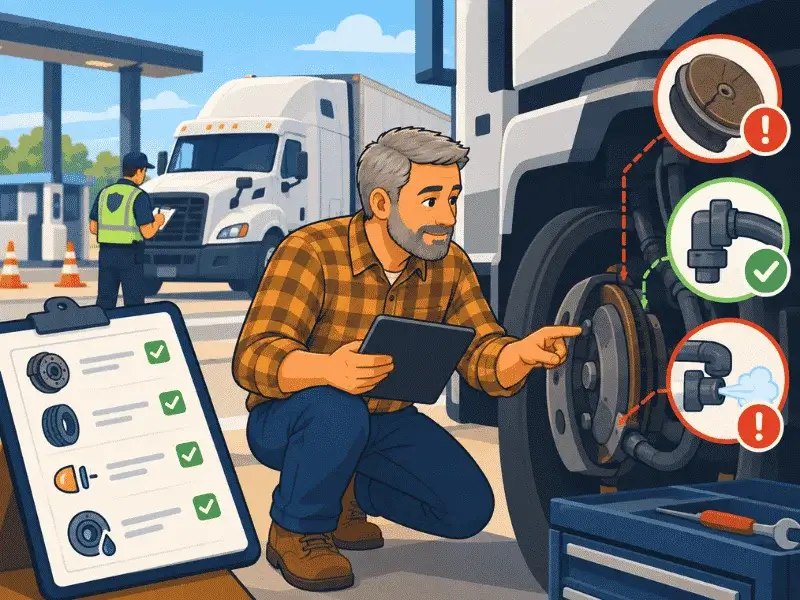
Fluid Leaks and Under-Vehicle Checks
Before moving on, drivers should glance under the vehicle to look for:
- Oil, coolant, or fuel leaks
- Hanging hoses or visible damage
Under-vehicle checks often reveal problems that are not visible once the engine warms up or the vehicle starts moving.
Cab and Safety Equipment
Inside the vehicle, drivers should confirm:
- Seatbelts function correctly
- Dashboard warning lights turn off after startup
- Horn is operational
- Windshield wipers and washers work
- Emergency items are present (first-aid kit, reflective triangles, fire extinguisher where required)
A calm, prepared driver starts with a well-inspected cab.
End-of-Day Inspection
End-of-day inspections are just as important as morning checks. They capture issues that developed during operations and provide maintenance teams time to act before the next shift.
What Drivers Should Review
At the end of each shift, drivers should report:
- New noises while driving
- Steering, braking, or transmission concerns
- Warning lights that appeared during the day
- Damage caused by road debris, weather, or minor collisions
- Fuel, oil, or fluid irregularities
End-of-day inspections help prevent the next driver from inheriting unresolved problems and protect drivers from being blamed for existing damage.
Why End-of-Day Reporting Matters
Small issues grow when ignored overnight. Reporting them early allows maintenance teams to plan repairs instead of reacting to emergencies. It also builds a clear inspection trail that protects both drivers and the company.
💡💡Pre-trip inspections help drivers identify vehicle issues before beginning a trip. Post-trip inspections can provide an opportunity to record defects identified during or after vehicle use, depending on the fleet's procedures and applicable requirements.
For commercial motor vehicles subject to applicable requirements, these processes may also involve a Driver Vehicle Inspection Report (DVIR).
What Should Drivers Record During an Inspection?
When a driver finds a defect, the inspection should capture enough information for the fleet team to understand the issue. Depending on the inspection process, this can include:
- The inspection item that failed
- A description or note about the defect
- A photo showing the vehicle condition
- The vehicle and driver associated with the inspection
- The date and time of the inspection
Photo evidence can be especially useful for visible damage or defects because it gives fleet managers additional context when reviewing the reported issue.
Photo Capture Best Practices
Written checklists tell part of the story. Photos show reality.
Photo capture has become a best practice in driver inspections because it:
- Confirms reported defects
- Reduces disputes about vehicle condition
- Improves accountability
- Speeds up maintenance decisions
What Drivers Should Photograph
Best practice is to capture photos of:
- Damage to body panels or glass
- Tire defects
- Dashboard warning lights
- Fluid leaks
- Secured cargo or trailer connections
Photos should be clear, well-lit, and specific. A quick photo at the time of inspection saves time later and avoids miscommunication.
Consistency Is Key
When every driver captures photos in the same way, fleet managers gain reliable visibility across the entire fleet. This consistency is nearly impossible to achieve with paper inspections but becomes standard with digital tools.
For fleet managers, a clear inspection workflow makes it easier to see failed inspections, review reported defects, and follow up on issues before the vehicle returns to service.
Manual vs Digital Driver Inspections
Many fleets still rely on paper checklists. While familiar, they come with limitations.
Paper inspections are often:
- Incomplete or rushed
- Difficult to read
- Hard to archive and analyze
- Slow to trigger maintenance actions
Digital DVIR inspections address these gaps by guiding drivers step-by-step and automatically sharing results with fleet managers and maintenance teams.
Benefits of Digital Inspections
Digital inspection tools allow fleets to:
- Enforce standardized inspection workflows
- Require completion before vehicle use
- Attach photos directly to inspection items
- Flag critical defects instantly
- Maintain searchable inspection histories
Over time, this data supports smarter preventive maintenance and fewer unplanned failures.
Inspection Responsibilities: Drivers vs Fleet Managers
A strong inspection process clearly defines roles.
Driver Responsibilities
- Perform inspections honestly and consistently
- Report defects in real time
- Attach photos where required
- Avoid operating unsafe vehicles
Fleet Manager Responsibilities
- Provide clear inspection standards
- Review inspection data daily
- Escalate critical issues
- Ensure timely repairs
- Monitor compliance trends
When both sides understand their role, inspections become a safety system—not a paperwork exercise.
Driver Accountability in Fleet Inspections
A consistent driver inspection process creates a clear record of who completed the inspection and what was reported. This helps fleet managers understand whether required inspections are being completed and provides context when a vehicle defect is identified.
The goal is not simply to hold drivers responsible for defects. It is to create a consistent process for identifying, documenting, and communicating vehicle condition across the fleet.
Download Our Vehicle Inspection Resources For Free!
Prevent costly breakdowns and maximize uptime with our free checklist.
Download
Industries That Benefit Most from Driver Inspection Checklists
While all fleets benefit from inspections, some industries rely on them heavily due to safety risk and regulatory exposure.
Delivery Fleets
Frequent stops, high mileage, and tight schedules increase wear and tear. Daily inspections keep vehicles reliable and routes uninterrupted.
School Bus Fleets
Passenger safety is non-negotiable. Inspections ensure vehicles are safe for children and meet strict operating standards.
Service and Utility Fleets
Vehicles often carry tools and equipment. Inspections confirm cargo security and prevent equipment-related hazards.
Inspection Checklist Overview Table
How Simply Fleet Makes Driver Inspections Easier
Inspection success depends on ease of use. Drivers are more likely to complete inspections when the process is fast and intuitive.
Simply Fleet’s vehicle inspection feature helps fleets:
- Digitize DVIR processes
- Guide drivers through daily inspections
- Capture photos and notes in real time
- Instantly notify managers of defects
- Maintain inspection history for audits and analysis
Paper checklists slow teams down. Missed inspections cost money.
Simply Fleet helps drivers complete inspections faster and gives fleet managers real-time visibility into vehicle health.
Start building a safer, more reliable fleet today with digital driver inspections.