




Why the Class 8 Pre-Buy Window is Closed and How to Pivot
Key Takeaways
- Fleet businesses work with multiple vendors, making invoice management complex.
- A structured workflow (including vendor onboarding, purchase orders, invoice verification, approval processes, and payment reconciliation) helps prevent errors, control costs, and maintain strong vendor relationships.
- Automation tools and centralized systems can significantly improve efficiency and financial transparency in fleet operations.
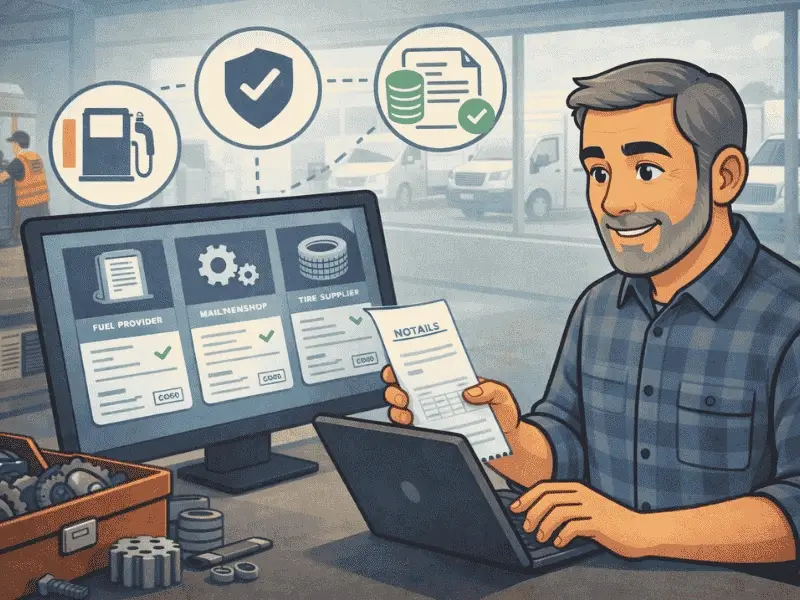
Fleet operations rely on a large ecosystem of vendors like fuel providers, maintenance workshops, tire suppliers, insurance companies, leasing partners, and equipment vendors. Each of these partners generates invoices that must be verified, approved, and paid on time.
Without a structured system, vendor and invoice management can quickly become complicated. Lost invoices, delayed approvals, duplicate payments, and poor vendor visibility can increase operational costs and strain vendor relationships.
A clear vendor and invoice process for fleets helps businesses maintain financial control, ensure transparency, and improve operational efficiency. This guide explains the complete process (from vendor onboarding to invoice reconciliation) and how fleet companies can manage it efficiently.
Why Vendor and Invoice Management Is Critical for Fleet Operations
Fleet companies generate a high volume of invoices every month. Maintenance services, spare parts, fuel purchases, toll payments, and leasing costs all create recurring financial transactions.
Without an organized system, several problems can arise:
- Financial leakages can occur due to duplicate or inaccurate invoices. When invoices are manually processed across different departments, duplicate payments or incorrect billing may go unnoticed. This leads to unnecessary expenses and accounting discrepancies.
- Delayed payments can damage vendor relationships. Vendors such as repair workshops and spare part suppliers depend on timely payments to maintain their operations. Late payments may lead to service delays or refusal to prioritize urgent fleet repairs.
- Lack of visibility into operational costs can impact decision-making. If invoice data is scattered across spreadsheets and emails, it becomes difficult to understand how much is being spent on maintenance, fuel, or vehicle assets.
An efficient vendor and invoice workflow helps fleet companies maintain transparency, control costs, and strengthen vendor partnerships.
Understanding the Fleet Vendor and Invoice Workflow
The vendor and invoice lifecycle in fleet operations generally follows a structured financial process. Each stage ensures that only valid invoices are paid and recorded properly.
Typical Vendor and Invoice Workflow
This process ensures financial discipline and reduces the risk of billing errors.
Step-by-Step Vendor and Invoice Process for Fleet Operations
Step 1: Vendor Onboarding and Registration
The vendor lifecycle begins with onboarding. Before any invoices are processed, the vendor must be registered in the company’s system.
- Vendor identification and company details: This includes the company name, address, registration documents, and contact details. Proper documentation ensures compliance with financial and tax regulations.
- Tax and compliance information: Fleet companies must collect tax identifiers, bank account details, and regulatory information to ensure invoices are processed legally and accurately.
- Payment terms and contractual agreements: The vendor agreement usually specifies payment timelines, service rates, and conditions. Clear terms help avoid disputes when invoices are submitted.
Once the vendor is verified and approved, the finance team creates a vendor record in the system, allowing all future invoices to be linked to that vendor profile.
Step 2: Purchase Orders for Fleet Services
Many fleet purchases begin with a purchase order (PO). A purchase order acts as an official request for goods or services and sets expectations for pricing and quantity.
- They create a clear agreement between the fleet company and the vendor. A PO outlines service details, quantity, cost, and expected delivery timeline, ensuring both parties are aligned.
- They help control spending across departments. Without a purchase order process, employees may order services without proper budget approvals.
- They make invoice verification easier. When the vendor submits an invoice, it can be matched against the purchase order to ensure accuracy.
Common fleet-related purchase orders include:
- Vehicle maintenance orders
- Tire replacements
- Spare parts purchases
- GPS device installation
- Asset purchases such as tools and equipment
Step 3: Service Delivery and Confirmation
Before an invoice can be processed, the fleet company must confirm that the goods or services have been delivered.
Verification Methods Used in Fleet Operations:
- Service completion reports from workshops: When a vehicle is repaired or serviced, a job card or service report confirms that the work has been completed.
- Delivery confirmations for spare parts or equipment: Goods received notes or delivery slips confirm that the purchased items were delivered successfully.
- Fuel or toll transaction reports: Digital fuel card systems or toll tracking platforms provide transaction data that verifies expenses.
Service verification is an essential step because it ensures the company pays only for services that were actually performed.
Download Our Free Fleet Management Resources Now!
Prevent costly breakdowns and maximize uptime with our free checklist.
Download
Step 4: Invoice Submission by Vendors
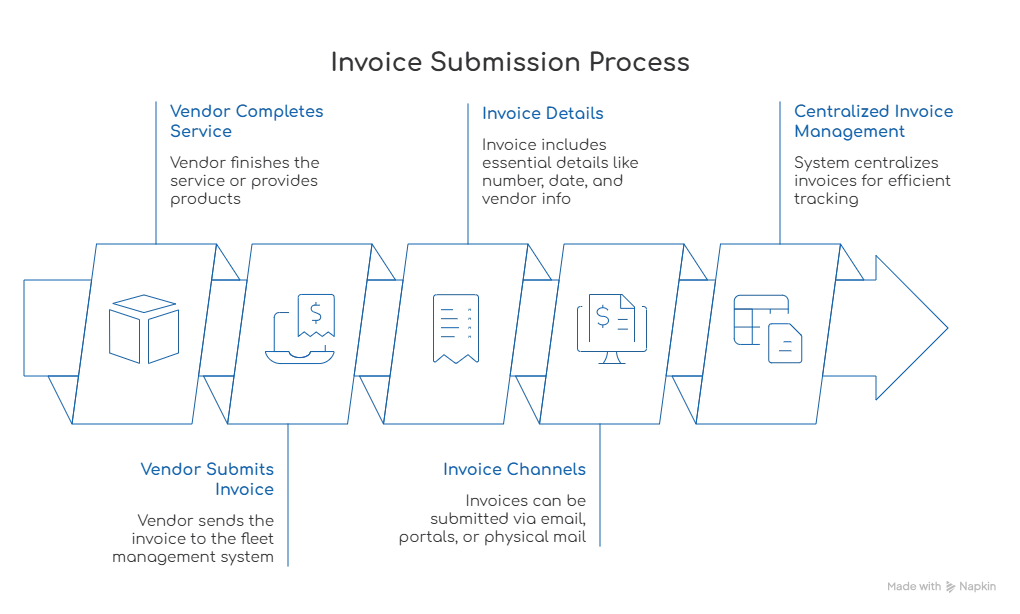
After completing the service, vendors submit invoices for payment.
A standard vendor invoice typically includes:
- Invoice number and date
- Vendor details
- Description of services or products
- Quantity and pricing information
- Tax breakdown
- Total payable amount
- Payment terms
Invoices may be submitted through multiple channels:
- Email invoices (PDF format)
- Vendor portals
- ERP or accounting systems
- Physical invoices
Centralizing invoice submission helps finance teams track all invoices efficiently.
Step 5: Invoice Verification and Matching
Invoice verification is one of the most important stages in the vendor payment process.
Fleet companies often use three-way matching to validate invoices.
Three-Way Matching Process
- Purchase Order – Confirms what was ordered
- Service or Delivery Record – Confirms what was received
- Vendor Invoice – Confirms what is being billed
If all three documents match, the invoice moves forward for approval.
Common Invoice Issues Detected During Verification
- Quantity differences between invoice and purchase order
- Incorrect pricing or tax calculation
- Duplicate invoices submitted by vendors
- Missing purchase order reference
Resolving these discrepancies early prevents financial errors and disputes.
Step 6: Invoice Approval Workflow
After verification, the invoice enters an approval workflow.
Approval ensures that payments are authorized and aligned with budgets.
Typical Fleet Approval Structure:
- Operational supervisors confirm that services were delivered. For example, a fleet manager may confirm that vehicle maintenance was completed before approving payment.
- Department managers verify the business necessity of the expense. They ensure that the expense aligns with operational needs and budgets.
- Finance teams review compliance and accounting accuracy. The finance department verifies tax details, vendor records, and payment terms.
A structured approval hierarchy ensures accountability and reduces financial risks.
Step 7: Payment Processing
Once the invoice is approved, the finance team schedules the payment according to vendor agreements.
Common Fleet Payment Methods:
- Bank transfers
- Electronic payments
- Automated payment systems
- Vendor payment portals
Timely payments are essential because vendors such as repair workshops and spare part suppliers play a critical role in keeping the fleet operational.
Late payments may result in delayed services or reduced vendor priority.
Step 8: Accounting and Financial Reconciliation
After payment is completed, the transaction is recorded in the company’s accounting system.
Reconciliation Activities Include:
- Vendor ledger reconciliation: Ensures that vendor balances match invoice and payment records.
- Bank statement verification: Confirms that payments recorded in the system match bank transactions.
- Expense categorization for financial reporting: Expenses are categorized into maintenance, fuel, assets, or operational costs.
Regular reconciliation improves financial transparency and supports accurate reporting.
Common Challenges in Fleet Invoice Management
Fleet companies often face operational challenges due to the complexity of vendor transactions.
High Vendor Volume
Fleet businesses typically work with hundreds of vendors across different regions. Managing invoices manually can quickly become overwhelming.
Manual Processing Errors
Manual data entry increases the risk of duplicate payments, incorrect billing entries, and lost invoices.
Lack of Cost Visibility
Without centralized systems, finance teams may struggle to track how much is being spent on specific assets, vehicles, or maintenance activities.
Delayed Approvals
When invoices require multiple approvals across departments, the process can become slow and inefficient.
Best Practices for Managing Fleet Vendor Invoices
Fleet companies can improve efficiency by implementing structured financial processes.
Centralize Invoice Intake
All vendor invoices should be submitted to a single system or email address. This ensures that no invoices are lost and makes tracking easier.
Standardize Vendor Invoice Formats
Vendors should follow a standardized invoice format that includes PO references, service descriptions, and tax details.
Automate Invoice Processing
Automation tools can extract invoice data, detect duplicates, and match invoices with purchase orders automatically.
Maintain Regular Vendor Reconciliation
Monthly vendor reconciliations help identify discrepancies early and maintain accurate financial records.
How Fleet Management Software Improves Vendor and Invoice Processes
Fleet management software can significantly improve the efficiency of vendor and invoice workflows.
These systems help businesses:
- Track vendor services and associated costs
- Maintain centralized records for invoices and payments
- Monitor asset expenses and maintenance history
- Improve visibility into operational spending
By integrating operational and financial data, fleet companies gain better control over their vendor ecosystem.
Improve Fleet Visibility with Simply Fleet
Vendor and invoice management is a critical financial function in fleet operations. With multiple vendors, frequent maintenance activities, and recurring expenses, fleet companies must maintain structured processes to prevent errors and control costs.
A well-defined workflow (from vendor onboarding and purchase orders to invoice verification and reconciliation) ensures transparency and operational efficiency. Companies that implement centralized systems and automation tools can significantly reduce manual work while improving financial accuracy.
Simply Fleet helps fleet businesses monitor equipment usage, track maintenance costs, and maintain clear records of vendor-related expenses. With better visibility into asset usage and service history, finance and operations teams can make faster, data-driven decisions.
Explore how Simply Fleet can help streamline your fleet operations and financial workflows.