



Construction Equipment Downtime Cost: How to Calculate It (and Cut It)
Key Takeaways
- Fuel efficiency is the most critical KPI for monitoring vehicle performance and fuel usage.
- Fuel cost per mile helps fleets understand the true operating cost of vehicles.
- High idle time leads to wasted fuel and unnecessary expenses.
- Fuel variance helps detect fuel theft, misuse, or inaccurate reporting.
- Fleet management software helps track fuel KPIs automatically and optimize operations.
Fuel is one of the largest operational expenses for any fleet. Whether managing delivery vans, service vehicles, construction equipment, or long-haul trucks, fuel costs can quickly escalate without proper monitoring.
For many fleets, fuel expenses represent 25–40% of total operating costs. Even a small improvement in fuel efficiency can translate into thousands of dollars in savings every year.
This is where Fuel Key Performance Indicators (KPIs) become essential. Fuel KPIs help fleet managers track fuel usage, detect inefficiencies, monitor driver behavior, and identify opportunities to reduce costs.
This guide explains the most important fuel KPIs for fleets, how they are measured, and how fleet managers can use them to improve performance and profitability.
Why Fuel KPIs Matter for Fleet Management
Fleet managers often track fuel expenses, but raw fuel spending alone does not reveal the full picture. Without analyzing performance indicators, it becomes difficult to understand why fuel costs are increasing.
Fuel KPIs provide actionable insights that help answer questions such as:
- Which vehicles consume the most fuel?
- Are certain drivers using more fuel than others?
- Are inefficient routes increasing fuel consumption?
- Is fuel being wasted through excessive idling?
Tracking the right KPIs allows fleet managers to:
- Identify inefficient vehicles and replace them when needed
- Improve driver behavior through data-backed coaching
- Reduce operational costs through better route planning
- Detect fuel misuse or theft
Over time, fleets that consistently monitor fuel KPIs can significantly improve both cost control and operational efficiency.
Key Fuel KPIs Every Fleet Should Track
Not all KPIs carry the same importance. The following indicators are among the most useful metrics for monitoring fuel performance in fleet operations.
1. Fuel Efficiency (Miles per Gallon / Kilometers per Liter)
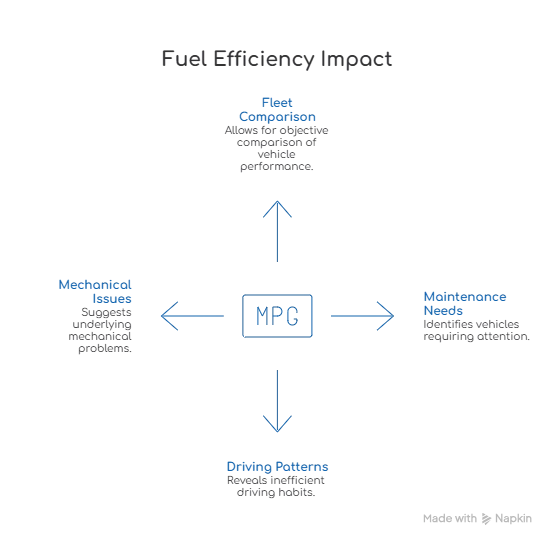
Fuel efficiency measures how far a vehicle can travel using a certain amount of fuel.
This KPI is one of the most fundamental indicators of vehicle performance.
Formula
Distance Traveled ÷ Fuel Consumed
For example, if a vehicle travels 400 miles using 40 gallons of fuel, the fuel efficiency is 10 miles per gallon (MPG).
Why this KPI matters
- It helps compare performance across vehicles in the fleet
- It highlights vehicles that require maintenance or inspection
- It helps fleet managers identify inefficient driving patterns
Low fuel efficiency may indicate mechanical issues such as engine problems, poor tire pressure, or outdated vehicles.
2. Fuel Cost per Mile
Fuel cost per mile measures how much fuel expense is required to operate a vehicle over a certain distance.
This KPI helps fleets understand the real cost of operating each vehicle.
Formula
Fuel Cost per Mile = Total Fuel Cost ÷ Total Distance Traveled
For example:
$2,000 fuel cost ÷ 10,000 miles = $0.20 per mile
Why this KPI matters
- It helps monitor the impact of rising fuel prices
- It enables better budgeting and forecasting
- It allows comparison of vehicle performance across the fleet
Vehicles with unusually high fuel cost per mile may require maintenance or replacement.
3. Idle Time Percentage
Idle time refers to the amount of time a vehicle's engine runs while the vehicle is not moving.
Excessive idling wastes fuel and increases engine wear.
Formula
Idle Time % = (Idle Time ÷ Engine Run Time) × 100
For example, if a vehicle idles for 1.5 hours during a 6-hour operating period, the idle percentage is 25%.
Why monitoring idle time is important
- Idling consumes fuel without generating revenue
- It increases vehicle maintenance costs
- It contributes to unnecessary emissions
Reducing idle time is one of the fastest ways fleets can reduce fuel expenses.
4. Fuel Consumption Rate
Fuel consumption rate measures how much fuel is used over a certain distance or time period.
Common formats include:
- Gallons per mile
- Liters per 100 kilometers
- Fuel consumption per operating hour
Why this KPI matters
Fuel consumption rate helps fleet managers identify:
- inefficient vehicles
- poorly optimized routes
- vehicles requiring maintenance
If fuel consumption increases suddenly, it may signal mechanical issues or operational inefficiencies.
Download Our Free Fleet Management Resources Now!
Prevent costly breakdowns and maximize uptime with our free checklist.
Download
5. Fuel Variance
Fuel variance measures the difference between expected fuel usage and actual fuel consumption.
Formula
Fuel Variance = Expected Fuel Usage − Actual Fuel Usage
For example, if a vehicle should consume 100 gallons based on its mileage, but the fuel log shows 120 gallons, there is a variance of 20 gallons.
Why fuel variance is important
Monitoring this KPI helps detect:
- fuel theft
- fuel card misuse
- incorrect fuel reporting
- operational inefficiencies
Fuel variance is especially useful for fleets operating in regions where fuel tracking is difficult.
6. Empty Miles (Deadhead Percentage)
Empty miles refer to distance traveled without carrying cargo or passengers.
This metric is particularly important for logistics and transportation fleets.
Formula
Empty Miles % = (Empty Distance ÷ Total Distance) × 100
Why this KPI matters
High empty mileage leads to wasted fuel and reduced profitability.
Monitoring this KPI helps fleets:
- improve route planning
- optimize load distribution
- reduce unnecessary travel
Lower empty mileage means higher operational efficiency.
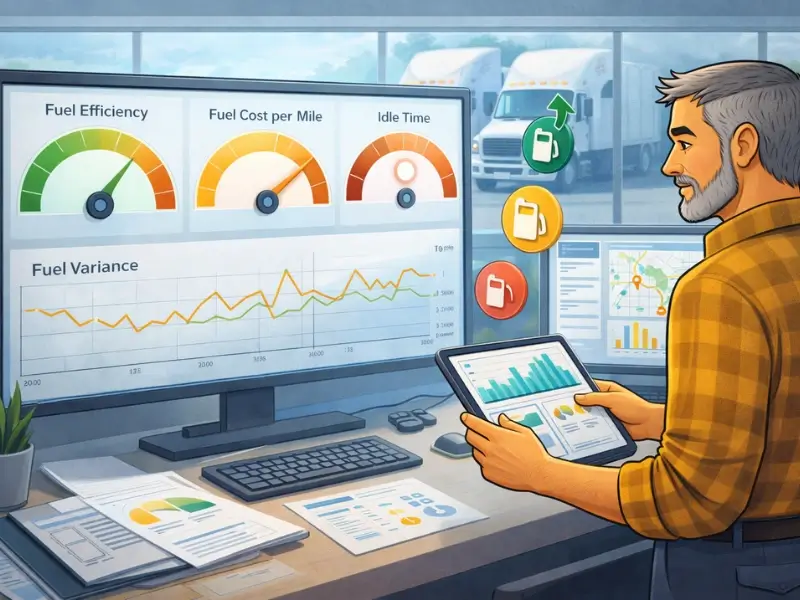
Example Fuel KPI Dashboard
Fleet managers often track multiple KPIs simultaneously using a dashboard.
Using a centralized dashboard allows fleet managers to identify patterns and respond quickly to inefficiencies.
Best Practices for Managing Fuel KPIs
Tracking KPIs alone is not enough. Fleet managers must combine data analysis with operational improvements.
Implement telematics and fuel tracking systems
Manual fuel logs are often inaccurate and time-consuming. Telematics systems automatically track fuel consumption, idle time, and vehicle performance.
This allows fleet managers to monitor real-time data and identify inefficiencies quickly.
Train drivers on fuel-efficient driving
Driver behavior has a major impact on fuel consumption.
Fleet managers should educate drivers on practices such as:
- maintaining consistent speeds
- avoiding harsh acceleration and braking
- reducing unnecessary idling
These small behavioral changes can significantly reduce fuel consumption across the fleet.
Optimize routes
Poor route planning leads to longer travel times, increased idle periods, and higher fuel usage.
Using route optimization tools helps fleets:
- avoid traffic congestion
- minimize travel distances
- improve delivery efficiency
Better routes mean lower fuel consumption and faster operations.
Monitor vehicle maintenance
Poorly maintained vehicles consume more fuel.
Regular maintenance should include:
- tire pressure checks
- engine inspections
- air filter replacements
- fuel system checks
Well-maintained vehicles operate more efficiently and use less fuel.
How Technology Improves Fuel KPI Tracking
Modern fleet management systems make it easier to track and analyze fuel KPIs.
Instead of relying on spreadsheets or manual reports, fleets can use software platforms that provide:
- automated fuel tracking
- real-time vehicle data
- driver performance monitoring
- route optimization insights
These tools help fleet managers make data-driven decisions that reduce fuel costs and improve operational efficiency.
Optimize Fuel Performance with Simply Fleet
Managing fuel KPIs manually can be time-consuming and prone to errors. Fuel costs will always be a major concern for fleet operators. However, fleets that actively track and manage fuel KPIs gain a strong advantage.
Simply Fleet’s Fleet Management Software helps fleets monitor fuel consumption, track vehicle performance, and analyze key KPIs in one centralized dashboard.
With Simply Fleet, you can:
- Track fuel usage across all vehicles
- Monitor idle time and driver behavior
- Detect fuel anomalies and reduce fuel theft
- Generate actionable fuel performance reports
Start using Simply Fleet’s Fleet Management Software to gain better control over fuel costs and improve fleet efficiency.