




Construction Equipment Downtime Cost: How to Calculate It (and Cut It)
Key Takeaways
- Fuel KPIs help fleet managers control one of their biggest costs. Track fuel efficiency, fuel cost per mile, idle time, fuel variance, and driver behavior metrics.
- Set benchmarks, monitor trends monthly, and use insights for driver coaching, preventive maintenance, and route optimization.
- Consistent KPI tracking leads to measurable cost savings and better fleet performance.
Fuel is one of the largest operating expenses for any fleet. Whether you manage delivery vans, construction equipment, service trucks, or a mixed fleet, even small improvements in fuel efficiency can result in significant annual savings.
Tracking the right fuel KPIs (Key Performance Indicators) helps fleet managers move beyond guesswork. Instead of reacting to rising fuel bills, you gain visibility into where fuel is being used, wasted, or mismanaged. This practical guide explains which fuel KPIs matter most, how to calculate them, and how to use them to improve fleet performance.
Why Fuel KPIs Matter for Fleet Management
Fuel costs fluctuate. But inefficiency is controllable.
If you only monitor total fuel spending, you miss the bigger picture. Rising costs might be caused by poor routing, excessive idling, aggressive driving, maintenance issues, or even fuel theft. Fuel KPIs break these factors into measurable insights.
When properly tracked, fuel KPIs help you:
- Identify underperforming vehicles before problems escalate. A drop in fuel efficiency often signals mechanical issues such as tire pressure problems, clogged filters, or engine inefficiencies.
- Coach drivers using objective data. Instead of general advice, you can show drivers exactly how idling or harsh acceleration impacts fuel consumption.
- Set realistic improvement targets. Measurable KPIs allow you to define goals like reducing idle time by 10 percent over three months.
- Protect margins in price-sensitive industries. Even small improvements in cost per mile can significantly improve profitability.
Core Fuel KPIs Every Fleet Should Track

Not every metric is equally useful. Below are the most practical fuel KPIs that provide real operational value.
Fuel Efficiency (MPG or Miles per Gallon)
Fuel efficiency measures how far a vehicle travels per unit of fuel.
Formula:
Total miles driven ÷ total gallons consumed
This is the foundation of all fuel performance tracking. If MPG drops unexpectedly, investigate:
- Maintenance issues such as misaligned wheels or low tire pressure.
- Increased idling time.
- Route inefficiencies.
- Aggressive driving habits.
Track fuel efficiency at both the fleet level and individual vehicle level. Comparing similar vehicles helps identify outliers that need attention.
Fuel Cost per Mile
Fuel prices change. Fuel efficiency alone does not tell you the cost impact. Fuel cost per mile normalizes expenses against distance traveled.
Formula:
Total fuel cost ÷ total miles driven
This KPI provides a clearer picture of how fuel affects your operating costs. It allows you to compare different vehicle types, routes, or time periods without being misled by fuel price volatility.
Idle Time Percentage
Idling burns fuel without moving the vehicle. Excessive idling increases fuel consumption, engine wear, and emissions.
Formula:
Idle hours ÷ total engine hours × 100
Monitoring idle time helps you:
- Identify drivers who leave engines running unnecessarily.
- Reduce fuel waste during loading and unloading.
- Improve compliance with company fuel policies.
Even reducing idle time by a few minutes per shift can create substantial savings across an entire fleet.
Fuel Variance or Fuel Loss
Fuel variance compares purchased fuel against actual consumption.
If your records show more fuel purchased than consumed, you may have:
- Fuel theft.
- Fuel card misuse.
- Data entry errors.
- Leaks or mechanical problems.
Tracking variance ensures fuel accountability and helps prevent hidden losses that quietly erode profitability.
Fuel Cost per Revenue Hour
For service fleets or equipment-heavy operations, this KPI connects fuel consumption to productivity.
Formula:
Total fuel cost ÷ billable hours
This metric shows whether fuel expenses are aligned with revenue-generating activity. It is especially useful for construction fleets, field service teams, and heavy equipment operations.
Fuel KPIs at a Glance
Download Our Free Fleet Management Resources Now!
Prevent costly breakdowns and maximize uptime with our free checklist.
Download
Supporting KPIs That Influence Fuel Performance
Fuel metrics rarely operate in isolation. Supporting KPIs provide context.
Driver Behavior Metrics
Driving habits have a direct impact on fuel consumption. Monitor:
- Harsh acceleration and braking, which increase fuel burn and vehicle wear.
- Excessive speeding, which reduces fuel efficiency and increases safety risk.
- Rapid gear changes or poor shift timing in manual fleets.
Coaching drivers based on data creates measurable improvement rather than relying on general reminders.
Route Efficiency
Poor routing leads to unnecessary miles. Even minor route improvements reduce fuel usage.
Analyze:
- Repeated backtracking.
- Traffic-heavy zones.
- Suboptimal delivery sequencing.
Route optimization software can significantly improve fuel performance across large fleets.
Preventive Maintenance Compliance
A poorly maintained vehicle consumes more fuel. Track:
- Tire pressure checks.
- Oil change intervals.
- Air filter replacement schedules.
Maintenance compliance supports stable MPG and prevents fuel inefficiency caused by neglect.
How to Set Effective Fuel KPI Benchmarks
Collecting data is only useful if you act on it.
Establish a Baseline
Track fuel metrics for 30 to 60 days without making major operational changes. This gives you a realistic starting point.
Set Specific Targets
Examples of effective targets include:
- Reduce idle time from 18 percent to 12 percent within three months.
- Improve average MPG by 5 percent year over year.
- Reduce fuel cost per mile by 8 percent through routing optimization.
Targets should be achievable yet meaningful.
Monitor Trends, Not Just Snapshots
One week of data does not reveal a trend. Review KPIs monthly and quarterly. Look for consistent patterns rather than reacting to short-term fluctuations.
Turning Fuel KPI Insights into Action
Data without action creates no value. Here is how to convert insights into measurable improvements.
Driver Coaching Programs
Share fuel reports with drivers. Transparency builds accountability.
Instead of saying, “Reduce idling,” show how idling costs the company and how improvements benefit both performance and job stability. Reward top-performing drivers to reinforce positive driver behavior.
Route Optimization
Use GPS and telematics insights to redesign inefficient routes. Shorter routes and better scheduling reduce both fuel costs and vehicle wear.
Even small route changes can save thousands of gallons annually in larger fleets.
Maintenance Interventions
If a vehicle’s MPG drops suddenly, schedule inspections immediately. Fuel efficiency often signals deeper mechanical issues.
Proactive maintenance reduces downtime and prevents long-term damage.
Technology Integration
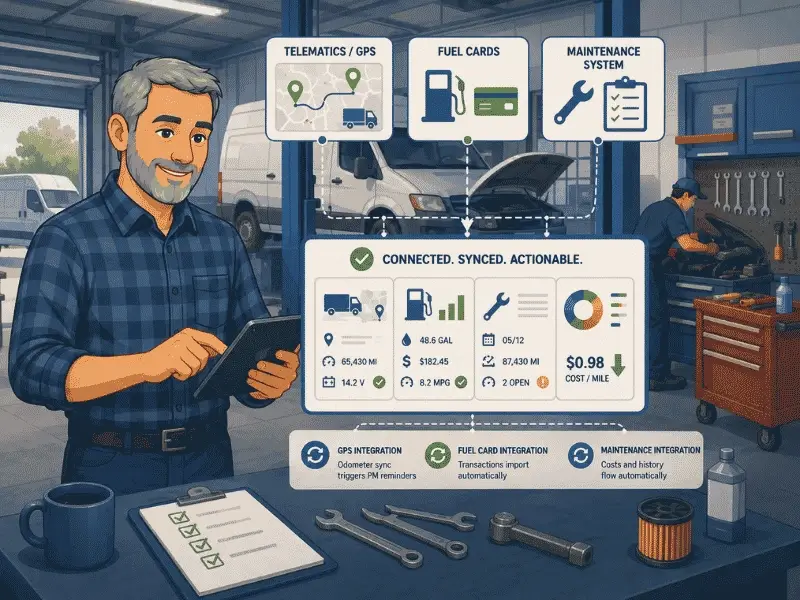
Manual tracking creates errors and delays. Automated telematics systems provide real-time fuel data, engine diagnostics, and driver behavior metrics.
Digital dashboards allow managers to spot anomalies immediately instead of waiting for monthly reports.
Common Mistakes When Tracking Fuel KPIs
Even experienced fleet managers make these mistakes:
- Focusing only on total fuel spend instead of per-mile metrics.
- Ignoring vehicle-level data and analyzing only fleet averages.
- Collecting data but failing to act on it.
- Setting unrealistic targets that discourage teams.
- Not integrating fuel metrics with maintenance and driver performance systems.
Avoiding these pitfalls ensures KPI tracking produces real improvements.
Take Control with Simply Fleet
Fuel KPIs provide the clarity fleet managers need to control costs and improve operational efficiency. Establish a baseline, set realistic goals, monitor trends, and take action. With the right tools and processes in place, fuel performance can become a competitive advantage rather than a constant expense.
Fuel KPIs are only effective when supported by reliable tracking systems.
Simply Fleet helps fleet managers monitor equipment usage, prevent asset loss, and integrate operational data into one centralized dashboard. By combining fuel performance insights with asset and maintenance tracking, Simply Fleet empowers you to reduce costs, improve accountability, and operate smarter.
Start optimizing your fleet today with Simply Fleet.