





Why the Class 8 Pre-Buy Window is Closed and How to Pivot
Key Takeaways
- Manual fleet management has low upfront costs but leads to higher long-term expenses due to manual labor, errors, and inefficiencies.
- Automated fleet management systems require an initial investment but significantly reduce fuel, maintenance, and administrative costs over time.
- Preventive maintenance through automation helps avoid breakdowns and costly emergency repairs.
Automated systems provide better visibility into fuel usage, vehicle performance, and utilization, enabling data-driven decisions. - For growing fleets, automated fleet management delivers better scalability, cost control, and long-term ROI than manual methods.
Fleet management plays a critical role in controlling operating expenses, improving efficiency, and ensuring business continuity. Yet, many companies still struggle to decide whether to continue with manual fleet management methods or invest in automated fleet management systems.
At first glance, manual fleet management appears economical. It involves familiar tools such as spreadsheets, paper records, and basic communication methods. However, when fleets grow and operations become more complex, the true cost of managing vehicles manually starts to surface. Automated fleet management systems, on the other hand, require an upfront investment but promise long-term cost savings, better control, and scalability.
This article takes a realistic and cost-focused look at manual versus automated fleet management to help businesses understand where their money is truly going.
What Is Manual Fleet Management?
Manual fleet management refers to handling fleet operations without specialized software. It relies heavily on human effort and basic tools to track vehicles, drivers, fuel usage, maintenance schedules, and compliance requirements.
In a manual setup, fleet managers typically maintain records using spreadsheets or notebooks, follow up on servicing dates through calendar reminders, and rely on drivers to submit logs and reports. While this approach can work for very small fleets, it becomes increasingly difficult to manage as the number of vehicles and drivers grows.
The biggest appeal of manual fleet management is its low initial cost. There is no software subscription, no implementation process, and minimal technical training required. However, the absence of automation creates inefficiencies that gradually increase operational expenses.
Cost Implications of Manual Fleet Management
Manual fleet management often hides its true costs behind daily routines. Administrative work consumes a significant amount of time, especially when tracking fuel expenses, mileage, service history, and compliance documents. As fleets expand, businesses frequently need to hire additional administrative staff just to keep records up to date.
Another major cost factor is human error. Manual data entry leads to inaccurate fuel logs, missed maintenance schedules, and incomplete records. These errors can result in unnecessary repairs, unexpected breakdowns, compliance penalties, and lost productivity.
Maintenance under manual systems is largely reactive. Vehicles are often serviced only after issues arise, leading to higher repair costs and increased downtime. Without reliable data, it is also difficult to analyze vehicle performance or identify inefficiencies such as fuel wastage or underutilized assets.
While manual fleet management may appear inexpensive in the short term, its long-term financial impact is often underestimated.
What Is Automated Fleet Management?
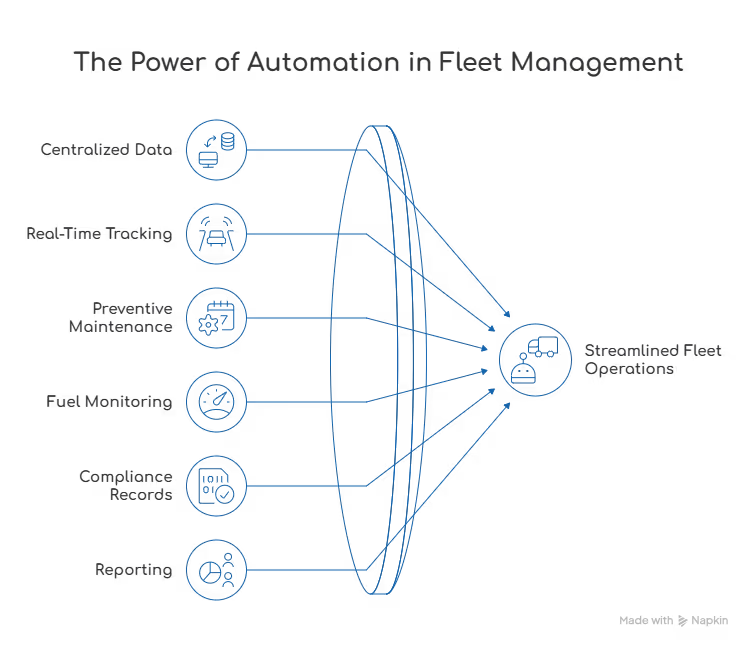
Automated fleet management uses software platforms to centralize and streamline fleet operations. Instead of relying on manual tracking, automated systems collect, organize, and analyze data in real time.
A modern fleet management system allows businesses to track vehicles, schedule preventive maintenance, monitor fuel usage, store compliance records, and generate reports from a single dashboard. Solutions like Simply Fleet are designed to replace fragmented processes with a unified and data-driven approach.
Automation does not eliminate the role of fleet managers. Instead, it reduces repetitive tasks and enables better decision-making by providing accurate, up-to-date information.
Cost Structure of Automated Fleet Management Systems
Automated fleet management systems typically involve subscription fees, which may be charged monthly or annually based on fleet size and features. There may also be initial setup costs, including onboarding and training. Some fleets choose to integrate hardware such as GPS or telematics devices, which can add to the upfront investment.
However, these costs are predictable and transparent. Unlike manual systems, where inefficiencies quietly accumulate, automated systems make expenses and savings visible. Over time, the reduction in fuel waste, maintenance expenses, and administrative overhead often outweighs the cost of the software itself.
Manual vs Automated Fleet Management: Understanding the Difference
The core difference between manual and automated fleet management lies in how costs are controlled and optimized. Manual systems depend on discipline, memory, and manual effort, while automated systems rely on data, alerts, and real-time visibility.
The table below provides a high-level cost comparison between the two approaches.
Download Our Free Fleet Management Resources Now!
Prevent costly breakdowns and maximize uptime with our free checklist.
Download
Administrative and Labor Costs
Manual fleet management demands continuous administrative involvement. Fleet staff must collect data from multiple sources, update records, and prepare reports manually. As the fleet grows, this workload increases, often requiring additional hires.
Automated systems significantly reduce this burden. Data is recorded automatically, reports are generated instantly, and reminders are system-driven. This allows businesses to manage larger fleets without increasing administrative costs.
Maintenance and Repair Costs
In manual systems, maintenance is often delayed due to missed reminders or incomplete records. This leads to vehicle breakdowns and expensive emergency repairs.
Automated fleet management systems promote preventive maintenance by sending timely alerts based on mileage, time, or usage. Preventive servicing reduces unexpected failures, lowers repair costs, and extends vehicle lifespan, resulting in measurable savings.
Fuel Cost Management
Fuel is one of the largest operating expenses for any fleet. Manual fuel tracking relies on receipts and driver reports, which are often inconsistent or inaccurate. This makes it difficult to identify fuel inefficiencies.
Automated systems provide clear visibility into fuel consumption patterns. Businesses can identify inefficient vehicles, abnormal fuel usage, and opportunities for optimization, leading to sustained fuel cost reductions.
Vehicle Utilization and Asset Costs
Without automation, many businesses struggle to understand how effectively their vehicles are being used. Underutilized vehicles continue to generate costs through insurance, maintenance, and depreciation.
Automated fleet management provides insights into vehicle usage, enabling better asset planning. Businesses can reduce unnecessary vehicles, optimize deployment, and avoid capital expenses associated with fleet expansion.
Scalability and Growth Costs
Manual fleet management does not scale well. Each additional vehicle increases complexity and cost disproportionately.
Automated systems are designed to scale seamlessly. Whether managing ten vehicles or hundreds, the cost per vehicle remains predictable, making automation a more sustainable option for growing businesses.
Conclusion: Which Approach Is More Cost-Effective?
Manual fleet management may seem cost-effective initially, but it often results in higher long-term expenses due to inefficiencies, errors, and reactive operations. Automated fleet management systems require an upfront investment, but they consistently reduce operating costs, improve efficiency, and provide better financial control.
For businesses aiming to grow, optimize expenses, and make data-driven decisions, automated fleet management is not just an upgrade. It is a strategic necessity.
If rising fleet costs and operational inefficiencies are holding your business back, it is time to switch to automation.
Simply Fleet helps you reduce fuel and maintenance expenses, eliminate manual workload, and gain complete visibility into your fleet operations.
Start using Simply Fleet today and take control of your fleet costs with confidence.