





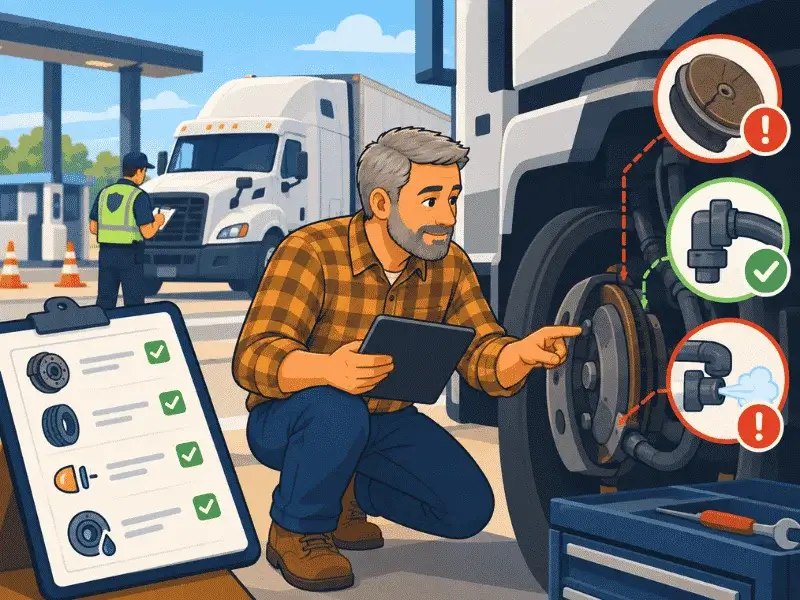
A Practical Guide to Preventing OOS Violations and Maintenance Failures
Key Takeaways
- Uptime is when your fleet vehicles are operational and generating value. Downtime is when they are out of service due to maintenance or breakdowns. Planned downtime is healthy.
- Unplanned downtime is expensive. Track key metrics like availability rate, MTBF, and MTTR.
- Use preventive maintenance, inspections, telematics, and asset tracking to reduce risk. Tools like Simply Fleet help minimize delays and improve operational control.
Fleet performance is not just about how many vehicles you own. It is about how many vehicles are actually available to work when you need them. That is where uptime and downtime come in.
For fleet managers, uptime means productivity, revenue, and customer satisfaction. Downtime means delays, unexpected costs, and operational stress. The goal is not to eliminate downtime entirely. It is to control it, plan it, and prevent the costly kind.
This practical guide explains downtime and uptime in simple terms, shows how to calculate and track them, and provides actionable strategies to improve both using modern fleet management practices.
What Is Uptime and Downtime in Fleet Management?
Understanding these two terms clearly is the first step toward improving performance.
What Is Uptime?
Uptime refers to the period when a vehicle or asset is fully operational and available for use. In simple terms, it is time spent on the road, at a job site, or ready to be dispatched.
High uptime means:
- Vehicles are generating revenue instead of sitting idle.
- Operations run smoothly with fewer disruptions.
- Customers receive services on schedule.
What Is Downtime?
Downtime is the period when a vehicle or asset is unavailable due to maintenance, repairs, inspections, or unexpected failures.
Downtime can be divided into two types:
- Planned downtime: Scheduled preventive maintenance, inspections, tire replacements, or compliance checks.
- Unplanned downtime: Breakdowns, accidents, unexpected mechanical failures, or missing tools that delay operations.
Planned downtime is necessary. Unplanned downtime is where most fleet costs spiral out of control.
Why Uptime and Downtime Matter More Than You Think
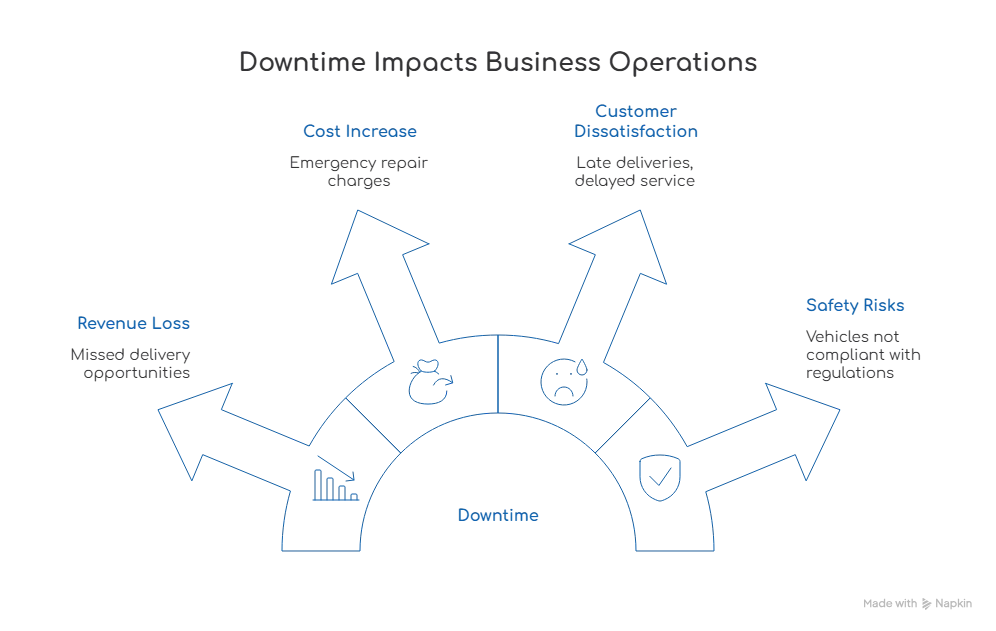
Fleet downtime affects more than just the maintenance department. It impacts the entire business.
Revenue and Productivity
Every hour a vehicle is down is an hour it is not delivering goods, transporting staff, or completing a service call. Over time, this results in missed revenue opportunities and inefficient resource utilization.
Cost Control
Unplanned downtime often leads to:
- Emergency repair charges.
- Towing expenses.
- Overtime labor costs.
- Expedited parts procurement.
- Rental vehicle costs to fill gaps.
These hidden costs accumulate quickly and affect overall profitability.
Customer Satisfaction
When deliveries are late or service calls are delayed, customers lose trust. Consistent uptime improves reliability and strengthens long-term relationships.
Compliance and Safety
Planned downtime for inspections and servicing ensures vehicles remain compliant with safety regulations. Skipping maintenance to “save time” often leads to larger failures later.
How to Calculate Fleet Uptime and Downtime
Tracking performance requires measurement.
Uptime Formula
Uptime Percentage = (Operational Time ÷ Total Available Time) × 100
For example, if a vehicle is available for 30 days in a month and is operational for 27 days, its uptime is:
(27 ÷ 30) × 100 = 90 percent uptime.
Key Fleet Maintenance Metrics
Below is a table summarizing essential metrics every fleet should track.
Tracking these metrics regularly allows fleet managers to identify patterns and address root causes.
Download Free Fleet Maintenance Resources Now!
Prevent costly breakdowns and maximize uptime with our free checklist.
Download
Common Causes of Fleet Downtime
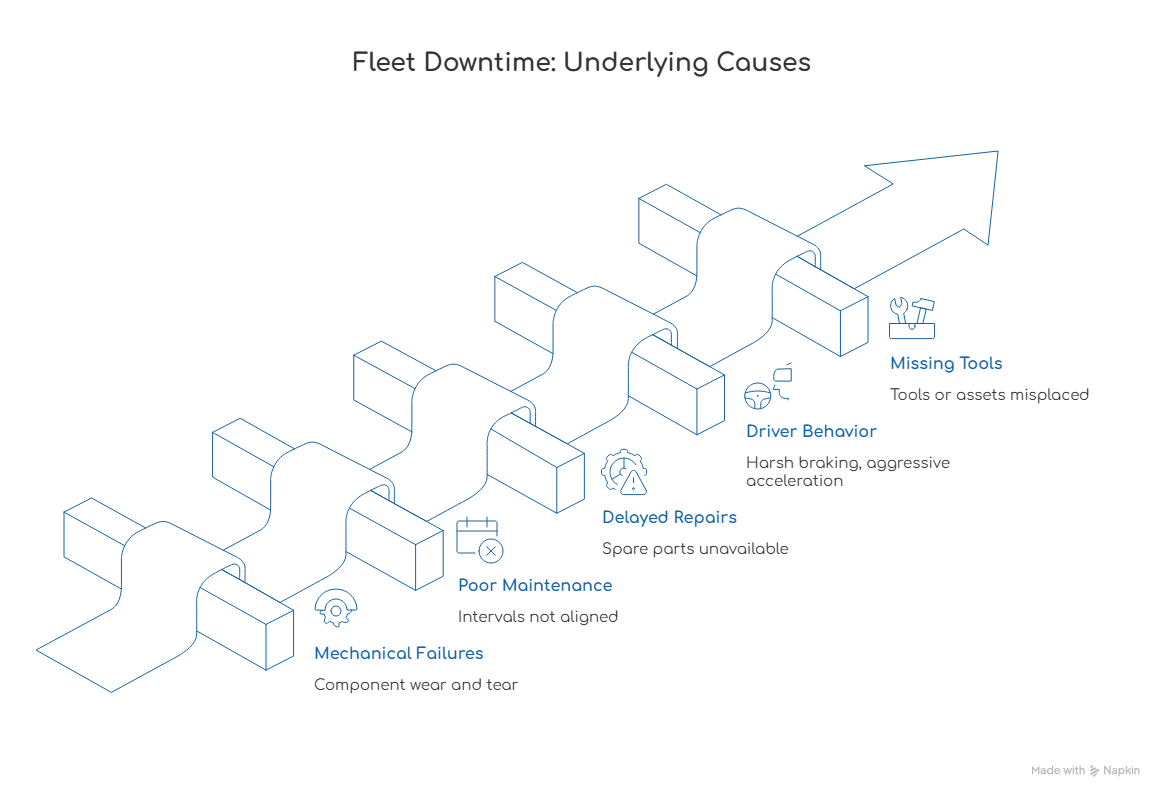
Downtime rarely happens randomly. There are usually underlying issues.
Mechanical Failures
Component wear and tear, engine overheating, brake failures, or electrical system issues can take vehicles out of service unexpectedly. Many of these failures occur due to missed preventive maintenance.
Poor Maintenance Scheduling
If maintenance intervals are not aligned with mileage, engine hours, or manufacturer recommendations, vehicles become vulnerable to breakdowns.
Delayed Repairs
When spare parts are not available or workshops are overloaded, minor issues escalate into longer downtime periods.
Driver Behavior
Harsh braking, aggressive acceleration, overloading, and ignoring warning signals can accelerate wear and increase failure rates.
Missing Tools or Equipment
Sometimes downtime is not mechanical. It can happen because tools, attachments, or critical assets are missing or misplaced, delaying jobs.
Practical Strategies to Increase Fleet Uptime
Improving uptime requires structured processes and the right technology.
Implement Preventive Maintenance Programs
Preventive maintenance is the backbone of fleet uptime.
A strong preventive program should:
- Schedule services based on mileage, engine hours, and time.
- Include oil changes, brake inspections, fluid checks, and tire rotations.
- Use automated reminders to prevent missed services.
- Track maintenance history for each vehicle.
Preventive maintenance reduces unexpected failures and extends asset life.
Use Predictive Maintenance and Data Monitoring
Telematics and vehicle diagnostics provide real-time insights into engine performance, fuel efficiency, and fault codes.
Data-driven maintenance helps fleet managers:
- Identify potential failures before breakdowns occur.
- Schedule repairs at convenient times.
- Reduce emergency repair costs.
- Improve reliability metrics like MTBF.
Conduct Daily Driver Inspections
Pre-trip and post-trip inspections are simple but powerful.
Drivers should check:
- Tire condition and pressure.
- Fluid levels.
- Lights and indicators.
- Warning dashboard alerts.
Encouraging drivers to report issues early prevents minor problems from becoming major breakdowns.
Optimize Repair Turnaround Time
Reducing MTTR is just as important as preventing failures.
To improve repair speed:
- Maintain a list of trusted repair vendors.
- Keep commonly used spare parts in stock.
- Digitize work orders to avoid paperwork delays.
- Track repair time data to identify bottlenecks.
The Hidden Link Between Asset Tracking and Fleet Uptime
Fleet downtime is not only about vehicles. Tools and assets play a critical role.
If a service vehicle arrives at a job site without the required tools, the result is operational downtime. Time is lost, schedules shift, and customer expectations are impacted.
Why Asset and Tool Tracking Matters
Effective asset tracking helps fleet managers:
- Know exactly where tools and equipment are located.
- Prevent loss or theft of expensive assets.
- Reduce delays caused by missing equipment.
- Improve accountability among field teams.
- Optimize asset utilization rates.
When assets are properly tracked, vehicles can perform their tasks efficiently, increasing true operational uptime.
Building a Downtime Reduction Plan
A structured plan ensures long-term improvements.
Step 1: Analyze Historical Data
Review breakdown records, repair frequency, and downtime hours. Identify recurring issues.
Step 2: Identify High-Risk Vehicles
Older vehicles or those with repeated failures may require special attention or replacement planning.
Step 3: Strengthen Preventive Maintenance
Increase compliance rates and automate reminders.
Step 4: Train Drivers and Technicians
Provide training on safe driving habits and early issue detection.
Step 5: Implement Digital Fleet Management Tools
Manual spreadsheets cannot provide real-time insights. Modern fleet software centralizes maintenance schedules, work orders, inspections, and asset tracking.
Balancing Planned and Unplanned Downtime
It is important to understand that not all downtime is bad.
Planned downtime for servicing:
- Extends vehicle life.
- Reduces catastrophic failures.
- Improves safety compliance.
- Controls long-term maintenance costs.
Unplanned downtime, however, creates uncertainty and financial strain.
The goal is not zero downtime. The goal is strategic downtime.
Take Control with Simply Fleet
Downtime and uptime are not just technical metrics. They reflect the health of your fleet and the efficiency of your business. Unplanned downtime drains resources and creates stress across departments.
Ready to reduce downtime beyond just vehicle maintenance? Simply Fleet helps you monitor equipment location, prevent loss, and ensure every vehicle arrives fully equipped for the job.
Explore Simply Fleet today and keep your fleet moving forward.