






A new kind of fleet intelligence: Meet Simply Fleet AI Insights
Key Takeaways
- Service intervals should be based on miles, engine hours, and time.
- Mileage works best for high-distance fleets.
- Engine hours are critical for idle-heavy operations.
- Time-based intervals prevent neglect in low-usage vehicles.
- Use “whichever comes first” logic for maximum protection.
- Automating tracking reduces downtime and improves compliance.
- A smart interval strategy lowers total cost of ownership.
Managing a fleet is not just about keeping vehicles on the road. It is about keeping them reliable, safe, compliant, and cost-efficient. One of the most important foundations of good fleet management is setting the right service intervals.
Should you schedule maintenance based on miles? Engine hours? Or time? What works best for delivery vans may not work for construction equipment or service vehicles that idle for long periods.
In this practical guide, Simply Fleet breaks down how service intervals work, how to choose the right trigger, and how to build a preventive maintenance schedule that actually fits your fleet.
What Are Service Intervals in Fleet Management?
Service intervals are predefined thresholds that determine when a vehicle or asset should receive maintenance. These intervals are typically based on:
- Mileage (miles driven)
- Engine hours
- Time (calendar-based intervals)
Instead of waiting for something to fail, service intervals allow fleet managers to take a preventive approach. This reduces unexpected breakdowns, improves uptime, and lowers long-term repair costs.
Why Service Intervals Matter for Fleet Performance
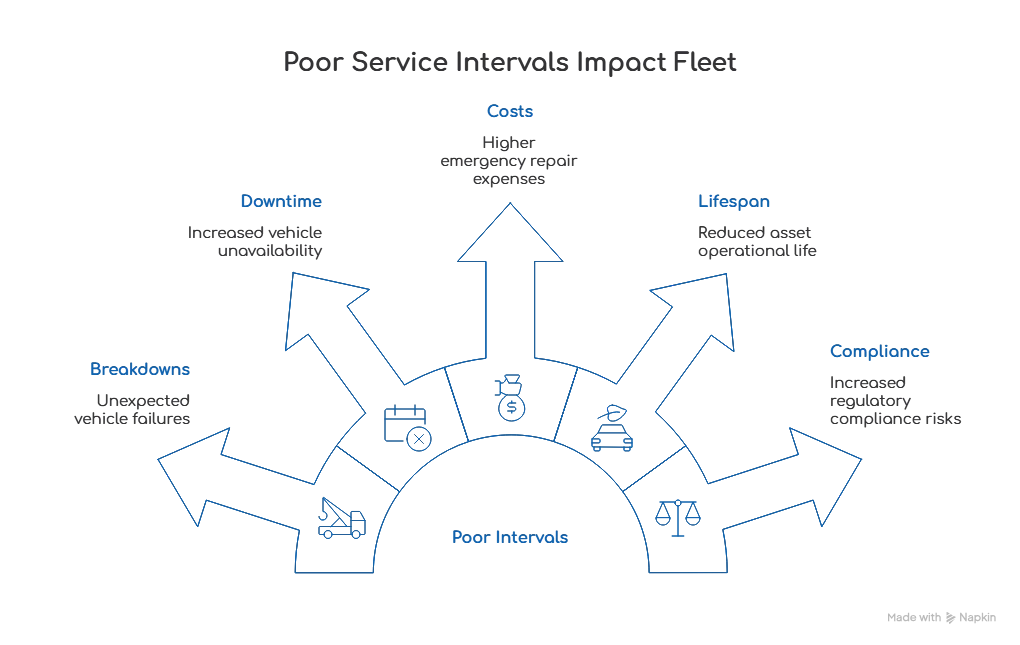
When service intervals are poorly defined or inconsistently followed, fleets experience:
- Unexpected breakdowns
- Increased downtime
- Higher emergency repair costs
- Reduced asset lifespan
- Compliance risks
A well-structured service interval program helps:
- Extend vehicle life
- Improve safety and driver confidence
- Maintain manufacturer warranty compliance
- Control operating costs
- Improve resale value
For growing fleets, service intervals are not optional. They are operational discipline.
Understanding the Three Types of Service Intervals
Every fleet asset operates differently. That is why service intervals are typically built around three primary triggers.
1. Mileage-Based Service Intervals
Mileage-based intervals are ideal for vehicles that spend most of their time driving.
This method is commonly used for:
- Delivery vans
- Long-haul trucks
- Sales fleet vehicles
- Field service vehicles
Typical examples include:
- Oil changes every 5,000 to 7,500 miles
- Tire rotation every 6,000 to 8,000 miles
- Brake inspections every 10,000 to 15,000 miles
Mileage-based intervals are simple and effective when vehicles consistently accumulate distance.
However, they may not accurately reflect wear if vehicles idle heavily.
2. Engine Hour-Based Service Intervals
Engine hours track how long a vehicle’s engine has been running, regardless of miles traveled.
This is especially important for:
- Construction equipment
- Utility trucks
- Bucket trucks
- Snowplows
- Vehicles with heavy idling
For example, a service truck may only drive 5,000 miles in six months but idle for hours each day at job sites. The engine is still wearing down, even if the odometer does not reflect heavy usage.
Typical engine-hour intervals:
- Oil and filter changes every 250 to 300 engine hours
- Preventive maintenance checks every 500 engine hours
For idle-heavy fleets, engine hours provide a more accurate measurement of engine stress than miles alone.
3. Time-Based Service Intervals
Time-based intervals ensure that vehicles are serviced even if they are not driven often.
These are important for:
- Low-usage vehicles
- Backup units
- Seasonal equipment
- Compliance inspections
Examples include:
- Oil changes every 3 to 6 months
- Annual safety inspections
- Coolant flush every 2 years
- Brake fluid replacement every 2 years
Time-based triggers prevent degradation due to aging fluids, corrosion, and inactivity.
When to Use Miles vs. Hours vs. Time
Most modern fleets use a combination approach.
The best practice is to follow a “whichever comes first” rule.
For example:
Oil change at 6,000 miles OR 300 engine hours OR 6 months (whichever comes first).
This ensures vehicles are serviced based on actual usage patterns while avoiding over-maintenance.
Below is a general reference framework. Actual intervals should always align with manufacturer recommendations and real-world operating conditions.
These are general planning benchmarks, not universal rules.
Download Our Free Fleet Maintenance Resources Now!
Prevent costly breakdowns and maximize uptime with our free checklist.
Download
How to Build a Practical Fleet Maintenance Schedule
Creating an effective service interval plan requires more than copying manufacturer guidelines. Here is a structured approach.
Step 1: Start with OEM Recommendations
Always begin with the manufacturer’s preventive maintenance schedule. This protects warranties and provides a reliable baseline.
Step 2: Analyze Fleet Usage Patterns
Ask:
- Do vehicles idle heavily?
- Are they exposed to harsh climates?
- Do they carry heavy loads?
- Are routes stop-and-go or highway-heavy?
Operating conditions may require shortening intervals.
Step 3: Categorize Assets by Usage Type
Group vehicles by similar usage patterns:
- Long-haul fleet
- Local delivery
- Idle-heavy service trucks
- Construction equipment
- Seasonal assets
Each category may require a different service interval logic.
Step 4: Apply Dual or Triple Triggers
Use:
- Mileage
- Engine hours
- Time
Apply whichever comes first logic to reduce risk.
Step 5: Automate Tracking
Manual spreadsheets often fail at scale. Automated maintenance tracking ensures:
- No missed service deadlines
- Real-time alerts
- Accurate historical records
- Easier compliance reporting
How Service Intervals Impact Total Cost of Ownership
Preventive maintenance directly affects:
- Fuel efficiency
- Engine longevity
- Tire lifespan
- Downtime rates
- Residual asset value
Skipping fleet maintenance may save money short term but increases long-term repair costs.
A structured interval program lowers total cost of ownership by preventing major failures before they happen.
How Technology Improves Service Interval Accuracy
Modern fleet management software allows you to:
- Track mileage and engine hours automatically
- Set multiple maintenance triggers
- Generate alerts before deadlines
- View asset health in one dashboard
- Store maintenance history for compliance audits
This removes guesswork and improves reliability.
Final Thoughts
Service intervals are not just maintenance checklists. They are a strategic control system for fleet reliability.
The right interval structure keeps vehicles running longer, prevents expensive breakdowns, improves safety, and protects your investment.
Whether you manage 20 vehicles or 2,000, the key is consistency, data-driven decisions, and automation.
A well-maintained fleet is not lucky. It is managed. Stop relying on spreadsheets and manual reminders.
Start managing your fleet with precision. Explore Simply Fleet today and build a smarter, more reliable fleet.