





Keeping Up with the Industry: Fleet Forward Conference 2026
Key Takeaways
- Fleet costs don’t spike suddenly; they quietly build up through fuel waste, downtime, and inefficiencies.
- Hidden expenses like poor routing, idle vehicles, and manual admin work erode profits over time.
- Driver behavior and unplanned maintenance are major but controllable cost drivers.
- Tracking Total Cost of Ownership gives a clearer picture than focusing only on fuel or purchase price.
- Centralized fleet management tools help businesses regain visibility, control costs, and protect margins.
Fleet-related expenses rarely show up as a single alarming number. Instead, they slip into budgets quietly through fuel inefficiencies, unplanned downtime, administrative overhead, and poor visibility. Over time, these “small” costs compound and eat directly into company profits.
For businesses that rely on vehicles (logistics companies, sales-driven organizations, service providers, and construction firms) fleet costs can be the difference between healthy margins and constant firefighting.
This article breaks down where fleet costs silently leak money, why many companies underestimate them, and how modern fleet management practices help regain control.
Why Fleet Costs Are Often Underestimated
Most companies track obvious expenses like fuel bills and vehicle purchases. The problem is that fleet profitability is rarely lost in one place. It’s lost across dozens of small inefficiencies happening every day.
Some common reasons fleet costs go unnoticed include:
- Costs spread across multiple departments
- Manual tracking with incomplete data
- Lack of visibility into driver behavior
- Delayed reporting on vehicle health
- Treating fleet expenses as “fixed” rather than controllable
Without a centralized system, decision-makers often see only fragments of the full cost picture.
The Real Cost of Running a Fleet: More Than Just Fuel
Running a fleet is often viewed through the narrow lens of fuel expenses, but the true cost extends far beyond the gas tank. Several visible and invisible cost layers together determine how profitable (or unprofitable) fleet operations really are.
Direct Costs Everyone Notices
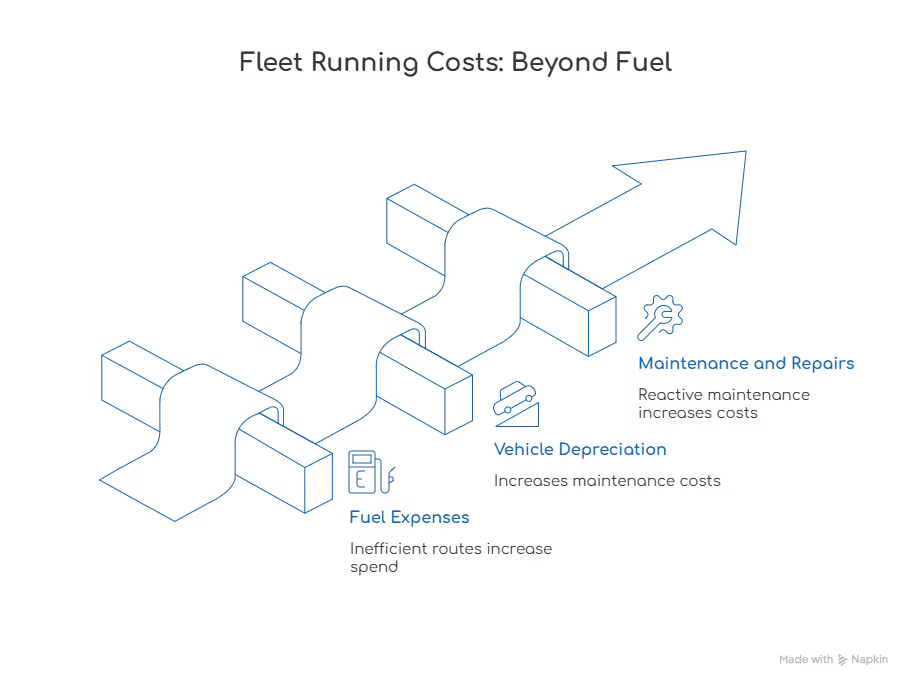
These expenses are usually budgeted but still often poorly optimized.
Fuel Expenses
Fuel is typically the largest recurring fleet cost. Inefficient routes, excessive idling, aggressive driving, and fuel theft can quietly increase fuel spend without increasing productivity.
Vehicle Purchase, Leasing, and Depreciation
Whether vehicles are owned or leased, depreciation starts the moment they hit the road. Holding vehicles beyond their optimal life cycle increases maintenance costs while reducing resale value.
Maintenance and Repairs
Reactive maintenance leads to higher repair costs, emergency servicing, and vehicle downtime, all of which directly affect revenue.
The Hidden Fleet Costs That Drain Profits
This is where most profit leakage happens.
Operational Inefficiencies
Small inefficiencies repeated daily can cost thousands annually per vehicle.
- Poor route planning leads to longer trips and higher fuel use
- Vehicles sit idle while still incurring costs
- Underutilized assets remain in the fleet unnecessarily
- Lack of real-time tracking hides inefficiency patterns
Without accurate usage data, companies often keep too many vehicles or deploy them inefficiently.
Driver-Related Costs
Drivers directly influence fuel consumption, maintenance needs, and safety outcomes.
Common Cost Drivers
- Harsh braking and rapid acceleration
- Excessive idling
- Speeding, leading to higher fuel and maintenance costs
- Increased accident risk and insurance claims
Driver behavior is one of the most controllable (but most ignored) fleet cost variables.
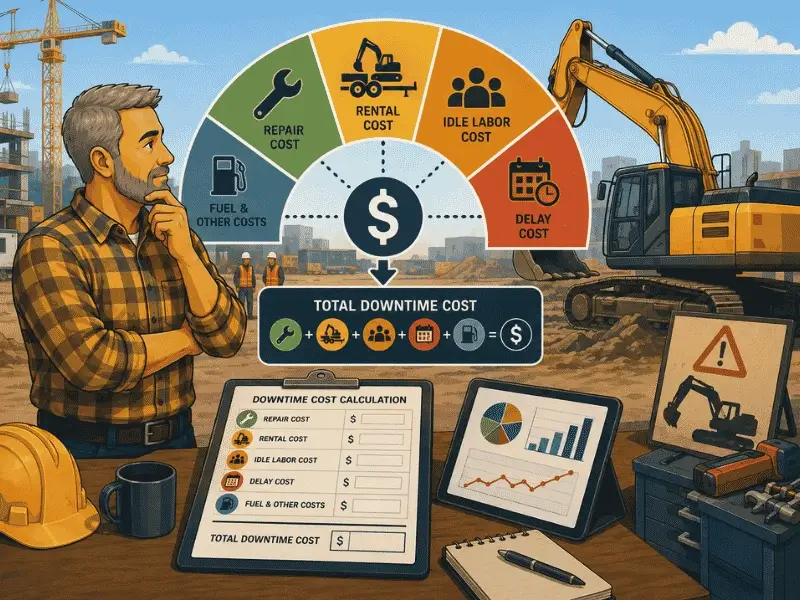
Downtime: The Silent Profit Killer
Every hour a vehicle is off the road costs more than repair bills.
Downtime leads to:
- Missed deliveries or service appointments
- Overtime costs to recover schedules
- Customer dissatisfaction
- Lost revenue opportunities
Unplanned downtime is significantly more expensive than preventive maintenance but many fleets still operate reactively.
Administrative and Compliance Costs
Fleet management generates paperwork, lots of it.
These costs often remain hidden because they don’t appear on vehicle expense sheets.
- Manual fuel logs and expense claims
- Compliance documentation
- Inspection records
- Insurance renewals and claims processing
- Driver scheduling and reporting
As fleets grow, administrative overhead increases unless systems are automated.
Total Cost of Ownership (TCO): The Metric That Matters
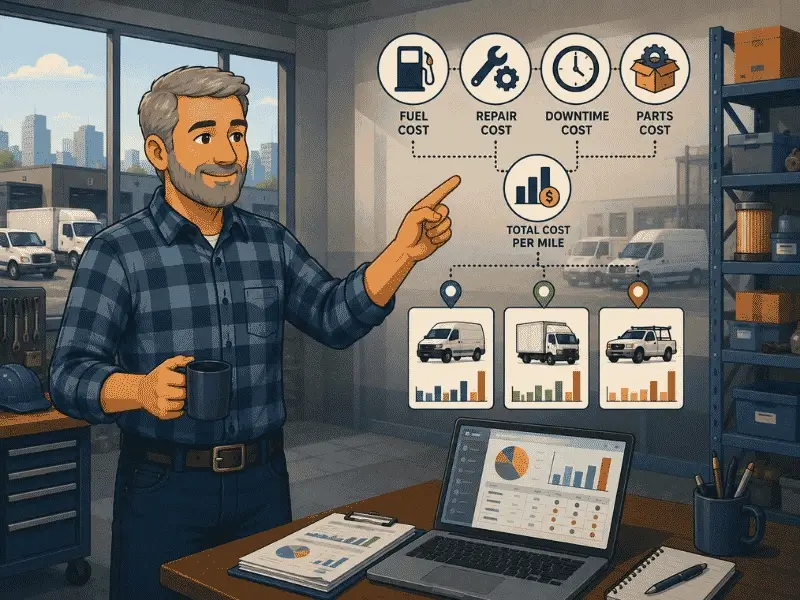
Focusing only on purchase price or fuel costs gives a distorted view of fleet profitability. What matters is Total Cost of Ownership (TCO).
What TCO Includes
Companies that track TCO at the vehicle level make better decisions about replacement, utilization, and budgeting.
Download Our Free Fleet Budget Calculator Template
Prevent costly breakdowns and maximize uptime with our free checklist.
Download
How Poor Visibility Makes Costs Worse
Lack of data allows them to grow.
Without real-time visibility:
- Fuel waste continues unchecked
- Maintenance issues escalate into breakdowns
- Underperforming vehicles stay in service
- Driver behavior issues go uncorrected
Decisions are made based on assumptions instead of evidence, leading to higher long-term costs.
What Profitable Fleets Do Differently
High-performing fleets control and optimize profits.
Preventive Maintenance Over Reactive Repairs
Scheduled maintenance reduces emergency breakdowns, lowers repair costs, and extends vehicle life.
Data-Driven Route Optimization
Better routing reduces fuel use, shortens trip times, and increases vehicle utilization.
Driver Performance Monitoring
Tracking driving behavior allows companies to coach drivers, reduce fuel waste, and improve safety.
Vehicle Lifecycle Management
Replacing vehicles at the right time prevents excessive maintenance costs and preserves resale value.
Centralized Fleet Visibility
A single system for tracking vehicles, drivers, expenses, and maintenance ensures nothing slips through the cracks.
The Role of Modern Fleet Management Software
Fleet management software transforms fleet operations from reactive to proactive. Instead of guessing where money is going, businesses see it clearly and act faster.
Stop letting fleet costs silently eat into your profits. Simply Fleet helps businesses gain full visibility into vehicle usage, maintenance, expenses, and driver behavior.
Take control of your fleet. Choose Simply Fleet.