




How to Identify High-Cost Fleet Vehicles Across Multiple Locations
Key Takeaways
- Daily inspections help prevent unexpected breakdowns during trips
- Weekly and monthly checks ensure long-term vehicle health
- Preventive maintenance reduces repair costs and downtime
- Safety checks are essential for compliance and passenger protection
- Using fleet management software simplifies tracking and scheduling
Managing a fleet of buses is not just about keeping vehicles on the road, it is about ensuring safety, reliability, and cost efficiency. A single missed inspection can lead to breakdowns, delays, or even accidents.
A structured bus maintenance checklist helps fleet managers stay proactive instead of reactive. It ensures that issues are identified early, maintenance is scheduled properly, and vehicles operate smoothly.
This guide provides a detailed checklist that can be implemented across school buses, transport buses, or commercial fleets.
Why a Bus Maintenance Checklist is Important

A well-defined maintenance routine is the backbone of any successful fleet operation.
Without a checklist, maintenance becomes inconsistent and dependent on manual tracking, which often leads to missed inspections.
Key Benefits
- Improved safety: Regular vehicle inspections ensure brakes, tires, and critical systems are always in working condition
- Reduced downtime: Identifying issues early prevents major failures and unexpected breakdowns
- Cost savings: Preventive maintenance is significantly cheaper than emergency repairs
- Better compliance: Helps meet regulatory and safety standards
- Extended vehicle life: Proper care increases the lifespan of buses
For fleet companies, these benefits directly impact profitability and service reliability.
Daily Bus Maintenance Checklist (Pre-Trip Inspection)
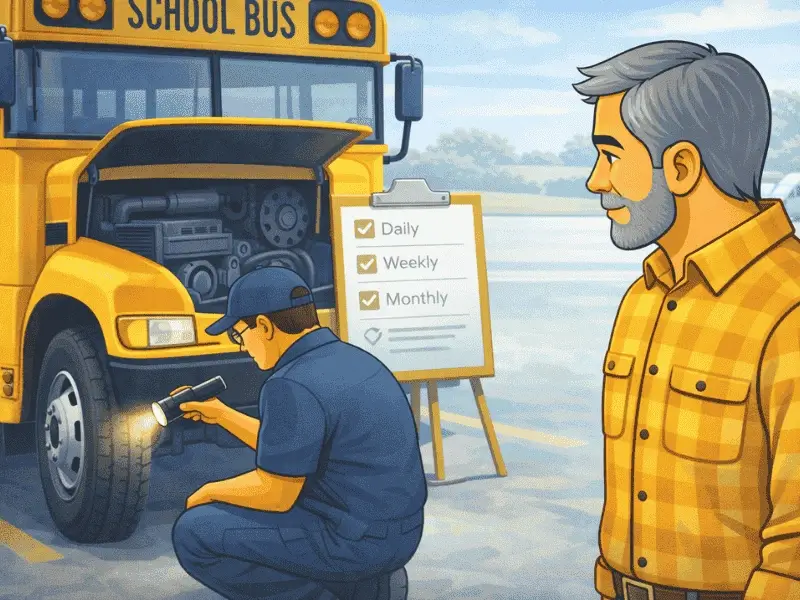
Daily inspections are the most critical part of fleet maintenance. They ensure that the bus is safe before it leaves the depot.
Exterior Inspection
- Tires should be checked for proper air pressure, visible cuts, and uneven wear, as damaged tires can lead to serious accidents
- All lights, including headlights, brake lights, and indicators, must be functioning properly to ensure visibility and communication on the road
- Mirrors should be clean and properly adjusted to provide a clear view for the driver
- Look for any fluid leaks under the bus, which may indicate engine or hydraulic issues
Engine Compartment
- Engine oil levels should be within the recommended range to avoid engine damage
- Coolant levels must be checked to prevent overheating during operation
- Battery terminals should be clean and secure to ensure proper electrical function
- Belts and hoses must be inspected for cracks or looseness
Interior and Safety Checks
- Emergency exits should open easily and be unobstructed for passenger safety
- Fire extinguishers must be present, charged, and easily accessible
- First aid kits should be fully stocked and available
- Horn, windshield wipers, and dashboard indicators should be tested before departure
Brake System
- Brake pedal response should feel firm and consistent
- Parking brakes must hold the vehicle securely
- For air brake systems, air pressure levels should be within the safe range
Daily checks ensure that no bus starts its journey with a hidden risk.
Download Free School Bus Pre-Trip Inspection Checklist Now!
Prevent costly breakdowns and maximize uptime with our free checklist.
Download
Weekly Bus Maintenance Checklist
Weekly maintenance focuses on deeper inspection and early wear detection.
Key Checks
- All fluid levels, including brake fluid and washer fluid, should be topped up if required to ensure smooth operation
- Brake components should be inspected for wear, as worn-out brakes reduce stopping efficiency
- Suspension components like shock absorbers and springs should be checked to ensure passenger comfort and stability
- Steering system should be tested for responsiveness and unusual play
- Battery condition and electrical connections should be inspected to avoid sudden failures
Weekly checks help detect gradual wear before it becomes a major issue.
Monthly Bus Maintenance Checklist
Monthly inspections involve more technical checks and servicing tasks.
Important Areas
- Engine oil should be changed or topped up based on usage and manufacturer recommendations
- Transmission fluid should be inspected to ensure smooth gear shifting
- Exhaust system should be checked for leaks or damage that could affect emissions and performance
- Tires should be rotated to ensure even wear and extend their lifespan
- Fuel system should be inspected for leaks or inefficiencies
These checks ensure long-term reliability and performance.
Preventive Maintenance Schedule Overview
Below is a simple table to help fleet managers organize maintenance tasks efficiently:
This structured approach makes maintenance predictable and manageable.
Safety and Compliance Checks

Safety is non-negotiable in bus fleet operations.
Critical Safety Areas
- Seat belts and handrails must be in good condition to protect passengers during transit
- Emergency alarms and exits should function properly in case of emergencies
- Reflective triangles and warning devices must be available for roadside emergencies
- Accessibility equipment like ramps or lifts should be inspected regularly
Compliance
- All vehicle documents, including insurance and permits, should be up to date
- Maintenance logs must be maintained for audits and regulatory checks
Ignoring safety checks can result in penalties and reputational damage.
Common Mistakes in Bus Maintenance
Even experienced fleet managers can make mistakes that impact operations.
Mistakes to Avoid
- Skipping daily inspections: Small issues often escalate into major failures
- Poor documentation: Without proper records, tracking maintenance becomes difficult
- Reactive maintenance approach: Waiting for breakdowns increases costs
- Ignoring driver feedback: Drivers often notice early warning signs that should not be overlooked
- Inconsistent schedules: Irregular maintenance leads to unpredictable performance
Avoiding these mistakes ensures smoother fleet operations.
How Technology Simplifies Bus Maintenance
Manual tracking using spreadsheets or paper logs can quickly become overwhelming, especially for growing fleets.
Fleet management software helps automate and streamline the entire process.
Key Advantages
- Automated maintenance reminders based on mileage or time
- Centralized dashboard to track all vehicles
- Digital inspection checklists for drivers and technicians
- Real-time alerts for faults and issues
- Maintenance history tracking for better decision-making
Technology reduces human error and improves operational efficiency.
Simplify Your Fleet Maintenance with Simply Fleet
A structured bus maintenance checklist is essential for ensuring safety, reducing downtime, and controlling costs. However, managing maintenance manually can be challenging as fleets grow. This is where digital solutions play a crucial role.
Managing bus maintenance does not have to be complex. Simply Fleet helps streamline your entire maintenance process. Start optimizing your fleet operations today with Simply Fleet and ensure every bus is always road-ready.