


A Practical Guide to Preventing OOS Violations and Maintenance Failures
Key Takeaways
- Daily and weekly inspections are mandatory, not optional[ drivers handle pre-trip checks, while technicians focus on deeper weekly inspections.
- Audits failing due to poor documentation are a major red flag.
- Key systems like brakes, tires, lights, and safety equipment must be inspected consistently across all vehicles.
- Digital inspections and DVIRs make audits easier, creating time-stamped, centralized, and accurate compliance records.
- Standardized checklists and regular training help fleets stay inspection-ready and pass every DOT or government audit.
Fleet audits are stressful for one reason (they expose what daily operations quietly ignore). Missing inspection records, rushed pre-trip checks, or inconsistent documentation can quickly turn into violations, fines, or even vehicle out-of-service orders.
The good news? Most audit failures are preventable. With the right fleet inspection checklist, consistent processes, and digital records, passing every audit becomes routine.
This guide walks fleet managers and technicians through what inspectors actually look for, how to structure daily and weekly inspections, and how to stay prepared year-round using a proven checklist approach.
Why Fleet Inspections Matter More Than Ever?
Fleet inspections are not just about compliance. They impact safety, liability, uptime, and operating cost.
A single missed brake defect or undocumented inspection can result in:
- DOT violations
- Vehicles placed out of service
- Failed government audits
- Higher insurance premiums
- Reputational risk for public or school transport fleets
For industries like trucking, government fleets, and school buses, inspections are non-negotiable. Regulators expect clear records, consistent processes, and proof that unsafe vehicles are never allowed on the road.
That starts with a reliable fleet inspection list.
Daily vs Weekly Inspections: What’s the Difference?
Not all inspections serve the same purpose. Auditors expect different checks at different frequencies.
These inspection logs are essential when preparing for a fleet audit checklist.
Daily (Pre-Trip & Post-Trip) Inspections
Daily inspections focus on road-readiness. These are frontline checks performed by drivers before and after operating a vehicle.
Pre-trip inspections help catch issues that could cause immediate safety risks, such as brake failures, tire damage, or lighting problems. Post-trip inspections document defects discovered during operation.
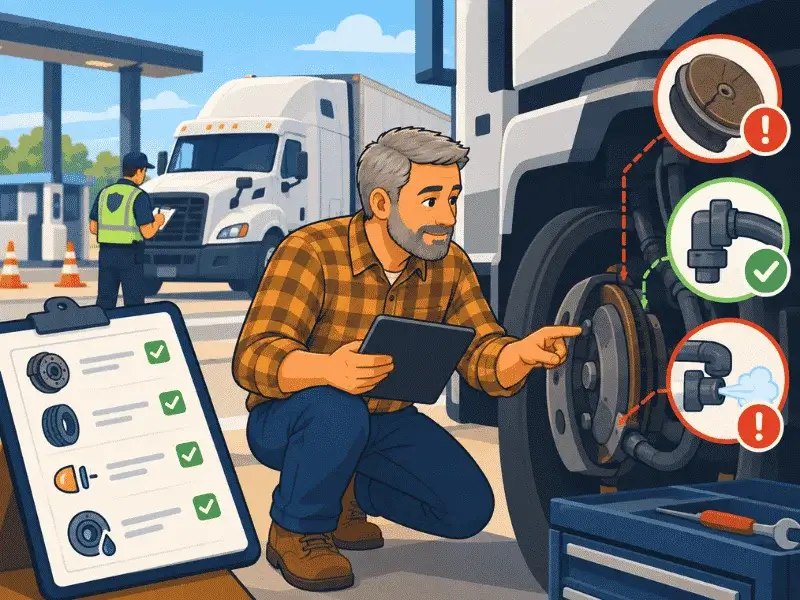
A standard pre trip checklist usually includes:
- Brakes (service and parking)
- Steering system
- Tires and wheels
- Lights and reflectors
- Mirrors and windshield
- Horn and safety equipment
- Fluid leaks
- Emergency items
For DOT-regulated fleets, failing to complete or submit daily DVIRs is one of the most common audit findings.
Weekly Inspections
Weekly vehicle inspections go deeper. These are typically handled by technicians or supervisors and focus on preventive maintenance.
Weekly checks often include:
- Suspension and alignment
- Battery condition
- Belts and hoses
- Exhaust system
- Undercarriage
- Chassis and frame integrity
- Brake wear indicators
Auditors look for evidence that weekly inspections are scheduled, completed, and acted upon, not just performed on paper.
Key Systems Every Fleet Inspection Must Cover
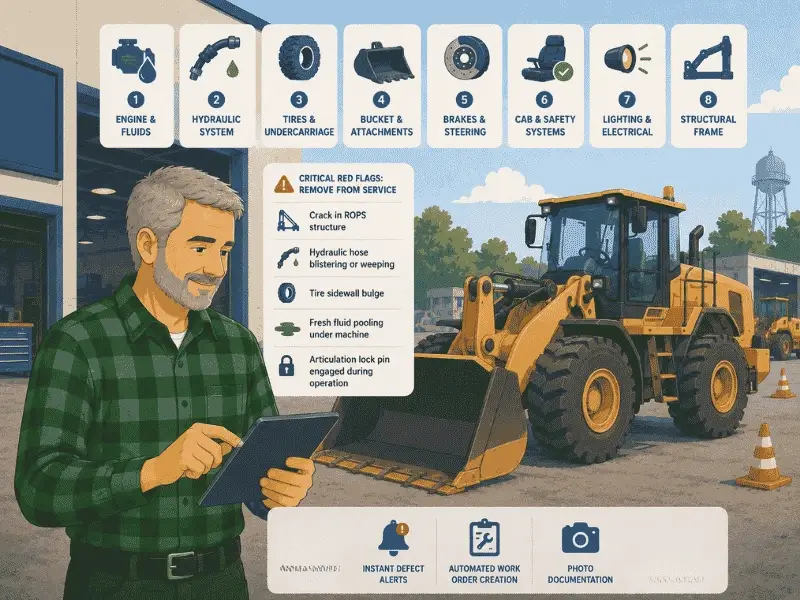
Regardless of vehicle type, auditors expect inspections to consistently cover critical systems. Skipping even one area repeatedly raises red flags.
Consistency matters. Inspectors compare inspection records across vehicles to look for patterns of neglect.
Audit Records: What Inspectors Actually Review
Passing an audit is about proving you did them correctly.
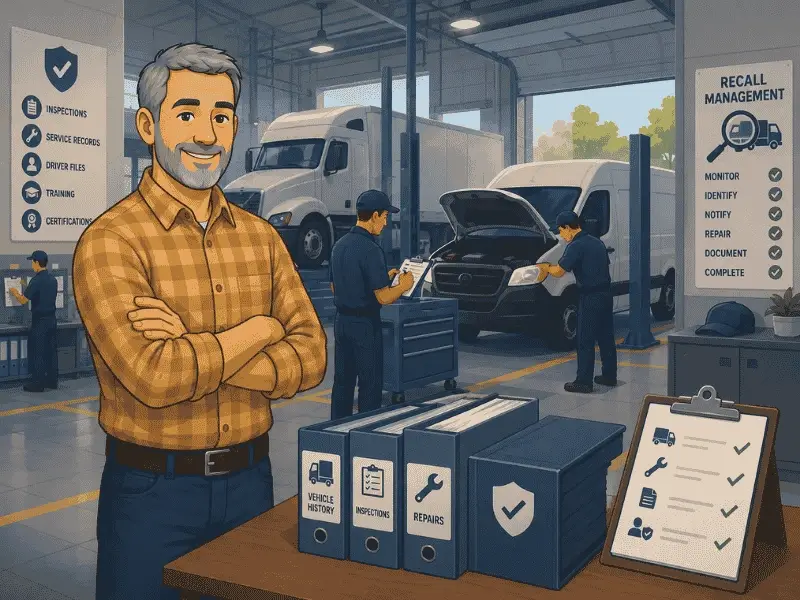
Auditors typically review:
- Daily DVIRs for all vehicles
- Defect reports and repair actions
- Technician sign-offs
- Maintenance timelines
- Driver acknowledgements
- Historical inspection trends
Missing paperwork is often treated the same as missing inspections.
Digital inspection systems reduce risk because they:
- Time-stamp inspections
- Prevent skipped fields
- Maintain audit-ready records
- Centralize data across the fleet
Paper checklists, on the other hand, are frequently lost, incomplete, or illegible.
Download Our Fleet Inspection Resources For Free!
Prevent costly breakdowns and maximize uptime with our free checklist.
Download
Behind this article
This article is brought to you by the Simply Fleet Team. The insights and recommendations you'll find here are not just theoretical; they are distilled from countless hours spent engaging with fleet professionals like you. Our team members actively collect knowledge from our customers, hundreds of discovery calls, and expert consultations. This ongoing dialogue is crucial for us to understand the struggles our users face, driving continuous improvement in our product and enabling us to share practical, experience-backed advice.
Fleet Inspection Checklist: Core Items Table
This checklist applies across trucking fleets, government vehicles, and school buses, with slight variations based on regulations and duty cycles.
How Digital DVIRs Improve Audit Outcomes
Digital Driver Vehicle Inspection Reports (DVIRs) are quickly becoming the audit standard.
Digital inspections:
- Enforce checklist completeness
- Automatically flag defects
- Notify maintenance teams instantly
- Maintain searchable audit trails
- Reduce administrative workload
For fleet managers, this means fewer surprise violations and faster audit preparation.
A centralized inspection platform also makes it easy to demonstrate compliance during DOT or government audits without scrambling for paperwork.
Training: The Missing Piece in Most Inspection Programs
Even the best checklist fails without proper training.
Fleet managers should ensure:
- Drivers understand why inspections matter
- Technicians know audit expectations
- New hires receive inspection training
- Refresher sessions are held periodically
Auditors often interview drivers. If answers don’t match documentation, it raises compliance concerns.
How Simply Fleet Helps You Pass Every Audit
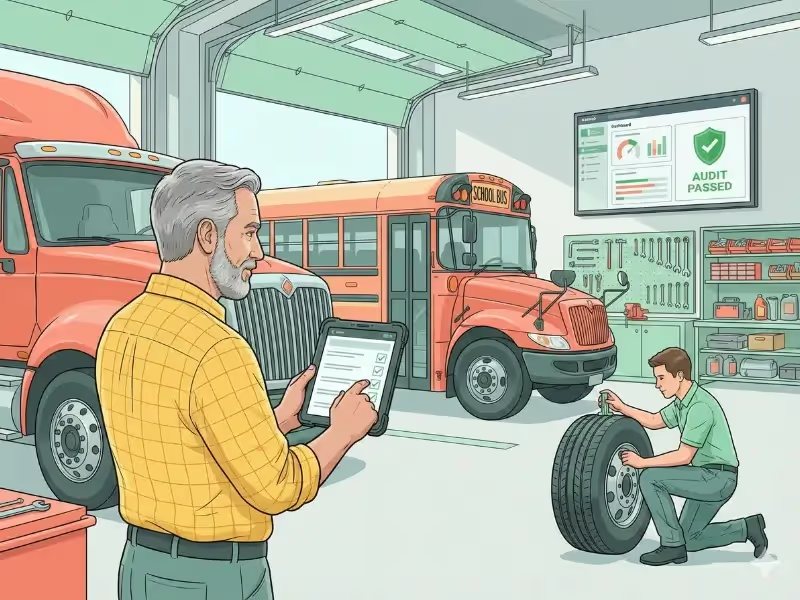
Audits shouldn’t disrupt operations. Simply Fleet makes inspection compliance part of daily workflows. Fleet inspections protect people, reduce risk, and keep operations running smoothly. A strong fleet inspection checklist, supported by digital records, turns audits into routine reviews instead of operational emergencies.
Instead of preparing for audits once a year, Simply Fleet helps fleets stay inspection-ready every day. With Simply Fleet’s digital inspections and DVIR tools, your fleet stays compliant, organized, and audit-ready every day.