



What Should Be on a Wheel Loader Daily Inspection Checklist?
Key Takeaways
- DVIR is a driver vehicle inspection report used to document vehicle safety checks.
- Inspections are typically performed before and after trips to identify safety defects.
- eDVIR digitizes the inspection process using mobile apps and fleet software.
- Digital inspections improve reporting speed, record management, and maintenance workflows.
- Modern fleets increasingly use eDVIR to improve safety, compliance, and operational efficiency.
Fleet safety and reliability depend heavily on the condition of vehicles on the road. Whether it is a logistics company, construction fleet, or service vehicle operation, regular inspections are essential to prevent breakdowns, ensure compliance, and protect drivers.
This is where Driver Vehicle Inspection Reports (DVIR) and their digital version electronic DVIR (eDVIR) become critical. These inspection systems help fleets document vehicle conditions, identify defects early, and maintain clear maintenance records.
As fleets scale and operations become more complex, many companies are moving from traditional paper DVIR processes to digital inspection systems that integrate with fleet management software.
This practical guide explains what DVIR and eDVIR are, why they matter, how they work, and how fleets can implement them effectively.
What Is DVIR?
A Driver Vehicle Inspection Report (DVIR) is a report completed by drivers to confirm that a vehicle has been inspected and is safe to operate.
It documents the condition of key vehicle components, identifies any safety defects, and ensures that problems are reported to maintenance teams before the vehicle continues operation.
DVIRs are commonly used in:
- Trucking fleets
- Delivery and logistics fleets
- Construction vehicle fleets
- Service vehicle fleets
- Public transportation fleets
The goal of a DVIR is simple: identify problems before they become dangerous or expensive.
When Are DVIR Inspections Conducted?
DVIR inspections are usually performed twice during a vehicle’s operational cycle.
Pre-trip inspection
Before starting a trip, the driver inspects the vehicle to confirm that it is safe to operate. This inspection focuses on critical safety components such as brakes, tires, lights, and steering systems.
The pre-trip DVIR helps ensure that vehicles do not leave the yard with safety defects.
Post-trip inspection
At the end of the trip, drivers conduct another inspection to identify any issues that occurred during the day. Any defects discovered during the trip must be documented so that maintenance teams can address them before the next use.
Together, these inspections create a continuous vehicle safety record.
Why DVIR Is Important for Fleet Operations
Vehicle inspections are not just a regulatory requirement. They are also a fundamental part of responsible fleet management.
DVIR processes help fleets achieve several critical goals.
Improve vehicle safety
Routine inspections help identify safety risks early. Issues such as worn brakes, damaged tires, or faulty lights can be detected before they lead to accidents.
By catching problems early, fleets significantly reduce operational risks.
Reduce unexpected breakdowns
Many vehicle failures occur because small issues go unnoticed until they become serious mechanical problems.
Regular DVIR inspections allow fleets to identify warning signs and schedule repairs before breakdowns occur.
Maintain regulatory compliance
In many jurisdictions, fleet operators are required to maintain inspection records for commercial vehicles. DVIR reports provide documented proof that safety checks are being performed regularly.
This documentation becomes extremely valuable during audits, inspections, or accident investigations.
Create a maintenance history
DVIR reports build a historical record of vehicle condition and repairs. Over time, this data helps fleet managers identify recurring issues and plan preventive maintenance strategies.
What Does a DVIR Inspection Include?
A DVIR inspection covers a range of vehicle systems that affect safety and operational reliability.
Drivers typically perform a walkaround inspection and review key components before and after driving the vehicle.
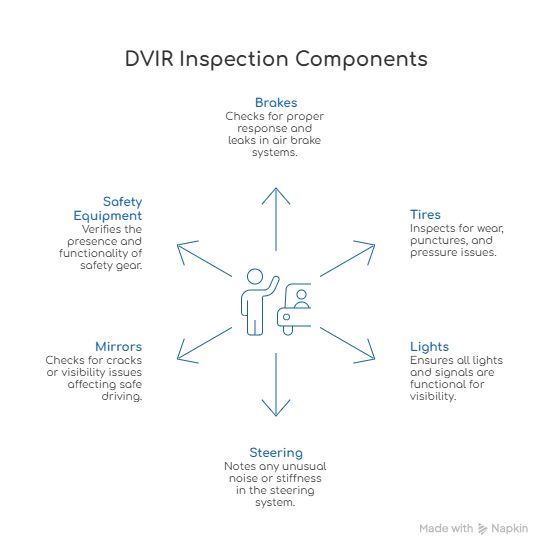
Common DVIR inspection items
- Brakes and air brake systems
Drivers check whether brakes respond properly and whether there are visible leaks or damage in air brake components. - Tires and wheels
Tires must be inspected for tread wear, punctures, or uneven pressure. Damaged wheels or loose lug nuts can also create serious safety hazards. - Lights and signals
Headlights, brake lights, indicators, and hazard lights must all function properly to ensure visibility and safe communication with other drivers. - Steering and suspension components
Any unusual noise, stiffness, or vibration in the steering system should be noted. - Mirrors and windshield
Drivers check for cracks, damage, or visibility issues that may impair safe driving. - Safety equipment
Fire extinguishers, warning triangles, and other required safety equipment must be present and functional.
Each inspection should be documented clearly so maintenance teams understand what needs to be repaired.
What Is eDVIR?
An electronic Driver Vehicle Inspection Report (eDVIR) is the digital version of the traditional paper DVIR.
Instead of filling out inspection forms manually, drivers complete inspections using:
- Mobile apps
- Tablets
- Smartphones
- Fleet management software platforms
The inspection results are automatically stored in a digital system and instantly shared with fleet managers.
Download Your Free Inspection Checklist Now!
Prevent costly breakdowns and maximize uptime with our free checklist.
Download
How eDVIR Works
The typical eDVIR workflow looks like this:
- The driver opens a vehicle inspection checklist in a mobile app.
- The driver completes the inspection and reports any defects.
- Photos or notes can be attached to document issues.
- The report is submitted instantly.
- Fleet managers receive alerts and assign maintenance tasks.
This digital workflow significantly improves speed, accuracy, and accountability.
DVIR vs eDVIR: Key Differences
While paper DVIR systems still exist, most modern fleets are transitioning toward digital inspection solutions.
Benefits of eDVIR for Fleet Management
Digital inspection systems offer major advantages for both drivers and fleet managers.
Faster defect reporting
Drivers can report issues immediately after discovering them. Fleet managers receive alerts in real time and can schedule repairs quickly.
This reduces the risk of vehicles continuing to operate with safety defects.
Improved record management
Paper inspection records are difficult to store, retrieve, and analyze.
eDVIR systems automatically organize reports in a digital database, making it easy to access historical inspection records whenever needed.
Better accountability
Digital inspection systems create clear records showing when inspections were completed and who performed them.
This transparency helps fleets maintain consistent safety standards.
Photo documentation
Drivers can upload photos of defects, which helps maintenance teams understand the problem before the vehicle even reaches the workshop.
This improves repair accuracy and reduces diagnostic time.
Maintenance integration
Many eDVIR systems integrate with fleet maintenance software. When a defect is reported, a maintenance task can be automatically generated and assigned to technicians.
Best Practices for Implementing eDVIR in Fleets
Adopting digital inspection systems requires planning and driver training.
Fleets can improve success by following these best practices.
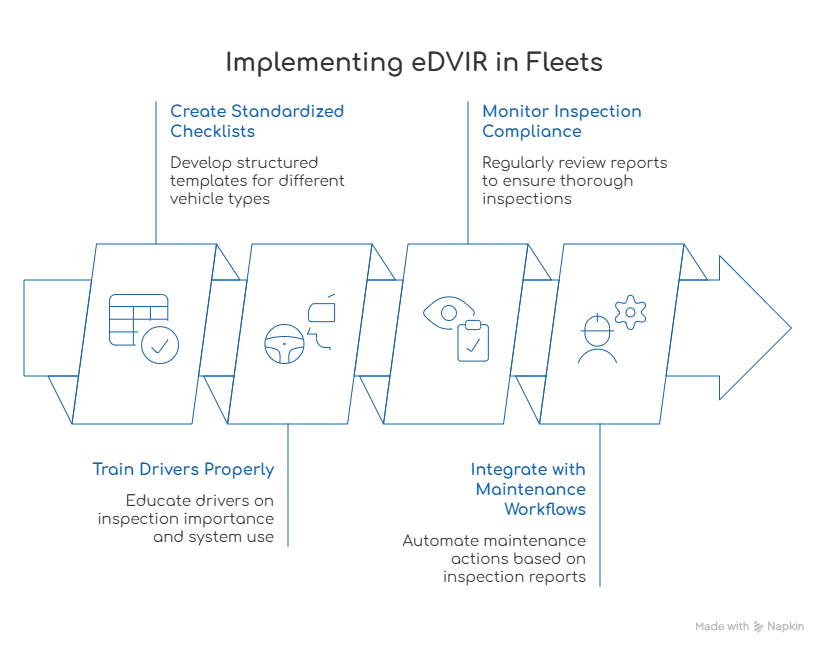
Create standardized inspection checklists
Different vehicle types may require different inspection procedures. Fleets should create structured inspection templates that ensure drivers check all critical components.
A clear checklist helps maintain consistency across the fleet.
Train drivers properly
Drivers should understand why inspections are important and how to use the digital system effectively.
Training should cover:
- How to complete inspection forms
- How to report defects
- When to attach photos
- How to submit reports correctly
Monitor inspection compliance
Fleet managers should regularly review inspection reports to ensure drivers are completing them properly.
Incomplete or rushed inspections can defeat the purpose of DVIR systems.
Integrate inspections with maintenance workflows
The greatest benefit of eDVIR comes when inspection reports trigger maintenance actions automatically.
Integrating inspections with maintenance management allows fleets to respond faster to issues.
Common DVIR Challenges for Fleet Operators
Even though DVIR systems are essential, many fleets face operational challenges when relying on traditional inspection processes.
Paper-based inefficiencies
Manual inspection reports often lead to delays in communication. Maintenance teams may not see reported issues until hours or days later.
This delay can result in vehicles continuing to operate with defects.
Missing or incomplete reports
Drivers sometimes forget to submit paper inspection forms or fail to document issues clearly.
Incomplete records make compliance and maintenance management difficult.
Limited data visibility
Paper reports cannot easily provide insights into recurring vehicle problems.
Digital systems allow fleet managers to analyze inspection trends and identify systemic maintenance issues.
How DVIR and eDVIR Improve Fleet Safety
When implemented properly, DVIR and eDVIR programs create a proactive maintenance culture within fleet organizations.
Instead of waiting for vehicles to break down, fleets can:
- Detect problems early
- Schedule preventive maintenance
- Reduce downtime
- Improve driver safety
- Maintain reliable operations
Digital inspection systems further enhance these benefits by providing real-time data, automated workflows, and centralized records.
As fleet operations become more data-driven, eDVIR systems are becoming an essential part of modern fleet management.
Streamline Inspections with Simply Fleet
Managing vehicle inspections manually can be time-consuming and inefficient.
Simply Fleet’s Fleet Management Software helps fleet operators digitize DVIR inspections, track vehicle maintenance, and manage fleet operations from a single platform.
With Simply Fleet, fleets can:
- Conduct digital vehicle inspections
- Track maintenance tasks automatically
- Monitor fleet health in real time
- Maintain accurate compliance records
- Reduce downtime and operational risks
Start managing inspections smarter with Simply Fleet.