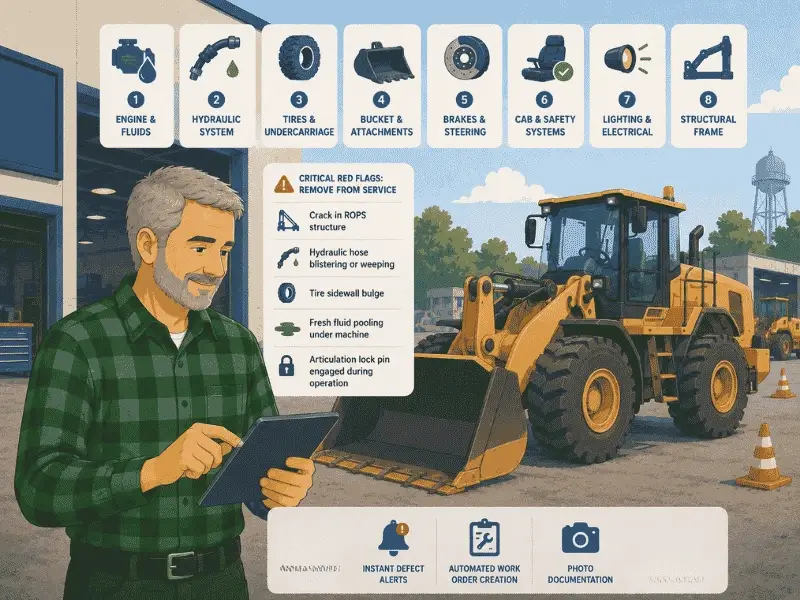






A Practical Guide to Preventing OOS Violations and Maintenance Failures
Key Takeaways
- Regular bit inspection prevents breakdowns and improves safety
- Always check for cracks, wear, and proper fit before use
- Replace bits when performance drops or damage is visible
- Standardized checklists ensure consistency across teams
- Digital fleet tools help automate and streamline inspections
Drill bits and cutting tools are small components, but their impact on fleet operations is significant. Whether used in construction, mining, maintenance, or field service, a poorly maintained bit can slow down work, damage equipment, and even lead to serious safety incidents.
For fleet managers and operators, having a structured bit inspection checklist is not optional. It is a critical part of preventive maintenance and operational efficiency.
This guide breaks down a practical, field-ready bit inspection checklist and explains how you can implement it across your fleet to reduce downtime, improve performance, and ensure safety.
Why Is Bit Inspection Important in Fleet Operations?

Bit inspection is often overlooked because it seems minor compared to engine or vehicle checks. However, ignoring it can have costly consequences.
Key Reasons You Should Prioritize Bit Inspection
- Prevents equipment failure: A damaged or worn bit can break during operation, which may damage the machine or halt work completely. This leads to unexpected downtime and repair costs.
- Improves operational efficiency: Sharp and well-maintained bits reduce resistance during drilling or cutting. This helps operators complete tasks faster with less effort.
- Enhances safety on-site: Cracked or loose bits can detach during operation, posing serious risks to operators and nearby workers.
- Reduces long-term maintenance costs: Regular inspections help identify wear early, allowing timely replacements instead of expensive repairs.
- Extends equipment life: Using the right and well-maintained bit reduces strain on machinery components like motors and gear systems.
What Should a Standard Bit Inspection Checklist Include?
A comprehensive checklist ensures that nothing is missed during inspection. Below is a structured approach that fleet teams can follow.
1. Visual Condition Check
The first step is a simple but crucial visual inspection.
What to Look For
- Cracks or fractures: Even small cracks can expand under pressure and lead to sudden failure during operation.
- Chipped or broken edges: Missing cutting edges reduce efficiency and increase strain on the machine.
- Bent or deformed structure: A bent bit can cause uneven drilling and vibration.
- Burn marks or discoloration: These indicate overheating, often due to improper use or excessive friction.
2. Wear and Tear Assessment
Over time, all bits wear down. Identifying the extent of wear helps determine usability.
Key Inspection Points
- Sharpness of the cutting edge: A blunt bit requires more force and reduces productivity.
- Diameter wear (undergauge condition): If the bit diameter reduces, it may not meet required specifications.
- Uneven wear patterns: This could indicate improper usage or alignment issues.
- Rounded edges: This reduces cutting efficiency and increases energy consumption.
3. Structural Integrity Check
Beyond surface-level inspection, the internal strength of the bit must also be evaluated.
What to Check
- Body fatigue or micro-cracks: Repeated use can weaken the bit structure.
- Shank condition: The shank should not be worn out or deformed, as it affects fitting.
- Thread condition (for threaded bits): Damaged threads can lead to improper attachment and slippage.
- Mushrooming at the head: Expansion at the head indicates excessive impact or stress.
4. Bit Mounting and Fit Check
Even a perfect bit can fail if it is not properly mounted.
Ensure the Following
- Proper fit in the chuck or holder: Loose fitting can cause slippage and vibration.
- Secure locking mechanism: The bit should be firmly locked before operation.
- Correct alignment: Misalignment leads to uneven wear and poor performance.
- No movement during idle rotation: Any wobble indicates improper installation.
5. Surface and Material Condition
Environmental exposure and usage conditions affect the surface quality of bits.
Inspection Points
- Rust or corrosion: Corrosion weakens the material and reduces lifespan.
- Pitting or surface damage: Small surface defects can lead to larger failures over time.
- Contamination (oil, dirt, debris): Dirty bits reduce efficiency and may cause operational issues.
- Cleanliness before use: Always ensure the bit is clean and ready for operation.
6. Functionality Testing
A quick functional test can reveal issues not visible during inspection.
What to Observe
- Smooth rotation: The bit should rotate without resistance.
- Absence of vibration: Excess vibration indicates imbalance or damage.
- No unusual noise: Grinding or rattling sounds signal potential issues.
Download Our Free Fleet Maintenance Resources Now!
Prevent costly breakdowns and maximize uptime with our free checklist.
Download
7. Heat and Stress Indicators
Heat is a major factor affecting bit performance and lifespan.
Signs to Watch
- Blue or black discoloration: Indicates overheating and loss of material strength.
- Surface hardening or brittleness: Excess heat can make the bit fragile.
- Frequent overheating patterns: Suggest improper usage or incorrect bit selection.
8. Compatibility Check
Using the wrong bit for the job can cause immediate and long-term damage.
Key Considerations
- Material compatibility: Ensure the bit is suitable for the material (metal, concrete, wood, etc.).
- Correct size and specification: Using the wrong size affects precision and safety.
Machine compatibility: The bit should match the machine’s RPM and torque requirements.
Bit Inspection Checklist (Quick Reference Table)
When Should You Replace a Drill Bit?
Knowing when to replace a bit is just as important as inspecting it.
Replace the Bit If
- The cutting edge is completely blunt
- Visible cracks or fractures are present
- The diameter is significantly reduced
- The bit produces poor results despite correct usage
- There is excessive vibration or instability
Delaying replacement can increase operational risks and damage expensive machinery.
How Digital Fleet Management Improves Inspection Efficiency
Manual inspections are prone to inconsistency. This is where fleet management systems make a difference.
Benefits of Digital Inspection Systems
- Standardized checklists across all teams
- Real-time reporting and issue tracking
- Automated maintenance reminders
- Data-driven insights for replacement cycles
- Improved compliance and accountability
By digitizing inspections, fleet managers can ensure that no step is missed and every asset is monitored effectively.
Simplify Inspections with Simply Fleet
Streamline inspections, track maintenance, and reduce downtime with Simply Fleet. Create digital checklists, monitor equipment health in real time, and ensure every bit inspection is done right. Take control of your fleet today.
Start optimizing your fleet operations today with Simply Fleet and never miss a critical inspection again.