





Why the Class 8 Pre-Buy Window is Closed and How to Pivot
Key Takeaways
- Daily checks prevent immediate safety risks and breakdowns
- Weekly inspections help identify developing mechanical issues
- Monthly maintenance ensures long-term performance and durability
- Preventive maintenance reduces repair costs and downtime
- Digital tracking tools make maintenance more consistent and scalable
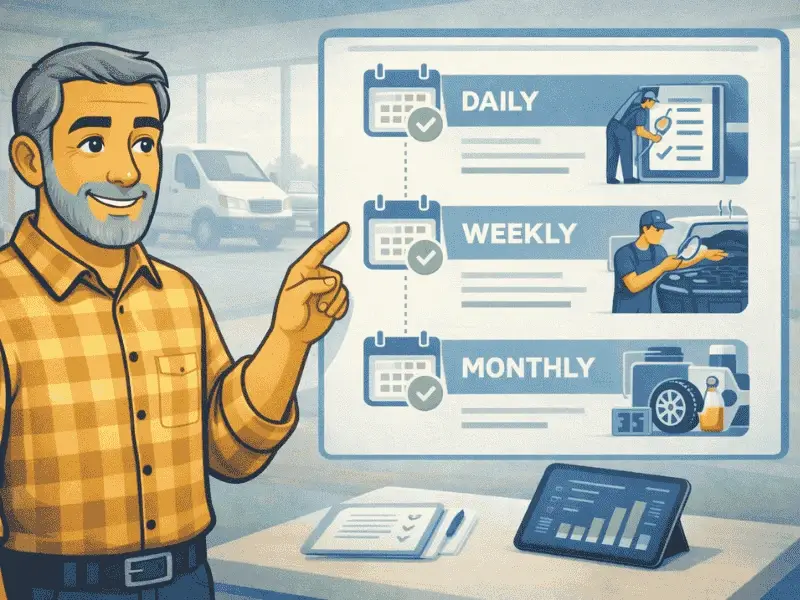
Managing a fleet is about keeping them safe, efficient, and cost-effective. One missed inspection or delayed check can lead to breakdowns, expensive repairs, or even compliance issues.
That is why a structured vehicle maintenance checklist is essential. Whether managing 5 vehicles or 500, a well-defined routine helps prevent problems before they become costly disruptions.
This guide breaks down daily, weekly, and monthly maintenance tasks in a practical and easy-to-follow format designed specifically for fleet operations.
Why a Vehicle Maintenance Checklist Matters for Fleets

Fleet vehicles operate under heavier usage compared to personal vehicles. This means higher wear and tear, tighter schedules, and greater operational pressure.
Key benefits of a structured checklist:
- Reduced downtime: Issues are identified early before failure
- Improved safety: Regular checks minimize accident risks
- Lower costs: Preventive maintenance is cheaper than repairs
- Better compliance: Helps meet legal and operational standards
- Longer vehicle life: Consistent care increases asset value
A checklist creates consistency across drivers and teams, ensuring nothing is overlooked.
Daily Vehicle Maintenance Checklist (Pre-Trip Inspection)
Daily inspections are the first line of defense against breakdowns and safety hazards. These checks should be completed before every trip.
Exterior Inspection
Drivers should visually inspect the vehicle to ensure it is road-ready.
- Tires condition and pressure: Look for under-inflation, cuts, or uneven wear that could affect handling or lead to a blowout
- Lights and indicators: Confirm headlights, brake lights, and turn signals are working properly to ensure visibility and communication on the road
- Windshield and mirrors: Clean surfaces to avoid visibility issues and ensure there are no cracks or obstructions
- Leaks under the vehicle: Any oil, coolant, or fluid leakage must be reported immediately to avoid major engine damage
Under-the-Hood Quick Check
Even a quick glance can prevent serious issues.
- Engine oil level: Low oil can cause engine overheating and damage
- Coolant level: Ensures the engine maintains optimal temperature
- Belts and hoses (visible): Check for obvious looseness or cracks
Interior & Functional Checks
Before driving, the vehicle must be operationally safe.
- Dashboard warning lights: Any alerts should be addressed before starting the trip
- Brakes and steering response: Ensure proper control and responsiveness
- Horn and seat belts: Basic safety features must be functional
- Fuel level: Avoid unnecessary delays due to low fuel
Daily checks take only a few minutes but can prevent major operational disruptions.
Weekly Vehicle Maintenance Checklist
Weekly inspections go deeper than daily checks and focus on developing issues that are not immediately visible.
Fluids and Engine Components
- Brake fluid level: Low levels may indicate leaks or brake wear
- Transmission fluid: Essential for smooth gear shifting and vehicle performance
- Washer fluid: Ensures visibility during adverse weather conditions
Tires and Wheels
- Tire pressure with gauge: Accurate readings ensure optimal fuel efficiency and safety
- Tread depth: Low tread reduces traction, especially on wet roads
- Spare tire condition: Often overlooked but critical during emergencies
Battery and Electrical Systems
- Battery terminals: Look for corrosion or loose connections that may cause starting issues
- Electrical components: Ensure all lights and indicators are functioning properly
Filters and Airflow
- Air filter inspection: A clogged filter reduces engine efficiency and increases fuel consumption
- Cabin filter: Ensures driver comfort and air quality
Belts, Hoses & Exhaust
- Belts and hoses: Check for cracks, wear, or looseness
- Exhaust system: Listen for unusual noise or leaks that may indicate damage
Weekly checks help identify problems early, allowing fleet managers to schedule maintenance proactively rather than reactively.
Download Our Free Fleet Maintenance Resources Now!
Prevent costly breakdowns and maximize uptime with our free checklist.
Download
Monthly Vehicle Maintenance Checklist
Monthly fleet maintenance is more comprehensive and focuses on long-term performance and reliability.
Engine and Fluids
- Engine oil and filter (if due): Regular oil changes prevent engine wear and overheating
- Coolant system inspection: Ensures efficient heat regulation
- Power steering and brake fluids: Essential for smooth and safe operation
Brake System
- Brake pads and discs: Worn brakes compromise safety and must be replaced promptly
- Brake performance: Ensure there is no delay or noise during braking
Suspension and Steering
- Shock absorbers and suspension: Affect ride quality and vehicle control
- Steering components: Ensure proper alignment and responsiveness
Battery and Electrical System
- Battery health test: Weak batteries can lead to unexpected breakdowns
- Wiring and connections: Check for wear or damage
Air and Fuel Systems
- Air filter replacement or cleaning: Improves engine efficiency
- Fuel system inspection: Ensures smooth fuel delivery
Exhaust and Emissions
- Exhaust inspection: Detect leaks or damage
- Emission checks: Helps maintain environmental compliance
Monthly checks are crucial for maintaining fleet reliability and operational continuity.
Vehicle Maintenance Checklist Summary Table
Common Mistakes Fleet Managers Should Avoid
Even with a checklist, certain mistakes can reduce effectiveness.
- Ignoring minor issues: Small problems like unusual noise or slight leaks can quickly escalate into major failures if not addressed early.
- Lack of documentation: Without proper records, it becomes difficult to track maintenance history or identify recurring issues.
- Inconsistent inspections: Skipping checks due to time constraints can lead to unexpected breakdowns.
- Over-reliance on reactive maintenance: Waiting for a problem to occur instead of preventing it increases costs and downtime.
Avoiding these mistakes ensures the checklist delivers real value.
Simplify Fleet Maintenance with Simply Fleet
A well-structured vehicle maintenance checklist is a strategic tool for improving fleet performance.
For fleet operations, consistency is key. When every vehicle follows the same maintenance standard, the entire system becomes more efficient and reliable.
Managing maintenance manually can be time-consuming and inconsistent.
Simply Fleet helps streamline your operations. Take control of your fleet today. Explore Simply Fleet and make maintenance effortless.