




Keeping Up with the Industry: Fleet Forward Conference 2026
Key Takeaways
- Fleet maintenance technicians ensure vehicles are safe, reliable, and operational.
- Their responsibilities include preventive maintenance, diagnostics, repairs, and inspections.
- Strong technical, problem-solving, and digital skills are essential for the role.
- A structured daily workflow helps maintain efficiency and minimize downtime.
- Technology is transforming fleet maintenance with predictive and data-driven systems.
Fleet operations run on consistency, reliability, and proactive maintenance. At the center of this system is the fleet maintenance technician, a role that directly impacts vehicle uptime, safety, and overall operational costs.
For businesses managing multiple vehicles (whether in logistics, construction, or service industries) understanding this role is critical. This article breaks down the responsibilities, skills, and daily workflow of fleet maintenance technicians, along with how they contribute to efficient fleet operations.
Who is a Fleet Maintenance Technician?
A fleet maintenance technician is responsible for inspecting, maintaining, and repairing vehicles within a fleet to ensure they operate safely and efficiently.
Unlike general mechanics, fleet technicians focus on:
- Maintaining multiple vehicles under a structured system
- Following preventive maintenance schedules
- Minimizing downtime across operations
Their work goes beyond fixing problems. They are responsible for preventing problems before they occur.
Key Responsibilities of a Fleet Maintenance Technician
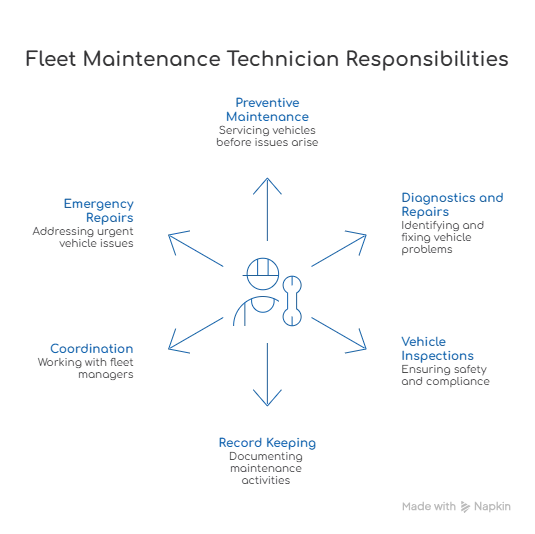
The key responsibilities of a fleet maintenance technician are mentioned below. These responsibilities primarily focus on ensuring that vehicles are properly maintained, operational at all times, and compliant with safety and regulatory requirements across the fleet.
1. Preventive Maintenance
Preventive maintenance is the foundation of fleet reliability. It involves servicing vehicles before issues escalate.
- Technicians perform scheduled tasks such as oil changes, brake inspections, and fluid checks at regular intervals. This ensures that wear and tear is addressed early, preventing unexpected breakdowns that can disrupt operations.
- They also follow maintenance calendars based on mileage, usage, or time intervals. This structured approach helps fleets maintain consistency across all vehicles rather than reacting to failures.
2. Diagnostics and Repairs
When issues arise, technicians must identify and resolve them quickly.
- Using diagnostic tools, technicians analyze engine performance, electrical systems, and onboard vehicle data to detect faults. This requires both technical expertise and experience in interpreting system outputs.
- Once the issue is identified, they repair or replace faulty components such as engines, transmissions, or wiring systems. Their ability to diagnose accurately reduces repair time and avoids repeated issues.
3. Vehicle Inspections and Compliance
Safety and compliance are non-negotiable in fleet operations.
- Technicians conduct routine inspections to ensure vehicles meet regulatory and safety standards. This includes checking brakes, tires, lights, emissions, and suspension systems.
- These vehicle inspections help companies avoid penalties, ensure driver safety, and maintain operational credibility, especially in industries like logistics and public transport.
4. Record Keeping and Maintenance Logs
Documentation plays a critical role in fleet management.
- Technicians maintain detailed service records for each vehicle, including repairs, part replacements, and maintenance schedules. These records help track vehicle performance over time.
- Accurate logs enable fleet managers to identify patterns, predict failures, and make data-driven decisions about repairs or replacements.
5. Coordination with Fleet Managers
Fleet maintenance is a collaborative process.
- Technicians work closely with fleet managers to schedule repairs without disrupting operations. This coordination ensures vehicles are serviced at optimal times.
- They also communicate vehicle conditions, upcoming maintenance needs, and potential risks, helping management plan effectively.
Download Our Free Fleet Maintenance Resources Now!
Prevent costly breakdowns and maximize uptime with our free checklist.
Download
6. Emergency and Field Repairs
Breakdowns can happen despite preventive efforts.
- Technicians may respond to emergency situations where vehicles fail on the road. In such cases, they either perform on-site repairs or assess whether towing is required.
- Quick response to emergencies minimizes downtime and ensures continuity of operations.
Essential Skills Every Fleet Maintenance Technician Must Have
The essential skills every fleet maintenance technician must have are outlined below. These skills enable technicians to handle maintenance tasks efficiently, diagnose issues accurately, and ensure smooth and safe fleet operations.
Technical Skills
A strong understanding of mechanical systems such as engines, transmissions, and braking systems is essential. Technicians must also be comfortable working with modern vehicle electronics and onboard diagnostics. Familiarity with tools, repair techniques, and maintenance procedures ensures that technicians can handle both routine servicing and complex repairs efficiently.
Problem-Solving Ability
Diagnosing issues is not always straightforward. Technicians must identify root causes rather than just fixing visible symptoms. This requires analytical thinking, attention to detail, and the ability to troubleshoot under time constraints.
Digital and Software Skills
Modern fleet operations rely heavily on software systems. Technicians should be familiar with maintenance tracking tools, inventory systems, and diagnostic software. Using digital tools helps streamline workflows, reduce errors, and improve coordination with fleet managers.
Communication Skills
Clear communication is essential for reporting issues and coordinating repairs. Technicians must explain technical problems in a way that managers and drivers can understand, ensuring better decision-making.
Physical and Practical Skills
The role requires physical stamina, as technicians often work in demanding environments and handle heavy components. Precision and manual dexterity are important for performing repairs accurately and safely.
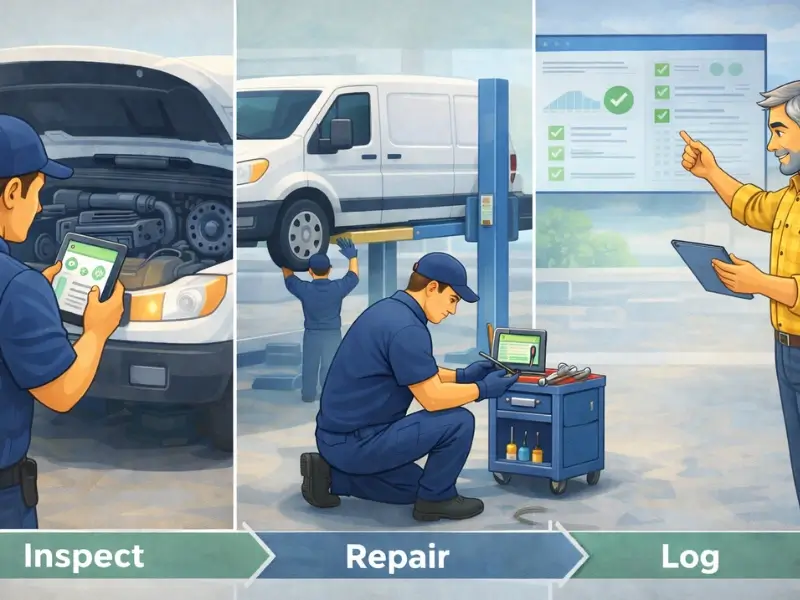
Daily Workflow of a Fleet Maintenance Technician
Understanding the daily workflow helps businesses appreciate how this role contributes to operational efficiency.
.webp)
Morning: Inspection and Planning
The day typically begins with reviewing work orders and maintenance schedules. Technicians prioritize tasks based on urgency and operational needs. Vehicles are inspected for any immediate issues, especially those reported by drivers or flagged during previous operations.
Midday: Maintenance and Repairs
Technicians carry out scheduled maintenance tasks such as oil changes, brake servicing, and system checks. They also diagnose and repair any issues identified during inspections or reported by drivers. This is the most intensive part of the day, requiring focus and efficiency.
Afternoon: Documentation and Coordination
After completing repairs, technicians update maintenance records and service logs. This ensures accurate tracking of each vehicle’s history. They may also coordinate with suppliers to order spare parts and prepare for upcoming maintenance tasks.
On-Demand Tasks
Emergency repairs or unexpected breakdowns can occur at any time. Technicians must be ready to respond quickly. These situations test their ability to work under pressure and make quick decisions.
End of Day: Review and Preparation
The day ends with final checks to ensure all serviced vehicles are ready for operation. Tools and workspaces are organized, and plans are made for the next day’s tasks.
Why Fleet Maintenance Technicians Are Critical for Business Operations
Fleet maintenance technicians play a direct role in improving efficiency and reducing costs.
Their work ensures that fleet operations run smoothly, making them indispensable to any fleet-dependent business.
Upgrade Your Fleet Operations with Simply Fleet
Fleet maintenance technicians are the backbone of efficient fleet operations. Their work directly influences safety, cost management, and business productivity. By combining technical expertise with structured processes, they ensure that fleets remain reliable and ready for daily operations.
Managing maintenance manually can lead to missed schedules, unexpected breakdowns, and rising costs.
Simply Fleet helps streamline your entire maintenance process. Take control of your fleet operations today with Simply Fleet.