



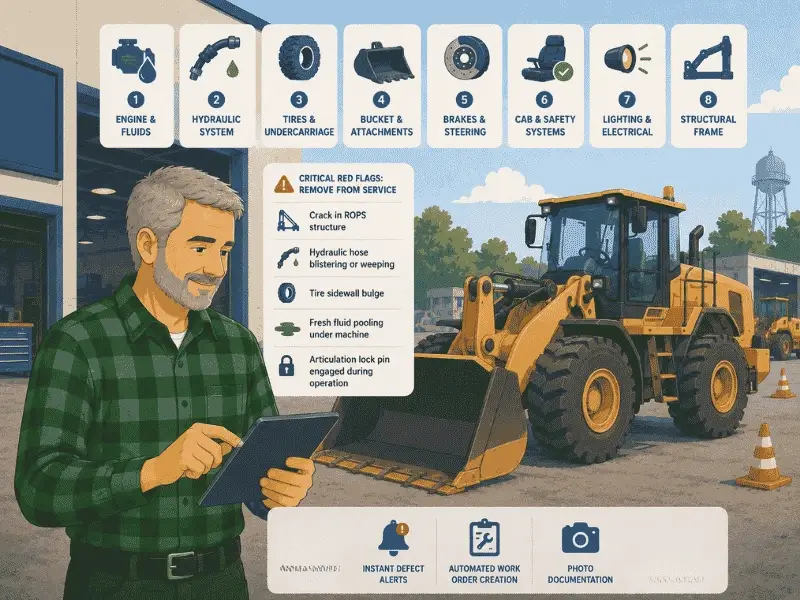
What Should Be on a Wheel Loader Daily Inspection Checklist?
Key Takeaways
- Vehicle inspection forms ensure safety, compliance, and cost control across fleet operations
- Pre-trip and post-trip inspections are essential for preventing breakdowns and liability risks
- A good template includes vehicle details, checklist items, defect reporting, and sign-offs
- Digital inspection forms improve accuracy, tracking, and real-time reporting
- Standardized processes lead to better maintenance planning and fleet performance
Fleet operations depend heavily on vehicle safety, reliability, and compliance. One of the simplest yet most powerful tools to ensure all three is a well-structured vehicle inspection form.
Whether managing a small fleet or a large enterprise operation, inspection forms help standardize checks, reduce risks, and maintain accountability across drivers and vehicles. Without a proper system, inspections become inconsistent, issues go unnoticed, and operational costs increase.
This guide explains everything needed to design and implement effective vehicle inspection forms and templates for fleets.
What is a Vehicle Inspection Form?
A vehicle inspection form is a structured checklist used by drivers or fleet managers to evaluate the condition of a vehicle before and after use.
It ensures that:
- Critical components like brakes, tires, and lights are functioning properly
- Safety equipment is present and usable
- Any defects are identified and reported immediately
In many fleet operations, this process is referred to as a Driver Vehicle Inspection Report (DVIR).
Why Vehicle Inspection Forms Are Critical for Fleets

Vehicle inspections are a core part of safe and efficient fleet operations. They help standardize inspections, reduce the chances of human error, and ensure that every vehicle meets safety and compliance requirements. For fleet managers, vehicle inspection forms act as a control system that keeps operations predictable, accountable, and cost-effective.
Improved Safety Across Operations
Regular inspections help identify potential hazards before they lead to accidents. A faulty brake or worn-out tire can be detected early, preventing serious incidents.
Better Cost Management
Small issues, if ignored, often turn into expensive repairs. Inspection forms help catch these problems early, reducing long-term maintenance costs.
Regulatory Compliance
Many industries require documented vehicle inspections. Proper forms ensure that fleets stay compliant and avoid penalties or legal complications. Learn more about DOT compliance for fleets.
Accountability and Transparency
Inspection forms create a clear record of who inspected the vehicle, what issues were found, and what actions were taken. This builds accountability across teams.
Types of Vehicle Inspection Forms for Fleets
Not all inspections serve the same purpose, which is why fleets use different types of inspection forms at various stages of vehicle usage. Each form is designed to capture specific information, whether it is before a trip, after a trip, or during routine maintenance.
Understanding these types helps in building a structured inspection process that covers every aspect of vehicle health and compliance.
Pre-Trip Inspection Forms
These are completed before a vehicle is used. They focus on ensuring that the vehicle is safe and ready for operation.
Typical checks include:
- Brake functionality and responsiveness
- Tire pressure and visible damage
- Lights, indicators, and mirrors
- Fluid levels such as engine oil and coolant
These inspections reduce the chances of breakdowns during operations.
Post-Trip Inspection Forms
These are filled out after the vehicle has been used.
They focus on:
- Identifying new damage or issues
- Recording mileage and usage
- Reporting defects that occurred during the trip
Post-trip inspections help maintain a continuous maintenance cycle.
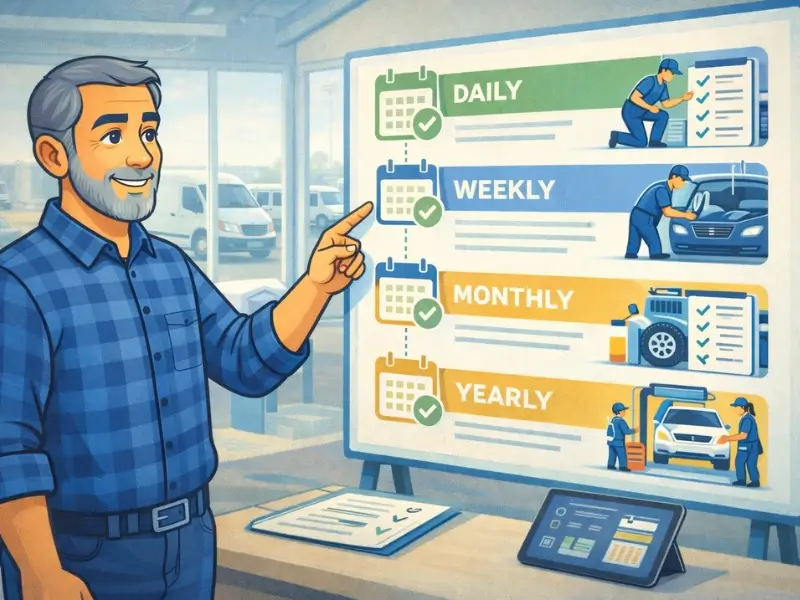
Routine (Daily/Weekly) Inspection Checklists
These are scheduled checks conducted regularly.
They help monitor:
- Long-term wear and tear
- Engine performance
- Battery condition
- General vehicle health
These inspections are essential for preventive maintenance.
Compliance and Audit Inspection Forms
These are used by supervisors or auditors to ensure adherence to safety and regulatory standards.
They typically include:
- Documentation verification (insurance, registration)
- Safety compliance checks
- Maintenance history review
Download Your Free Vehicle Inspection Checklist Now!
Prevent costly breakdowns and maximize uptime with our free checklist.
Download
Key Components of an Effective Fleet Inspection Template
A well-designed template ensures consistency and completeness in inspections.

Vehicle Information Section
This section captures essential identification details such as vehicle ID, license plate number, make, model, and odometer reading. Accurate information ensures proper tracking and record-keeping.
Inspector Details
This includes the name, contact information, and signature of the driver or inspector. It establishes accountability and ensures traceability.
Inspection Checklist
Interior Checks
- The horn should be tested to confirm proper functioning.
- Seat belts must be inspected for usability and damage.
- Dashboard indicators should be checked for warning signals.
Exterior Checks
- Tires should be examined for wear, pressure, and visible damage.
- Lights and indicators must be functioning correctly.
- Mirrors and windshield should be free from cracks or obstructions.
Mechanical Checks
- Engine oil levels should be within recommended limits.
- Coolant and brake fluids must be adequate.
- Battery condition should be stable and secure.
Safety Equipment Verification
This ensures that emergency tools are available and functional.
- Fire extinguishers should be accessible and not expired
- First aid kits must be stocked and ready
- Warning triangles and emergency tools should be present
Defect Reporting Section
This section allows drivers to clearly describe any issues found during inspection.
It should include:
- Detailed description of the defect
- Severity level (minor, major, critical)
- Recommended action
Learn how DVIR photo evidence strengthens defect documentation.
Sign-Off Section
Signatures from both the driver and supervisor confirm that the inspection has been completed and reviewed.
Sample Vehicle Inspection Template Structure
Below is a simplified format that can be used as a starting point:
You can also explore free fleet checklist templates to get started quickly.
Paper vs Digital Inspection Forms: Which is Better?
Fleet businesses are increasingly shifting toward digital inspection systems.
Paper-Based Forms
Paper forms are simple to use and require no technology. However, they come with several limitations. Data is difficult to track, reports are delayed, and there is a higher risk of human error or lost records.
Digital Inspection Forms
Digital forms provide a more efficient and scalable solution.
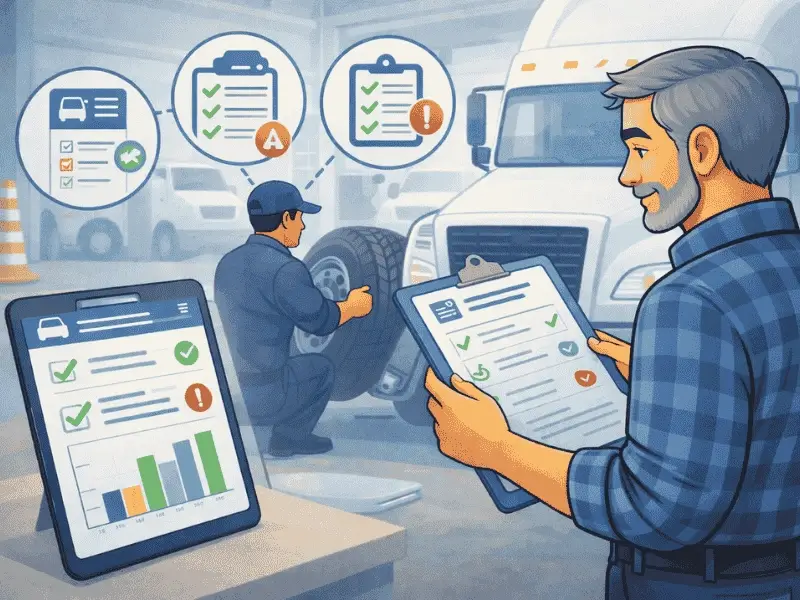
- Inspections can be completed quickly using mobile devices
- Data is stored automatically and can be accessed anytime
- Photos can be attached for better documentation
- Real-time alerts can be generated for critical issues
Digital systems significantly improve operational visibility and decision-making.
Explore the best vehicle inspection apps available for modern fleets. Digital systems significantly improve operational visibility and decision-making.
How Vehicle Inspection Forms Improve Fleet Performance
Vehicle inspection forms are not just a compliance requirement. They are a strategic tool that directly impacts fleet performance.
- They reduce downtime by identifying issues early
- They improve driver safety and confidence
- They extend vehicle lifespan through preventive maintenance
- They support better planning and resource allocation
Over time, consistent inspections lead to more efficient and reliable fleet operations.
Final Thoughts
Vehicle inspection forms play a critical role in maintaining safe, efficient, and compliant fleet operations. From pre-trip checks to ongoing maintenance tracking, these forms ensure that every vehicle is road-ready and every issue is documented.
Modern fleets are increasingly adopting digital solutions to streamline inspections, improve accuracy, and gain real-time insights. A well-designed inspection process not only reduces risks but also enhances overall fleet performance.
Managing inspections manually can slow down operations and lead to missed issues.
With Simply Fleet, fleet inspections become faster, smarter, and fully digital. Start optimizing fleet safety and performance with Simply Fleet today.