





Preventive Maintenance Checklist for Excavators: What to Check and When
Key Takeaways
- Most mid-to-large fleets run telematics, fuel cards, and a maintenance system as separate, disconnected tools.
- The hidden cost is manual cross-referencing: copying odometer readings, matching fuel transactions to mileage, and rebuilding cost-per-mile in spreadsheets.
- The highest-value connections are the ones that remove manual data entry: GPS-triggered maintenance reminders and automatic fuel card data import.
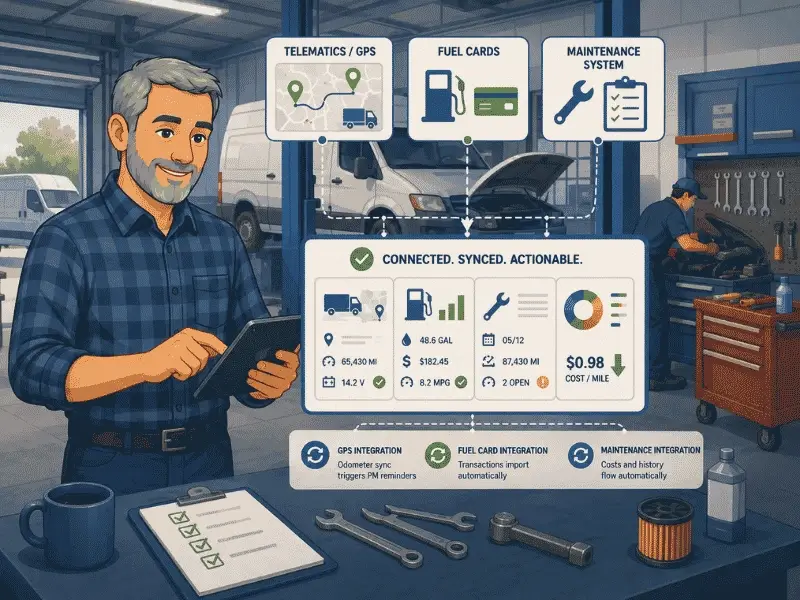
- Simply Fleet connects two of the highest-friction data sources. GPS integration triggers maintenance reminders from real odometer data. WEX fuel card transactions import automatically on a set schedule.
- The goal is not a single system that does everything. It is removing the manual handoffs between the systems you already run.
When I was researching how mid-to-large fleets actually run their software, the thing I could not find anywhere was an honest account of how disconnected everything is. The marketing talks about unified platforms and single sources of truth. The reality on most fleet teams is three or four systems that do not talk to each other, and a person whose unofficial job is to copy data between them.
A fleet running 120 vehicles typically has a GPS or telematics system tracking location and mileage, fuel cards recording every fill-up, and a maintenance system holding service records. Each one works. The problem is the gaps between them. The odometer in the telematics system does not flow into the maintenance schedule, so preventive maintenance is triggered off manually entered readings that are often weeks out of date. The fuel card data sits in a separate portal, so nobody cross-references it against mileage unless something looks obviously wrong. And the maintenance system holds repair costs but not fuel costs, so true cost per mile lives in a spreadsheet that one person updates and everyone else distrusts.
This is the software fatigue that enterprise fleet managers describe. It is not that they have too few tools. It is that the tools do not connect, and the connecting work falls on people.
The Hidden Cost of Disconnected Fleet Systems
Most cost-control conversations in fleet focus on the obvious numbers: fuel price, repair spend, parts cost. The cost of disconnected systems is harder to see because it does not show up as a line item. It shows up as time, errors, and decisions made on stale data.
Here is where it hides:
Manual odometer entry creates inaccurate PM timing
If your maintenance system relies on someone manually entering odometer readings, your preventive maintenance is only as current as the last time someone typed in a number. On a large fleet, that means PM intervals are calculated off readings that can be weeks old. A vehicle that has driven 4,000 miles since its last recorded reading is treated as if it has driven far fewer. The service comes due late. The interval slips. And nobody notices until the pattern shows up as premature wear.
Fuel data in a separate portal goes unchecked
Fuel card providers give you a portal. It shows transactions. What it does not do is sit next to your mileage and maintenance data, which is where fuel anomalies actually become visible. A fill-up that is larger than the tank capacity, two fills on the same vehicle an hour apart, or fuel volume that does not match the miles driven, these are only obvious when fuel data and mileage data are in the same place. In separate systems, they require someone to manually export both and compare them, which on a busy fleet means it rarely happens.
Cost per mile lives in a spreadsheet nobody trusts
True cost per mile requires fuel cost, maintenance cost, and accurate mileage in one calculation. When those three data points live in three systems, someone has to export and combine them manually. The result is a spreadsheet that is out of date the moment it is built, and a number that leadership treats with suspicion because they know how it was assembled. Getting this number right is foundational, and the methodology matters: this guide on how to calculate fleet cost per mile breaks down what has to be connected for the figure to be trustworthy.
Why This Problem Gets Worse as Fleets Grow
At 15 vehicles, one person can hold the cross-referencing together. They know the fleet, they notice when a fuel transaction looks off, and they can update the odometer readings without it becoming a full-time job.
At 100-plus vehicles across multiple locations, that breaks down for a simple reason: the volume of manual reconciliation grows faster than anyone can keep up with. More vehicles mean more fuel transactions, more odometer readings to enter, more service records, and more opportunities for the data in one system to drift out of sync with the data in another.
The failure is not dramatic. Nothing breaks all at once. The data just gets progressively less reliable until the fleet is running on numbers that feel approximately right but cannot be trusted for a real decision. And the larger the fleet, the more expensive each bad decision becomes.
The Two Connections That Matter Most
Not every integration is worth the effort. The approach that comes from looking at where fleet teams actually lose time is to prioritize the connections that remove the most manual data entry. For most mid-to-large fleets, two connections deliver the majority of the benefit.
Connection 1: GPS telematics to maintenance reminders
The single most valuable data connection for maintenance accuracy is getting real odometer or engine-hour data into your PM schedule automatically. When your telematics system already knows how far each vehicle has driven, there is no reason for a person to be typing those numbers into a separate maintenance system.
Simply Fleet supports maintenance reminders triggered through GPS integration. The odometer data from the connected telematics system drives the PM schedule, so preventive maintenance comes due based on actual usage rather than the last reading someone remembered to enter. This removes the most common cause of slipped PM intervals on large fleets: stale, manually entered mileage.
This matters because the accuracy of your entire preventive maintenance program depends on the accuracy of the meter reading behind it. The research on why fleets experience breakdowns despite having PM programs consistently points to interval timing as a root cause, and interval timing is only as good as the odometer data feeding it.
Connection 2: Fuel card transactions to fleet records
The second connection that removes significant manual work is automatic fuel card data import. Instead of logging into a separate fuel card portal, exporting transactions, and importing them into your fleet system, the data flows in on its own.
Simply Fleet's WEX fuel card integration imports fuel transactions automatically, based on a sync schedule the fleet sets during WEX setup. The transactions land in the same system as the asset records, the maintenance history, and the cost data. There is no manual export-import cycle, and no separate portal to check.
The honest scope here is worth being clear about: the system records the WEX transactions, it does not automatically flag suspicious ones. But putting fuel data in the same place as mileage and asset data is what makes discrepancies findable in the first place. A manager reviewing fuel against mileage in one system can spot the patterns that are invisible when the data sits in a separate portal. For the metrics worth watching, this breakdown of fuel KPIs for fleets covers what to track once the data is consolidated.
Download Our Free Fleet Maintenance Resources Now!
Prevent costly breakdowns and maximize uptime with our free checklist.
Download
How Fuel Discrepancies Become Visible When Data Is Connected
Fuel waste and fuel fraud are real costs on large fleets, but most fleet content overstates what software does about them automatically. Let me be precise about how this actually works.
Consolidating fuel data with mileage and asset data does not automatically catch theft. What it does is make the signals visible to a person who is looking. Here is what becomes noticeable when fuel transactions sit next to mileage in one system:
- Fill volume exceeding tank capacity: a transaction showing more fuel than the vehicle's tank holds is only obvious when you know the asset's tank size, which lives in the same system.
- Fuel that does not match distance driven: when mileage and fuel are in one place, a vehicle consuming far more fuel per mile than its history suggests becomes visible in efficiency reporting.
- Multiple fills in a short window: Two transactions on the same card within a short period are easy to see in a consolidated fuel log, harder to catch across separate exports.
- Fills on days the vehicle was not in use: cross-referencing fuel dates against trip or usage data surfaces transactions that do not line up with operations.
None of this is automatic flagging. It is the difference between data being reviewable and data being scattered. A manager who can pull fuel and mileage in one view will catch patterns that no one catches when the fuel data lives in a portal nobody logs into. The deeper discussion of fuel card controls and reducing fuel fraud is worth reading for the policy side of this, which matters as much as the data side.
What to Track Once Your Data Is Connected
Connecting the data is the first step. The value comes from what you can then see. Here is what becomes trackable when telematics, fuel, and maintenance data are consolidated:
The reporting view that pulls these together is where the connected data pays off. A fleet management dashboard built on consolidated data shows cost and usage signals that are simply not visible when the underlying data is split across three systems.
How This Looks Across Different Fleet Types
How Simply Fleet Connects Your Fleet Data
Simply Fleet is not positioned as a system that replaces your telematics provider or your fuel card. It is the maintenance and cost system that connects to them, so the data you already generate flows into one place instead of staying trapped in separate portals.
Here is what that looks like in practice:
GPS-triggered maintenance reminders: Through telematics integration, real odometer data drives the PM schedule. Maintenance reminders trigger on actual usage, which removes the manual odometer entry that causes intervals to slip. See Simply Fleet's preventive maintenance software and the fleet integrations available.
Automatic WEX fuel card import: The WEX fuel card add-on imports fuel transactions automatically on a sync schedule you set during setup. Fuel data lands alongside asset, cost, and maintenance records, with no manual export-import cycle. See the fuel management software.
Bulk CSV import for historical and bulk data: For data sources that are not directly integrated, Simply Fleet supports bulk CSV import of fuel logs, vehicles, and other records, so historical data and data from other systems can be brought in without manual single-entry.
Unified cost and consumption reporting: With fuel and maintenance costs recorded against each asset, reporting can show cost per mile, fuel efficiency, and cost by asset group or location from one source. The reporting and data analysis features turn consolidated data into the numbers leadership can act on.
AI receipt scanning for non-card fuel purchases: For fuel bought outside the WEX card, drivers can scan receipts in the mobile app to capture the transaction, so fuel data stays complete even when it does not come through the card integration.
Want to see how connected fleet data translates into day-to-day maintenance operations? Watch the video below for a practical walkthrough of telematics-powered maintenance workflows in Simply Fleet:
Simply Fleet connects the two highest-friction data sources for most fleets, telematics-driven maintenance timing and fuel card transactions, and consolidates the cost data that those systems generate. It does not claim to be a universal integration layer for every system in your stack. What it does is remove the manual handoffs that cost the most time and create the most unreliable data.
Conclusion: Connection Beats Consolidation
The thing most enterprise fleet managers actually want is not a single system that does everything. They have been promised that before, and they know how it ends. What they want is for the systems they already run to stop creating manual work and unreliable data.
That is a more achievable goal, and a more honest one. The two connections that matter most, getting real odometer data into the maintenance schedule and getting fuel transactions out of a separate portal, remove the bulk of the manual cross-referencing that drains time and erodes trust in the numbers.
Cost control in fleet is usually treated as a finance problem. It is a data problem. The teams that connect the right data points end up controlling cost almost as a side effect, because for the first time they can actually see what each asset costs to run, whether fuel spend tracks with usage, and whether maintenance is keeping pace with real mileage.
Start with the connection that removes the most manual entry for your fleet. For most, that is GPS-triggered maintenance and automatic fuel import. Get those two right, and the spreadsheet that nobody trusts can finally be retired.
If you want to see how the telematics and fuel integrations work in practice, book a demo or explore the fleet management software overview.
Read More:
Why Geotab + Simply Fleet Is a Powerful Combination for Large Fleets
Simply Fleet + Verizon Connect: Automating Preventive Maintenance with Automatic Odometer Data