



Construction Equipment Downtime Cost: How to Calculate It (and Cut It)
Key Takeaways
- Manual odometer logs and paper DVIRs are the two most common reasons public works fleets scramble before a DOT compliance review.
- Simply Fleet's Samsara integration pulls mileage and fault code data straight into vehicle records, removing manual entry.
- Digital inspections replace paper checklists with photos, signatures, and inspection records that hold up under audit review.
- Failed inspection items convert into work orders automatically, so the defect to repair trail is already documented.
- Electronic DVIRs are explicitly permitted under FMCSA's 2026 rule, removing any doubt about whether digital records satisfy an audit.
Public works fleets automate DOT audits by connecting Simply Fleet to Samsara so odometer readings sync automatically and drivers complete digital vehicle inspections with photos, signatures, and timestamps instead of paper DVIRs. The result is a searchable digital inspection and maintenance record an auditor can review in minutes instead of days.
Public works departments run some of the most scrutinized fleets in the country. Snowplows, street sweepers, utility trucks, and emergency vehicles all sit under one department's name, and taxpayers see the results directly. When a DOT compliance review lands on a public works or municipal fleet, the stakes go beyond a fine. Industry compliance data suggests only about 7% of motor carriers pass a compliance review without a single violation, and fleets still relying on paper DVIRs and spreadsheet mileage logs tend to land on the wrong side of that number. Connecting Simply Fleet to Samsara closes the two gaps that cause most of the damage: manual odometer entry and paper inspection trails.
Why Public Works Fleets Carry a Heavier Compliance Burden
A single public works or government fleet can be responsible for a dozen vehicle types across multiple divisions: streets, water, parks, and emergency response, each with its own service pattern and audit exposure. Add federal or state grant funding, and documentation requirements multiply again, since funding bodies expect a clean audit trail alongside DOT compliance. Most government fleet maintenance programs still track this manually across paper binders, driver notebooks, and disconnected spreadsheets, a challenge common enough that it shows up across most public sector fleet operations. When an auditor asks for twelve months of maintenance and inspection records, as a DOT compliance review typically does, that structure turns into hours of searching instead of minutes.
What "Automating a DOT Audit" Actually Means
Automating an audit does not mean removing human oversight. It means removing the two manual steps that create the biggest gaps in a compliance record: odometer entry and paper inspections. Simply Fleet's telematics integration with Samsara pulls mileage and diagnostic trouble codes directly from the vehicle into Simply Fleet, so a reading never depends on a driver remembering to write it down. On the inspection side, drivers complete a digital vehicle inspection through the DVIR app, capturing photos, signatures, and odometer readings at the point of inspection instead of on a clipboard that may or may not make it back to the office.
Industry-wide, only about 7% of motor carriers pass a DOT compliance review without a single violation, and the gap usually isn't a missing policy, it's a missing handoff. Paper DVIRs sit in a truck cab until someone remembers to file them, and odometer readings get copied from a dashboard days after the fact. Fleets that moved to digital inspections have reported meaningfully higher audit pass rates than paper based fleets, precisely because a photo, a signature, and a timestamp exist the moment the inspection happens, not whenever someone gets around to entering it.
How the Samsara Integration Removes the Paperwork
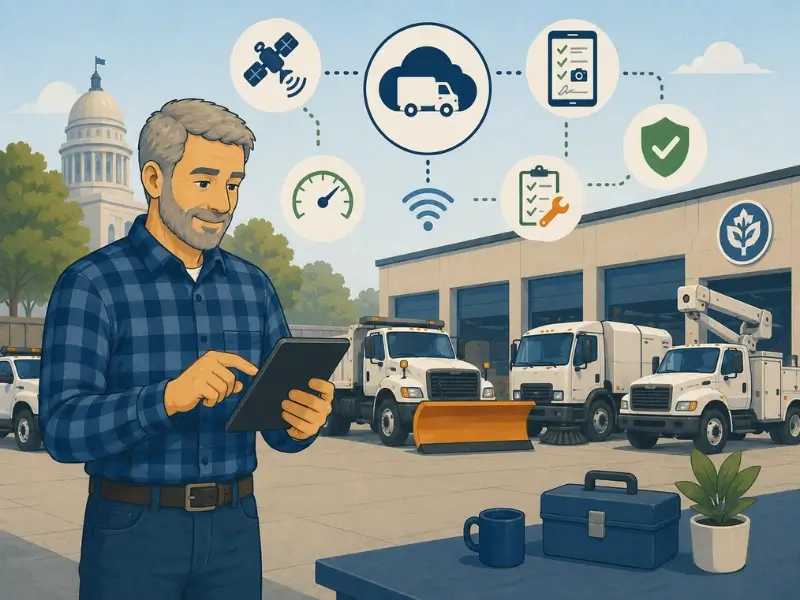
Once a vehicle is connected, Samsara feeds vehicle details, fault codes, and mileage into Simply Fleet without anyone re-entering data. For public works fleets specifically, this matters most during winter storm season and emergency response windows, when vehicles log heavy hours and manual mileage tracking falls behind fastest. Our Samsara and Geotab integration surfaces diagnostic trouble codes before they become breakdowns, and every mileage reading and fault code is synced directly into Simply Fleet. This is the same shift covered in our comparison of traditional fleet logs versus digital inspection reports: on the inspection side, a failed item on a driver vehicle inspection report can be converted into a work order, so the chain from defect found to defect fixed already exists in the system rather than needing to be reconstructed for an auditor after the fact.
Download our free Monthly Vehicle Inspection Checklist Now!
Prevent costly breakdowns and maximize uptime with our free checklist.
Download
Two regulatory shifts made automated recordkeeping less optional this year. FMCSA's rule effective March 23, 2026 explicitly authorizes electronic DVIRs under 49 CFR 396.11 and 396.13, closing any lingering doubt about whether a digital inspection holds up next to a paper one. At the same time, the 2026 CSA overhaul split Vehicle Maintenance into two separate scoring categories, standard maintenance violations and driver-observed defects, which means the data behind an inspection matters more to a fleet's compliance score than it did last year, not less
Building an Audit-Ready Public Works Fleet Record
Start with the vehicles that carry the highest compliance exposure: emergency response units and any vehicle involved in a reportable incident, since these draw the closest review during a CVSA or DOT inspection. Connect telematics first so mileage and fault data start flowing before you migrate inspections. Then move each department onto the same digital inspection form, so the streets division and the water division are producing the same standard of record. Simply Fleet's fleet compliance software keeps this in one place across departments, which is usually the harder problem for public works fleets than the individual features themselves.