




How to Automate Public Works DOT Audits with Simply Fleet and Samsara
Key Takeaways
- Government fleets face aging vehicles, limited budgets, and strict compliance needs
- Deferred maintenance increases costs and service disruptions
- Poor data visibility makes planning and audits difficult
- Preventive, data-driven maintenance reduces downtime and total lifecycle costs
- Digital fleet management platforms help public agencies stay reliable and accountable
Government and public sector fleets keep cities running. Police vehicles, ambulances, buses, sanitation trucks, utility vans, and inspection vehicles all depend on consistent maintenance to stay operational. When these fleets struggle, the impact is felt immediately; delayed services, higher costs, and public dissatisfaction.
Unlike private fleets, government fleets operate under strict regulations, fixed budgets, and high public accountability. Fleet maintenance is not just an operational task; it is a public service responsibility. This article explores the major fleet maintenance challenges in government and public sector organizations and explains how modern fleet management platforms like Simply Fleet help agencies overcome them.
Why Fleet Maintenance Is Especially Challenging in the Public Sector
Public sector fleet managers balance reliability, safety, and cost efficiency while operating in complex administrative environments. Procurement rules, aging assets, staffing shortages, and compliance requirements make maintenance planning significantly harder than in commercial fleets.
Key Fleet Maintenance Challenges in Government & Public Sector

Government and public sector fleets operate in a uniquely demanding environment. Vehicles are expected to deliver uninterrupted public services while navigating budget approvals, procurement rules, compliance obligations, and long replacement cycles.
Unlike private fleets, maintenance decisions in the public sector are often shaped by policy constraints rather than operational convenience. As a result, several recurring maintenance challenges emerge (each directly affecting fleet reliability, safety, and long-term costs).
Aging Fleet and Extended Vehicle Lifecycles
One of the most common challenges is operating vehicles far beyond their ideal replacement cycle.
- Budget constraints delay vehicle replacement
- Older vehicles break down more often
- Spare parts for outdated models are harder to source
- Maintenance costs rise sharply with age
Many government agencies keep vehicles running for years longer than recommended, increasing downtime and safety risks.
Limited Budgets and Deferred Maintenance
Public sector fleets often face flat or shrinking budgets, even as operational demands increase.
- Preventive maintenance is postponed to save short-term costs
- Repairs become reactive instead of planned
- Deferred maintenance leads to expensive breakdowns
- Emergency repairs disrupt daily services
Cutting maintenance budgets rarely saves money in the long run, it shifts costs to future repairs and replacements.
Fragmented Fleet Data and Poor Visibility
Many agencies still rely on spreadsheets, paper logs, or disconnected systems.
This leads to:
- Incomplete service histories
- Missed maintenance schedules
- Inaccurate cost tracking
- Difficulty forecasting future expenses
Without centralized data, fleet managers struggle to make informed decisions or justify budget requests.
Compliance, Safety, and Audit Pressure
Government fleets must comply with strict safety, emissions, and reporting requirements.
Common challenges include:
- Maintaining inspection and service records
- Tracking emissions compliance
- Preparing documentation for audits
- Managing safety recalls across large fleets
Manual record-keeping increases the risk of non-compliance and audit failures.
Skilled Technician Shortages
Finding and retaining qualified maintenance staff is a growing issue.
- Private sector offers higher wages
- EVs and advanced vehicles require new skills
- Aging workforce is nearing retirement
- Training budgets are often limited
Staff shortages slow repairs and increase vehicle downtime.
Transition to Electric and Alternative Fuel Vehicles
Sustainability goals are pushing public fleets toward EVs and hybrid vehicles, but maintenance becomes more complex.
Challenges include:
- Limited charging infrastructure
- Lack of EV-trained technicians
- New maintenance schedules and diagnostics
- Higher upfront planning and coordination
Without proper systems, agencies struggle to manage mixed fleets of traditional and electric vehicles.
Downtime in Mission-Critical Vehicles
Unlike commercial fleets, many public sector vehicles cannot simply be taken out of service.
Examples include:
- Police and emergency vehicles
- Public transport buses
- Utility repair trucks
Unexpected downtime directly affects public safety and service delivery, making preventive maintenance essential.
Cost Impact of Poor Fleet Maintenance
The table below shows how maintenance decisions impact long-term costs in public sector fleets:
Well-planned maintenance reduces total lifecycle costs and improves public service outcomes.
Download Our Free Fleet Maintenance Resources Now!
Prevent costly breakdowns and maximize uptime with our free checklist.
Download
How Technology Helps Solve Public Sector Fleet Challenges
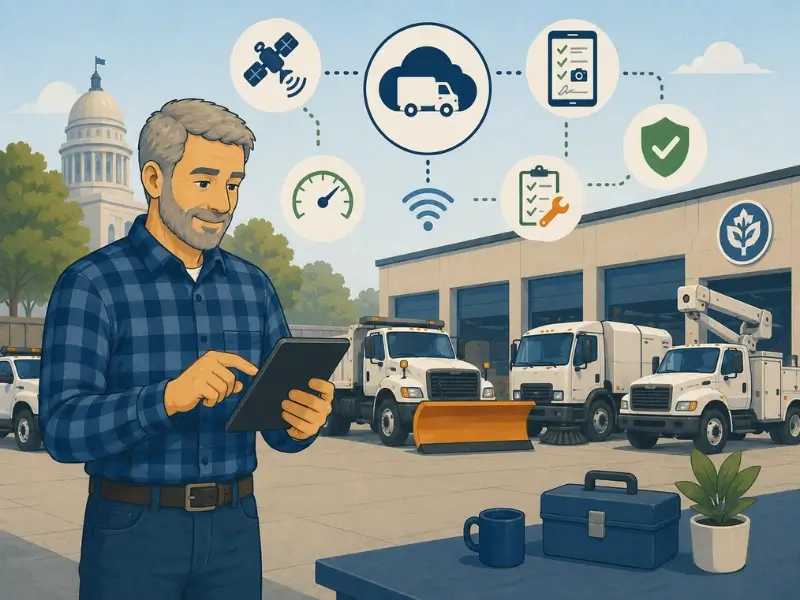
Centralized maintenance management brings all vehicle data, service history, and repair records into one system, giving public agencies clear visibility, better planning, and stronger compliance control.
Centralized Maintenance Management
Modern fleet management platforms centralize all maintenance data, including:
- Service history
- Work orders
- Inspection records
- Parts and labor costs
This gives fleet managers full visibility across departments and locations.
Automated Preventive Maintenance Scheduling
Digital systems automatically schedule services based on:
- Mileage
- Engine hours
- Time intervals
Real-Time Reporting and Audit Readiness
Fleet software generates accurate, up-to-date reports for:
- Budget planning
- Compliance audits
- Emissions tracking
- Asset utilization
Managing Mixed and Electric Fleets
Fleet platforms help agencies:
- Track EV maintenance separately
- Monitor charging schedules
- Compare costs between ICE and EV vehicles
- Plan infrastructure investments
Power Smarter Public Sector Fleets with Simply Fleet
Government and public sector fleets deserve reliable tools that support accountability, efficiency, and public trust.
Simply Fleet helps agencies modernize fleet maintenance, reduce downtime, and control costs. Discover how Simply Fleet can transform your public sector fleet operations today.
Read More:
7 Features Government Fleets Actually Need in Fleet Management Software