Best construction fleet software

Best Construction Fleet Management Software for Mid-to-Large Fleets in 2026

Not every construction fleet needs the same type of software. Compare maintenance-first and tracking-first platforms to find the right fit for your fleet, equipment, jobsites and existing systems.

Construction fleet management software overview
At a glance

Best Construction Fleet Management Software by Use Case

For mid-to-large construction fleets, the best platform depends on the primary operating problem. Simply Fleet is strongest for maintenance-first fleets using existing telematics; Tenna for native construction tracking and jobsite visibility; HCSS Equipment360 for heavy-civil maintenance shops; and Samsara when telematics and safety are central.

PlatformBest forOrientationNative trackingMaintenanceMain tradeoff
Simply FleetExisting telematics + maintenanceMaintenance-firstNoStrongLess native tracking and utilization depth
TennaConstruction tracking + jobsite operationsConstruction telematicsYesStrongBroader than maintenance-only buyers may need
HCSS Equipment360Heavy-civil shop operationsMaintenance-firstNot core to Equipment360StrongSpecialized around heavy-equipment maintenance
SamsaraTelematics + safetyTelematics-firstYesGoodMaintenance is not the only center of gravity
FleetioMature maintenance operationsMaintenance-firstVia telematics/OEM integrationsStrongTracking depends on its telematics/OEM ecosystem
GeotabOpen telematics + mixed-OEM dataTelematics-firstYesIntegration-drivenEcosystem and integration choices matter
T3 by EquipmentShareConnected assets + utilizationConstruction telematicsYesGoodHardware/telematics-centric deployment
AssetWorks FleetFocusEnterprise shop complexityEnterprise maintenanceVariesStrongGreater implementation and process complexity
First decision

Do You Need Maintenance Software or Construction Telematics?

Choose maintenance-first software when tracking already works but PM, inspections, repair follow-through and cost history are fragmented. Choose tracking-first software when location, geofencing, security, utilization, jobsite visibility or native tracking hardware are the primary problems.

Choose maintenance-first when

Your fleet already knows where its assets are, but maintenance execution is inconsistent. Prioritize engine-hour PM, inspection-to-repair workflows, work orders, parts/labor records and cost history.

Typical fit: Simply Fleet, Fleetio, HCSS Equipment360.

Choose tracking-first when

You are buying or replacing the tracking layer itself. Prioritize native GPS, equipment location, geofencing, utilization, security, jobsite visibility and connected-asset data.

Typical fit: Tenna, Samsara, Geotab, T3.

Methodology

How This Comparison Was Researched and Evaluated

This comparison is published by Simply Fleet, which is also one of the products being evaluated. That relationship is disclosed here so readers can judge the recommendations with the right context.

What we reviewed

Current official product pages and documentation, construction-specific product materials, integration documentation and public pricing pages where available.

How claims were verified

Product capabilities are included only when supported by current official documentation. We distinguish native capabilities from features delivered through telematics, OEM or partner integrations, and every core product receives an explicit best fit and limitation.

Evaluation criteria

We compared mixed-fleet support, construction specialization, fleet-scale suitability, engine-hour maintenance, inspection-to-repair workflow, work orders, parts, telematics, native tracking, utilization, cost visibility, field usability, integrations and implementation burden.

Hands-on testing

This version is documentation-led rather than a hands-on test of every competing platform. We do not imply that every competitor was independently demoed or workflow-tested where that did not occur.

Publisher disclosure

Simply Fleet is included because it is a relevant candidate for maintenance-first construction fleets using existing telematics. Because Simply Fleet publishes this comparison, its strengths and limitations are stated explicitly and it is evaluated against the same buying questions as the other platforms.

Last verified

Product capabilities, integrations and commercial terms were last reviewed on August 13, 2026 and can change. Re-check vendor documentation before making a final purchasing decision.

Detailed reviews

Best Construction Fleet Software: Detailed Reviews

The products below are not normalized into identical feature lists. Each review focuses on the operating problem the platform is strongest at solving, plus the limitation that matters most when shortlisting it.

Simply Fleet

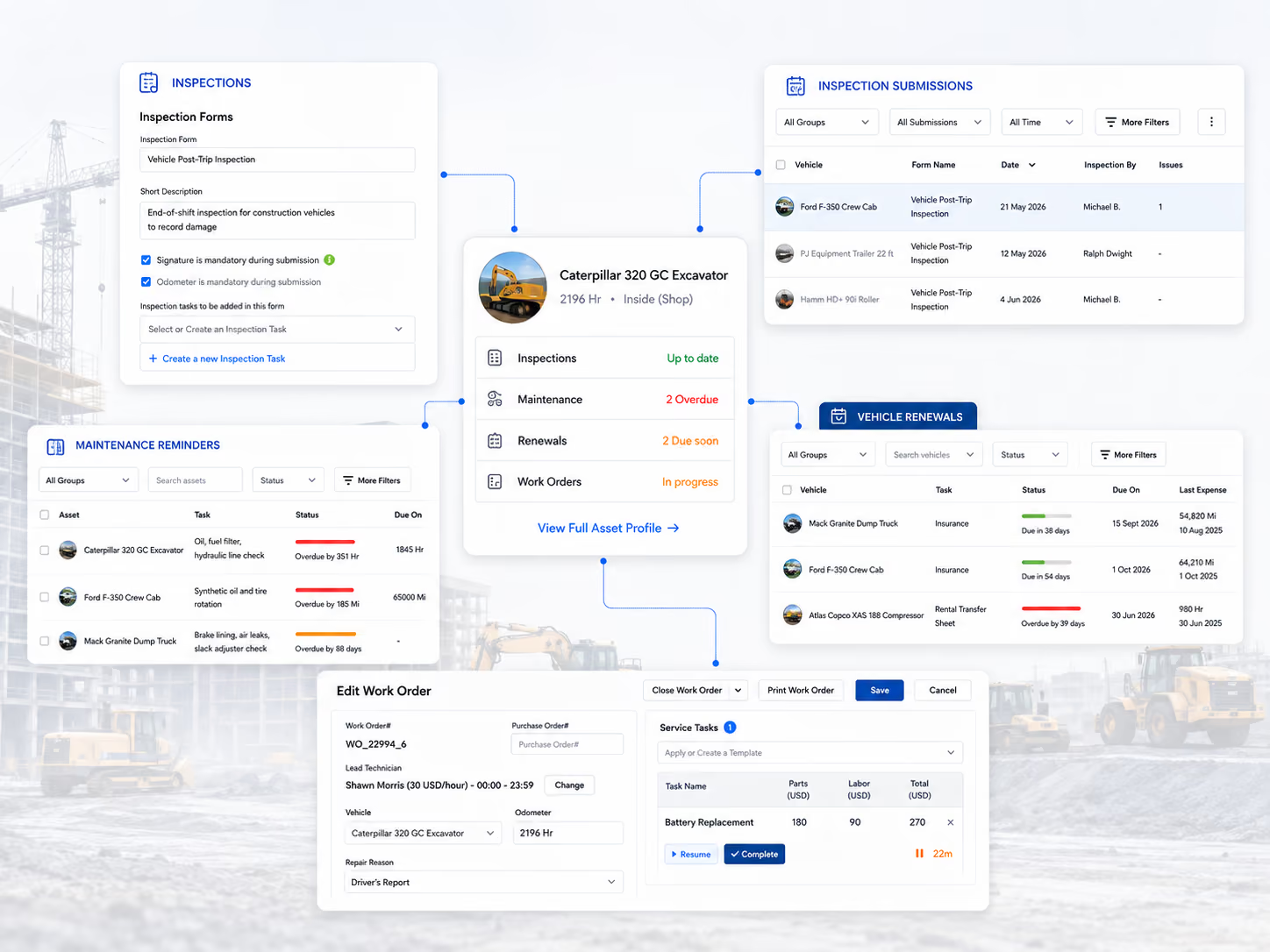
Why it belongs: Simply Fleet is best suited to maintenance-first construction fleets that already have telematics. It brings mileage-, engine-hour- and time-based preventive maintenance, inspections, issue tracking, work orders, parts, service history, fuel and expense records into the same operating layer. See how these workflows come together in Simply Fleet's construction equipment management software.

Where it stands out: The clearest differentiator is the connected workflow from usage data to PM, inspection, issue, work order, repair and asset cost/history. Existing tracking data can feed maintenance through fleet integrations instead of forcing a new GPS rollout. Available data and synchronization behavior vary by telematics integration, so verify the exact odometer, engine-hour, fault-code, fuel or other supported fields for the provider you use.

Best for:
Existing telematics + stronger maintenance execution

Limitation:
Not a native GPS, geofencing, theft-recovery, dispatch or deep-utilization platform.

Tenna

Why it belongs: Tenna is the construction-specific tracking and jobsite-operations anchor in this comparison. Its official construction fleet documentation covers live GPS tracking, geofencing, utilization, maintenance and broader mixed-asset operations. See Tenna's construction fleet documentation.

Where it stands out: Contractors that need the tracking layer itself, not simply a maintenance system connected to an existing telematics stack, should evaluate Tenna closely.

Best for:
Construction tracking + jobsite asset operations

Limitation:
The broader platform may be more than a maintenance-only buyer needs.

HCSS Equipment360

Why it belongs: HCSS Equipment360 is a strong fit when the heavy-equipment maintenance shop is the center of fleet operations. HCSS documents inspections, preventive maintenance, work orders, inventory management and maintenance requests as core Equipment360 workflows. See HCSS Equipment360 documentation.

Where it stands out: Heavy-civil contractors with equipment-centered shop workflows should keep HCSS high on the shortlist. Native GPS is not the center of Equipment360 itself; HCSS provides tracking through its broader Fleet Telematics ecosystem.

Best for:
Heavy-civil equipment maintenance

Limitation:
Specialized around heavy-equipment maintenance.

Samsara

Why it belongs: Samsara is a telematics-first option for construction fleets where mixed-fleet visibility, GPS, connected vehicle and equipment data, utilization, cameras and safety are top priorities. Its construction product page covers vehicles, heavy equipment and unpowered assets alongside maintenance and asset scheduling. See Samsara for Construction.

Where it stands out: It belongs in the shortlist when the buying decision extends well beyond maintenance into telematics and safety. Fleets already using Samsara can also evaluate whether a separate fleet maintenance layer better fits their repair workflow.

Best for:
Telematics + safety

Limitation:
Maintenance is not the only center of gravity.

Fleetio

Why it belongs: Fleetio is one of the closest maintenance-first comparisons. Its construction documentation covers engine-hour PM, Caterpillar and John Deere OEM telematics, diagnostic fault codes, mobile inspections and work orders, job assignments, location data and equipment cost tracking. See Fleetio's construction documentation.

Where it stands out: It is a credible shortlist option for teams with mature maintenance processes that also want telematics and OEM data in the maintenance workflow. Fleetio does not center the product around Fleetio-owned native GPS hardware; tracking is supported through its telematics and OEM integration ecosystem.

Best for:
Process-mature maintenance teams

Limitation:
Tracking relies on telematics/OEM integrations rather than Fleetio-owned native GPS hardware.

Geotab

Why it belongs: Geotab is the open-telematics and mixed-OEM option in the shortlist. Its construction offering combines ruggedized telematics hardware with MyGeotab for GPS, engine hours, PTO, idling, asset visibility and open data integration. See Geotab's construction fleet documentation.

Where it stands out: It is most compelling when the fleet wants telematics flexibility and mixed-source data rather than a maintenance-first system owning the whole workflow.

Best for:
Open telematics + mixed-OEM operations

Limitation:
Maintenance fit depends heavily on ecosystem and integration choices.

Capability comparison

Compare the Core Platforms on the Buying Questions That Matter

The most important differences are not whether a product has a generic “maintenance” or “tracking” checkbox. Compare how deeply each platform supports the workflow your fleet is actually trying to improve.

Buying dimensionSimply FleetTennaHCSSSamsaraFleetioGeotab
Primary orientationMaintenance-firstConstruction telematicsHeavy-equipment maintenanceTelematics + safetyMaintenance-firstOpen telematics
Mixed fleet / asset supportOn-road vehicles + heavy equipment; integrated telematics dataVehicles, heavy equipment, trailers, attachments + toolsMixed fleet via HCSS Fleet/OEM; Equipment360 maintenance focusVehicles, heavy equipment, unpowered assets + OEMsOn-road + off-road/heavy equipment + OEM integrationsOn-road + off-road assets + mixed-OEM data
Engine-hour PMCoreImportantCoreEvaluate depthCoreIntegration-driven
Inspection → repairCore workflowAvailable within broader platformStrong shop workflowEvaluate maintenance depthStrongDepends on maintenance layer
Native GPS hardwareNoYesNot core to Equipment360; available through HCSS Fleet TelematicsYesNo Fleetio-owned GPS hardware; tracking via integrations/OEMsYes
Utilization depthMaintenance usage dataDeep construction utilizationMaintenance-centeredTelematics-drivenMaintenance-centeredTelematics-driven
Existing telematics modelStrategic fitOften replaces/adds tracking layerHCSS Fleet/OEM ecosystemIs the tracking layerTelematics/OEM integration ecosystemIs the telematics layer
Best fitMaintenance bottleneck + existing GPSTracking + jobsite opsHeavy-civil shopTelematics + safetyMature maintenance processOpen mixed-OEM telematics

Asset-type and telematics notes are based on current official construction product documentation linked in the detailed reviews below. Verify the exact asset types and data fields required by your fleet before shortlisting a platform.

Buying distinctions

Five Questions That Change the Shortlist

These distinctions create more useful buying guidance than a long feature checklist because they reveal what happens inside the actual fleet workflow.

Can it manage the whole mixed fleet?

Construction fleets may include pickups, service trucks, vans, excavators, loaders, dozers, skid steers, cranes, trailers, small equipment and unpowered assets. Confirm that the platform supports the asset mix your operation actually owns.

How does engine-hour maintenance work?

Heavy equipment cannot be managed like highway vehicles alone. Compare engine-hour, mileage and calendar intervals, combined triggers, manual field capture, automatic meter imports and fault-code-driven maintenance.

What happens after an inspection fails?

A useful maintenance workflow should connect the defect to an issue, work order, technician, parts/labor, repair closeout and asset history. “Has inspections” is not enough if defects still disappear into a separate queue.

Do you need new tracking hardware?

If Samsara, Geotab, Verizon, Motive or another tracking system already solves location, a maintenance-first platform may be the cleaner next step. If native GPS, geofencing and security are missing, a tracking-first platform may make more sense. For Simply Fleet, available data and synchronization behavior vary by integration, so verify the exact fields your telematics provider sends into the maintenance workflow.

Are engine hours the same as utilization?

No. Maintenance usage data answers “when is this asset due for service?” Utilization analytics answers “should we own, rent, redeploy or move this equipment?” Compare those capabilities separately.


Buyer checklist

What Mid-to-Large Construction Fleets Should Look For

Asset count alone does not define enterprise fit. Larger fleets should evaluate the operating model around maintenance, field adoption, integrations and controls—not just whether a vendor says it supports thousands of assets.

Maintenance execution

Mixed-fleet support, engine-hour PM, inspections, issue-to-repair workflows, work orders, parts and inventory, service history, maintenance cost and asset TCO.

Field and jobsite operations

Mobile usability, multiple jobsites, groups or business units, operator and technician workflows, jobsite visibility, utilization and rightsizing requirements.

Data and enterprise controls

Telematics and OEM integrations, APIs, ERP/accounting connections, permissions, reporting, multiple branches, migration requirements and implementation complexity.

Shortlist by situation

Which Platform Is Best for Your Construction Fleet?

Match the shortlist to the problem your fleet is trying to solve. A product can be excellent in one operating model and unnecessarily broad—or too narrow—in another.

Fleet scenarioShortlist direction
You already have Samsara, Geotab, Verizon or Motive but maintenance is fragmented.Evaluate Simply Fleet.
You need native construction GPS, geofencing and jobsite equipment visibility.Evaluate Tenna or T3.
Your heavy-civil maintenance shop is the center of operations.Evaluate HCSS Equipment360.
Telematics and fleet safety are the top priorities.Evaluate Samsara.
Multi-OEM telematics architecture is critical.Evaluate Geotab.
Detailed maintenance processes and OEM maintenance data are central.Compare Fleetio and Simply Fleet closely.
Purchasing, inventory and large-enterprise shop complexity dominate.Evaluate AssetWorks.
Simply Fleet fit

Why Simply Fleet Belongs on the Shortlist

Simply Fleet is strongest here when maintenance execution is the bottleneck and the tracking layer already exists. Its value is the connected maintenance workflow rather than claiming parity with construction telematics platforms. For the broader operating model, see Simply Fleet's fleet management software.

Usage data

Mileage, engine hours and supported telematics data keep service triggers current.

PM + inspections

Preventive maintenance and field inspections surface work before it becomes hidden backlog.

Issues + work orders

Defects become accountable repair work with technician, parts, labor and status context.

History + cost

Completed work stays with the asset as service history and operating-cost context.

Closest comparisons

Two Head-to-Head Comparisons Worth Making

Use these comparisons to clarify category fit, not to force every product into the same feature checklist.

Simply Fleet vs Tenna

Choose Simply Fleet when telematics already exists and maintenance is the bottleneck. Choose Tenna when native GPS, equipment movement, geofencing/security, utilization or broader jobsite asset operations are central. See the deeper Tenna alternatives comparison.

Simply Fleet vs Fleetio

Compare both against construction asset support, engine hours, OEM data, inspections, issue management, work-order workflow, parts, costs, telematics integrations, deployment, mobile adoption, reporting, enterprise controls, pricing and API requirements. See the full Simply Fleet vs Fleetio comparison.

Also comparing inspection- or record-led platforms? See the Whip Around alternative comparison and AUTOsist alternative comparison, or browse all Simply Fleet competitor comparisons.

Commercial fit

Pricing and Implementation Questions to Ask Before You Buy

Pricing and rollout complexity can change the practical fit of two otherwise similar products. Verify current commercial terms before making a final shortlist.

What is included in the software price?

Compare public versus quote-based pricing, user limits, asset tiers, add-ons and whether essential maintenance workflows require a higher plan. Simply Fleet publishes fleet pricing and volume-pricing provisions for fleets above 500 vehicles.

Does the rollout include hardware?

If the selected platform requires a new tracking layer, include tracker procurement, installation and asset mapping in the implementation plan. A maintenance-first system using existing telematics can create a different rollout profile.

What changes at 100, 500 or 1,000 assets?

Validate data migration, branch structure, roles and permissions, reporting, integrations, ERP/accounting connections and field adoption—not just the maximum number of assets a platform can store.

FAQ

Construction Fleet Software Questions

These answers cover the buying distinctions that most often change the shortlist.

What is the best construction fleet management software?

There is no single best platform for every construction fleet. Simply Fleet is strongest for maintenance-first fleets using existing telematics; Tenna for construction tracking and jobsite operations; HCSS Equipment360 for heavy-civil maintenance shops; Samsara for telematics and safety; Fleetio for mature maintenance processes; and Geotab for open telematics and mixed-OEM data.

What is the difference between maintenance-first and tracking-first fleet software?

Maintenance-first systems center on preventive maintenance, inspections, repairs, work orders, parts, service history and costs. Tracking-first systems center on GPS, location, geofencing, security, utilization and connected asset data. Some platforms cover both, but their center of gravity still affects fit.

What if our construction fleet already uses Samsara, Geotab, Verizon or Motive?

If the existing tracking layer already solves location and meter-data needs, you may not need to replace it. Evaluate whether a maintenance-first system can use that telematics data to improve PM, inspections, work orders and repair history instead.

Are engine hours and equipment utilization the same thing?

No. Engine hours can tell a maintenance system when an asset is due for service. Utilization analytics go further by helping answer whether equipment should be owned, rented, redeployed or moved between jobsites.

What should a mid-to-large construction fleet compare beyond features?

Compare mixed-asset support, field adoption, multiple locations, permissions, integrations, API and ERP requirements, data migration, implementation burden, pricing structure and the exact limitation of every shortlisted platform.

Published on
12 Aug 2026
Written By
Nupur Kapadia
Co-Founder at Simply Fleet. Nupur blends real fleet operations insight with practical product thinking to create content that helps teams cut downtime, stay compliant, and run maintenance without the chaos.

Already have telematics but need better maintenance execution?

See how Simply Fleet connects preventive maintenance, inspections, issues, work orders, parts and asset history without making another tracking rollout the starting point.
Fleet Manager looking happy with Simply Fleet's solution